MUMBAI: India’s top court on Thursday began examining whether it was legal for a Muslim man to dump his wife by saying “I divorce you” three times, raising hopes among women campaigners of a long-awaited end to the ‘quickie’ divorce.
The practice of “triple talaq” is banned in most Muslim countries but allowed under India’s constitution that lets most religions, including Muslims — the biggest religious minority — regulate matters like marriage and divorce through civil codes.
But the Islamic instant divorce has come under increasing criticism as unconstitutional by violating the right to equality. Reports have emerged of men divorcing their wives via Skype, WhatsApp and text message, leaving families destitute.
Muslim women in India have demanded a ban to triple talaq with several women petitioning the nation’s top court, the Supreme Court, to overturn the practice.
Conservative Muslim clerics staunchly oppose any change.
At the hearing on Thursday, five multi-faith judges of the Supreme Court started to determine whether triple talaq is part of a fundamental religious right for Muslims.
“If we come to a conclusion that triple talaq is part of (the) fundamental right to religion, we would not interfere,” the judges were quoted as saying by The Times of India.
Local media said the Supreme Court has set aside six days for the hearing — half for those challenging triple talaq and half in defense — with the hearing expected to end by May 19.
The national Law Commission last year sought public views on whether to abolish the practice, triggering a debate between politicians and religious leaders.
More than 90 percent of Muslim women surveyed in 2015 by Bharatiya Muslim Mahila Andolan (BMMA), which campaigns for women’s rights, wanted an end to triple talaq and polygamy.
Noor Jehan from BMMA said they wanted the Supreme Court to rule triple talaq was illegal and unconstitutional, with many women left without support after such a divorce.
“Thousands of Muslim women have been suffering for long and they will welcome it if the court ends this practice of unilateral divorce,” she told the Thomson Reuters Foundation
The All India Muslim Personal Law Board (AIMPLB), a non-governmental body which oversees the application of Muslim personal law, opposes any ban on triple talaq and argues this is a religious matter and not for the courts.
But Prime Minister Narendra Modi disagrees and last year waded into a controversy by saying he believed it was destroying women’s lives, with Muslims making up about 13 percent of the country’s 1.2 billion people.
“It is the responsibility of the government and people of the country to give justice to Muslim women,” Modi said at a rally in Mahoba last year.


![]()
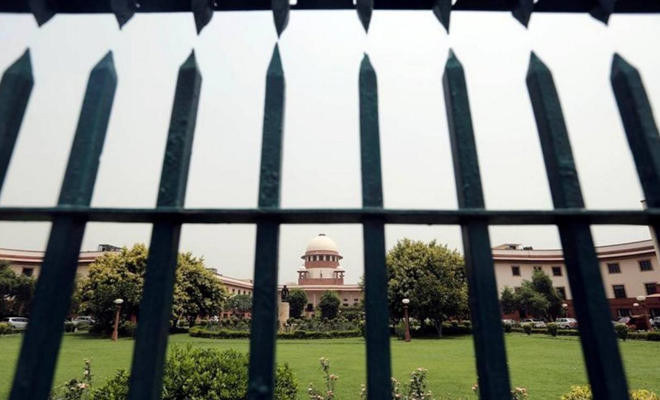
India’s top court reviews Muslim women's petition to ban instant 'triple talaq' divorce
India’s top court reviews Muslim women's petition to ban instant 'triple talaq' divorce
Latest updates


© 2026 SAUDI RESEARCH & PUBLISHING COMPANY, All Rights Reserved And subject to Terms of Use Agreement.