WASHINGTON: As Yemen’s war enters its third year, a two-day workshop addressing the military, political and humanitarian challenges of the conflict warned of Houthi ties to Iran and their impact on legitimate institutions in Yemen.
Saudi and Yemeni diplomats both echoed the urgency for a political solution, and invited the Houthis to the table as a political party and not an armed militia.
The conference in Washington, organized by the Gulf Research Center, featured Saudi and Yemeni officials, as well as US defense experts and former US ambassadors to Sanaa. The meetings took place on Thursday and Friday at the National Council for US-Arab relations, and at the Army Navy Club respectively.
Saudi Arabia’s Ambassador to Yemen Mohammed Al-Jaber stressed the need for a fair political solution to the conflict. “We invite the Houthis to the negotiating table, and we are more than open to a political solution,” he said.
His invitation, however, was paralleled with heavy criticism of the Houthis as an armed militia, accusing them of “selling Iran’s provided weapons to Al-Qaeda in Yemen.”
Al-Jaber also lambasted Iran’s “clear position... to destroy and undermine Yemen,” accusing Tehran of “supporting Houthis’ terrorism.”
The Saudi diplomat defined Riyadh’s role as “non-discriminatory and non-sectarian,” stating that its aid “goes to all the legitimate parties in Yemen.”
He stressed that the Hodeidah port “needs to be under the control of the international community so that aid can be distributed to the Yemeni people.”
Yemen’s Ambassador to Washington Ahmed Awad bin Mubarak defined the goal of a “political solution that preserves the Yemeni state and institutions” in ending the conflict.
Mubarak maintained that the Saudi-led coalition forces “are pushing for a political solution” to the war.
The Yemeni diplomat however sounded the alarm over the Houthis’ armament, saying that “for Yemen’s future, we can allow the Houthis as a political party but not as armed militia.” Mubarak offered heavy criticism of the Houthis, saying that “their leaders promote just as much extremism and violence as Al-Qaeda.”
In that capacity, Mubarak said Saudi Arabia’s decision to intervene was “the only option to prevent non-state actor from taking over Yemen.”
Former US Ambassador Gerald Feierstein stressed three goals for Saudi Arabia in Yemen. First is the “need to preserve legitimate Yemeni government,” and second is to “prevent further Houthi and Iranian expansion,” while the third goal is to protect the Saudi-Yemen border.
These goals were reiterated by the head of the Gulf Research Center (GRC) Abdulaziz Sager, who warned about letting Yemen “turn into another Lebanon with (a) violent non-state actor (Houthis) dominating the country’s security forces.” Sager said that the “coalition is trying to end the war but Iran is preventing it by financing violent non-state actors.”
In that context, Mustafa Alani, a defense analyst at GRC drew a red line for Saudi Arabia in Yemen, contending that the Kingdom cannot accept Houthi control over Yemen. “It would be a major strategic threat blocking all access to the sea,” he said. “The Houthi siege was a reality check for Riyadh (in 2015) after allowing the armed Houthi movement to grow in early 2000s.” Alani pointed out the difficulties and the complexities of the war, and that “there is no magic solution.” He said that any Hodeidah operation “is a high cost with less benefits. We aren’t prepared.”
The two-day conference framed Saudi Arabia’s military role in Yemen as “one of necessity and not choice,” and noted increased US-Saudi defense cooperation following US Secretary of Defense James Mattis’ visit. It highlighted the challenging humanitarian and economic terrains in the conflict, without, however, providing a clear exit strategy.


![]()
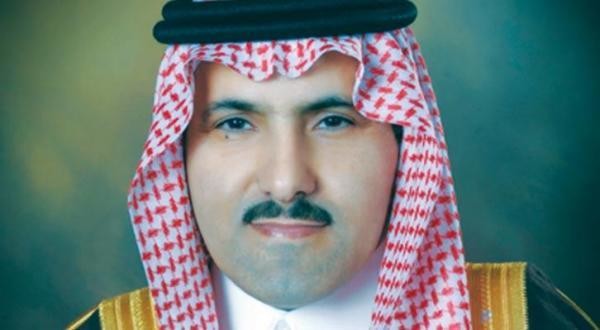
Houthis selling Iranian weapons to Al-Qaeda, says Saudi diplomat
Houthis selling Iranian weapons to Al-Qaeda, says Saudi diplomat
Latest updates


© 2026 SAUDI RESEARCH & PUBLISHING COMPANY, All Rights Reserved And subject to Terms of Use Agreement.