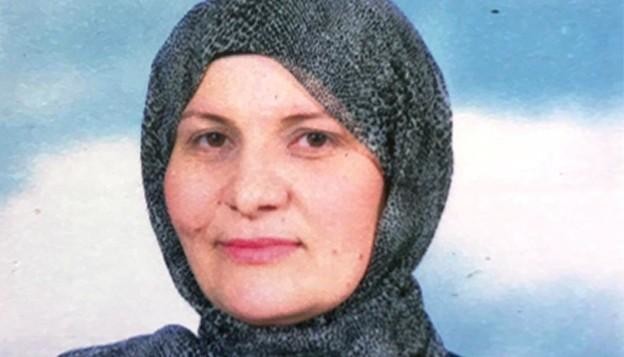
JERUSALEM: Israel appointed its first female judge in its Muslim sharia court system on Tuesday, officials said, a move hailed as historic.
Hana Khatib, an attorney from the northern town of Tamra, was selected by an Israeli justice committee alongside three men to become a religious judge, or qadi, in the courts ruling on personal law for Muslims inside Israel.
Justice Minister Ayelet Shaked, from the far-right Jewish Home party and head of the committee that selected Khatib, said the appointment of a female religious judge “should have happened a long time ago.”
“This is great news for Arab women and the Arab society,” she said in a statement.
“I’m excited over the choice, and hope this is the bellwether for further appointments of women.”
Aida Touma-Sliman, a female Arab lawmaker from the Joint List coalition, called Khatib’s appointment “a historic move” that was the result of a long legal struggle, adding it would benefit all Arabs in Israel.
“It’s time to believe in the power of Arab women in filling any role, making decisions and being in positions of influence in society and state, and removing the obstacles from the way,” she said in a statement.
In Israel, family law — divorce, marriage, endowments — falls under the jurisdiction of religious courts, and separate systems exist for the country’s different creeds.
Khatib is the first woman not only for the Muslim sharia courts but for all the religious courts in Israel, as no women serve as judges in the Jewish or Druze courts.
There are not many women qadis around the world. Two women serve as sharia judges in the neighboring Palestinian Authority.
Khatib will be sworn in by Israeli President Reuven Rivlin in a few weeks.
There are nine regional sharia courts in Israel as well as an appeal courts, with today’s appointments bringing the number of qadis in the Muslim system to 18.

Israel appoints country’s first female sharia judge
Sudan paramilitary advances near Ethiopia border
- Sudan’s Kordofan region, where the SPLM-N has its other foothold in the Nuba Mountains, is currently the war’s fiercest battleground
KHARTOUM: Sudanese paramilitary forces have advanced on army positions near the southeastern border with Ethiopia, according to the group and an eyewitness who spoke to AFP Wednesday.
Control over Sudan’s southeastern Blue Nile State, bordering both Ethiopia and South Sudan, is split between the army and a faction of the Sudan People’s Liberation Movement-North, allies of the paramilitary Rapid Support Forces.
In a statement released Tuesday, the SPLM-N, led by Abdelaziz Al-Hilu, said they had “liberated the strategic city of Deim Mansour and areas of Bashir Nuqu and Khor Al-Budi.”
Since April 2023, the Sudanese army has been at war with the RSF. In February of last year, the RSF announced a surprise alliance with the SPLM-N, securing experienced fighters, land and border access.
Deim Mansour lies between the SPLM-N stronghold Yabus, birthplace of their deputy commander Joseph Tuka, and the army-held town of Kurmuk, which hosts a large army contingent.
Babiker Khaled, who fled to Kurmuk, told AFP that SPLM-N fighters began amassing in the forests around Deim Mansour on Sunday.
“The shelling began on Monday, they entered the city on Tuesday,” he said, adding that “some people fled into Ethiopia, others arrived in Kurmuk.”
From its foothold in the southern Blue Nile, a thin strip of land jutting south between Ethiopia and South Sudan, the SPLM-N maintains reported supply lines from both countries, building on decades-old links.
Close to three years of war in Sudan have left tens of thousands dead and around 11 million displaced, creating the world’s largest hunger and displacement crises.
It has also torn the country apart, with the army holding the center, north and east of Sudan while the RSF and its allies dominate the west and parts of the south.
Sudan’s Kordofan region, where the SPLM-N has its other foothold in the Nuba Mountains, is currently the war’s fiercest battleground.
On Tuesday, the army broke a paramilitary siege on South Kordofan state capital Kadugli, days after breaking another on the nearby city of Dilling.