Two Israeli soldiers, four others arrested for anti-Arab attacks

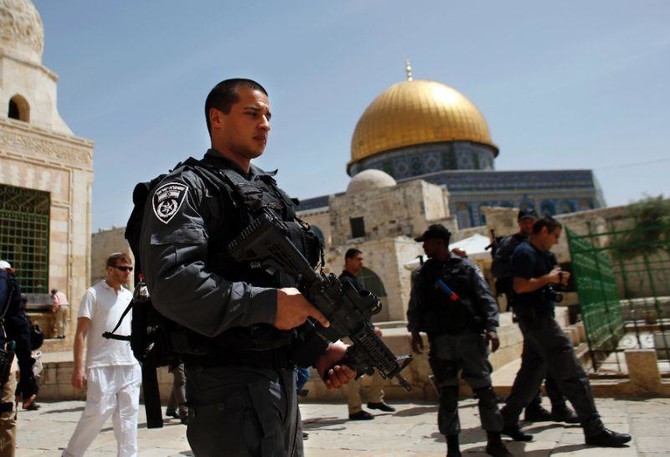
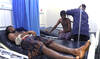
Israeli police said three Jewish minors were detained after a June 10 attack in the village of Yafia near the northern Israeli city of Nazareth in which a car was torched (AFP)
Updated 23 April 2017
Follow

Two Israeli soldiers, four others arrested for anti-Arab attacks

JERUSALEM: Six Israelis, including two soldiers, have been arrested for racist attacks against Arabs with knives and other weapons and charged with “terrorist” offenses, authorities said Sunday.
The suspects are accused of having used knives, clubs and bars to carry out at least five separate anti-Arab attacks and acts of vandalism against cars belonging to Arabs, police said in a statement.
Police did not provide details on whether the attacks resulted in serious injuries or how many people were targeted. They were charged in the southern Israeli city of Beersheba.
The accused were allegedly motivated by “nationalist and racist” beliefs, including seeking to prevent Jewish women from having relationships with Arab men.
According to police, they were influenced by a video from the Jewish extreme right group Lehava, which opposes inter-marriage.
In August 2014, Lehava activists staged a rally where racist slogans, including “Death to Arabs!,” were shouted at the wedding near Tel Aviv of a Muslim man and Jewish woman.
The group’s leader, Benzi Gopstein, was questioned by police in 2015 after he condoned torching churches in Israel, in accordance with a mediaeval Jewish commandment to destroy places of idol-worship.
Arabs account for some 17.5 percent of Israel’s eight million population.


Trump warns Iran of ‘very traumatic’ outcome if no nuclear deal

Updated 12 February 2026
Follow

Trump warns Iran of ‘very traumatic’ outcome if no nuclear deal

  • Speaking a day after he hosted Netanyahu at the White House, Trump said he hoped for a result “over the next month”

WASHINGTON: US President Donald Trump threatened Iran Thursday with “very traumatic” consequences if it fails to make a nuclear deal — but Israeli Prime Minister Benjamin Netanyahu said he was skeptical about the quality of any such agreement.
Speaking a day after he hosted Netanyahu at the White House, Trump said he hoped for a result “over the next month” from Washington’s negotiations with Tehran over its nuclear program.
“We have to make a deal, otherwise it’s going to be very traumatic, very traumatic. I don’t want that to happen, but we have to make a deal,” Trump told reporters.
“This will be very traumatic for Iran if they don’t make a deal.”
Trump — who is considering sending a second aircraft carrier to the Middle East to pressure Iran — recalled the US military strikes he ordered on Tehran’s nuclear facilities during Israel’s 12-day war with Iran in July last year.
“We’ll see if we can get a deal with them, and if we can’t, we’ll have to go to phase two. Phase two will be very tough for them,” Trump said.
Netanyahu had traveled to Washington to push Trump to take a harder line in the Iran nuclear talks, particularly on including the Islamic Republic’s arsenal of ballistic missiles.
But the Israeli and US leaders apparently remained at odds, with Trump saying after their meeting at the White House on Wednesday that he had insisted the negotiations should continue.

- ‘General skepticism’ -

Netanyahu said in Washington on Thursday before departing for Israel that Trump believed he was laying the ground for a deal.
“He believes that the conditions he is creating, combined with the fact that they surely understand they made a mistake last time when they didn’t reach an agreement, may create the conditions for achieving a good deal,” Netanyahu said, according to a video statement from his office.
But the Israeli premier added: “I will not hide from you that I expressed general skepticism regarding the quality of any agreement with Iran.”
Any deal “must include the elements that are very important from our perspective,” Netanyahu continued, listing Iran’s ballistic missile program and its support for armed groups such as the Palestinian movement Hamas, Yemen’s Houthi rebels and Hezbollah in Lebanon.
“It’s not just the nuclear issue,” he said.
Despite their differences on Iran, Trump signaled his strong personal support for Netanyahu as he criticized Israeli President Isaac Herzog for rejecting his request to pardon the prime minister on corruption charges.
“You have a president that refuses to give him a pardon. I think that man should be ashamed of himself,” Trump said on Thursday.
Trump has repeatedly hinted at potential US military action against Iran following its deadly crackdown on protests last month, even as Washington and Tehran restarted talks last week with a meeting in Oman.
The last round of talks between the two foes was cut short by Israel’s war with Iran and the US strikes.
So far, Iran has rejected expanding the new talks beyond the issue of its nuclear program. Tehran denies seeking a nuclear weapon, and has said it will not give in to “excessive demands” on the subject.