SHANGHAI: China’s first cargo spacecraft docked successfully with the Tiangong-2 space lab on Saturday, the official Xinhua news agency reported, marking a major step toward Beijing’s goal of establishing a permanently manned space station by 2022.
President Xi Jinping has prioritized advancing China’s space program to strengthen national security.
The Tianzhou-1 cargo resupply spacecraft made the automated docking process with the orbiting space lab after it had taken off on Thursday evening from the Wenchang Satellite Launch Center in the southern island province of Hainan.
The Tiangong-2 space laboratory, or “Heavenly Palace 2,” was home to two astronauts for a month last October in China’s longest ever manned space mission.
The cargo spacecraft mission provides an “important technological basis” to build a Chinese space station, state media have said. It can reportedly carry 6 tons of goods, 2 tons of fuel and can fly unmanned for three months.
Despite the advances in China’s space program for military, commercial and scientific purposes, China still lags behind the United States and Russia.
In late 2013, China’s Jade Rabbit rover landed on the Moon to great national fanfare, but ran into severe technical difficulties.
The US Defense Department has highlighted China’s increasing space capabilities, saying it was pursuing activities aimed at preventing other nations from using space-based assets in a crisis.
China insists it has only peaceful ambitions in space, but has tested anti-satellite missiles. (Reporting by Adam Jourdan)


![]()
![]()
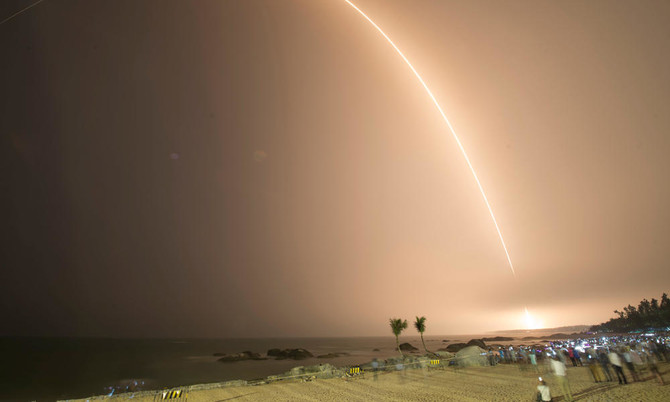
China’s first cargo spacecraft docks with orbiting space lab
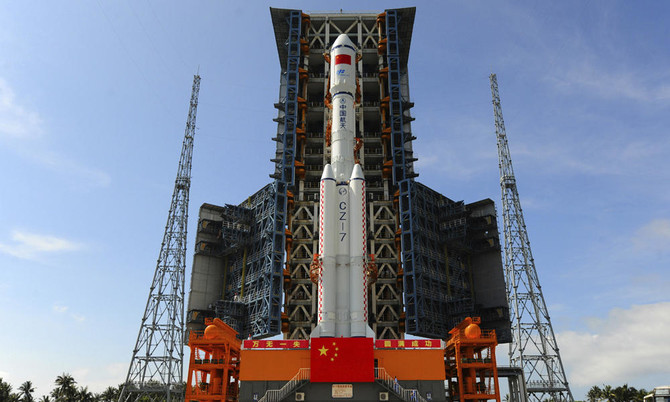
China’s first cargo spacecraft docks with orbiting space lab
Latest updates




© 2026 SAUDI RESEARCH & PUBLISHING COMPANY, All Rights Reserved And subject to Terms of Use Agreement.