LONDON: Debenhams, Britain’s second-biggest department store operator, said on Thursday it would return to growth by closing a few stores, revamping the rest and improving its online service, but concerns about the cost sent its shares lower.
After a strategic review by new Chief Executive Sergio Bucher, a former Amazon and Inditex executive, the group also said it would seek efficiencies by simplifying the business.
Debenhams, which posted a 6.4 percent fall in first-half profit, said up to 10 of its 176 UK stores would be reviewed for closure in the next five years, while consultation had begun on closing one central distribution center and about 10 regional warehouses.
Debenhams, ranked second by revenue behind department store chain John Lewis, has struggled in Britain’s intensely competitive retail market in recent years as consumers spend more on holidays, eating out and events.
“Customers have changed and we need to change too. Over the past four years growth in leisure has been 60 percent higher than growth in retail sales,” Bucher said, adding customers were also “increasingly living their lives through their mobile phones.”
Debenhams has 19 million UK customers, but Bucher said there was still a lot to fix.
“Some of our stores look tired and old, the online experience is not as good as it could be and we have so many promotions our customers struggle to know when it’s the right time to shop,” he said.
He said some customers complained that Debenhams had “got really great stuff but you have to work hard to find it.”
Bucher said he would upgrade mobile systems and the supply chain and invest in stores. Growth would come from offering new products and services, building on strong areas, such as beauty, make-up, handbags, swimwear, costume jewelry and footwear.
“We want to grow beauty to a 1 billion pound ($1.28 billion)business,” he said.
Debenhams would switch about 2,000 more staff to customer facing roles, declutter stores with a 10 percent reduction in stock and replenish stock faster. In-store catering would be enhanced.
The firm would also exit some brands and non-core international markets, Bucher said.
Shares in Debenhams, already down a third over the past year, fell up to 5.9 percent as investors fretted about the short-term costs and execution risk of the plan.
Annual capital expenditure would rise from 130 million pounds currently to 150 million pounds between 2018 and 2020, while exceptional costs in 2017-2020 would be 50 million pounds.
“The risks, aside from execution risk..., are that profit before tax is impacted if Debenhams is forced to lower clothing prices to maintain market share,” said RBC analyst Richard Chamberlain, who has a “sector perform” rating on the stock.
He said Debenhams could become more cautious on cash returns and closing stores could be expensive given average leases of 20 years.
Debenhams said pretax profit fell 6.4 percent to 87.8 million pounds ($112.5 million) for the 26 weeks to March 4, in line with market expectations, on revenue up 2.9 percent at 1.68 billion pounds. The interim dividend was maintained at 1.025 pence.


![]()
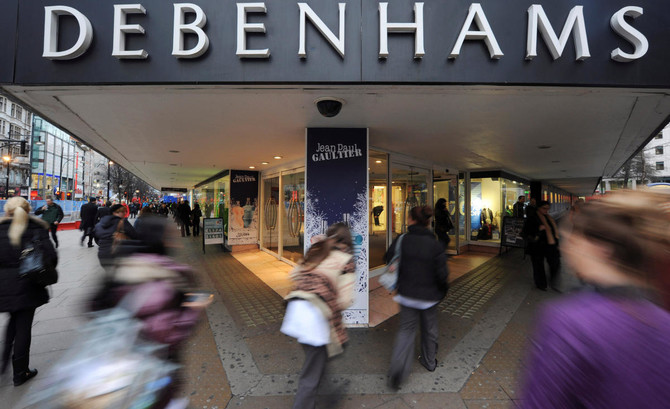
CEO: Some Debenhams stores ‘look tired and old’
CEO: Some Debenhams stores ‘look tired and old’
Latest updates


© 2026 SAUDI RESEARCH & PUBLISHING COMPANY, All Rights Reserved And subject to Terms of Use Agreement.