SEOUL: A fresh North Korean missile test failed when it exploded after launch Sunday, the US military said, a day after Pyongyang defiantly showcased its ballistic arsenal at a giant military parade.
The failure, which is likely to be seen as something of a public embarrassment for the regime, came amid soaring tensions in the region over the North’s nuclear weapons ambitions.
“The missile blew up almost immediately,” the US Defense Department said of the early morning launch which was also detected by the South Korean military.
Neither was able to determine immediately what kind of missile was used in the test, the timing of which appeared very deliberately chosen.
It came after North Korea displayed nearly 60 missiles — including what is suspected to be a new intercontinental ballistic missile — at a parade on Saturday to mark the 105th birthday of its founder Kim Il-Sung.
The missile failure also came hours ahead of a visit by US Vice President Mike Pence to South Korea where the North’s weapons program will top the agenda.
North Korea has a habit of firing off missiles to mark major political anniversaries, or as gestures of defiance to top US officials visiting the region.
US Defense Secretary Jim Mattis said President Donald Trump had been briefed on the latest test but had “no further comment.”
Sunday’s launch was carried out around dawn from Sinpo, a site on North Korea’s east coast where it has a shipyard.
“It is likely that this launch is a test for a new type of missile or an upgrade so the possibility is high for further provocation in the near future,” Kim Dong-Yub, a military expert at Kyungnam University’s Institute of Far Eastern Studies in Seoul, said.
In August last year, a submarine-launched ballistic missile tested from Sinpo flew 500 kilometers (300 miles) toward Japan.
North Korean leader Kim Jong-Un hailed that test as the “greatest success” and said it brought the US mainland within range of a mobile delivery system.
Pyongyang’s rogue atomic ambitions have come into sharp focus in recent weeks, with Trump vowing a tough stance against the North and threatening unilateral action if China failed to help curb its neighbor’s nuclear program.
Trump has repeatedly said he will prevent Pyongyang from its goal of developing a nuclear-tipped ballistic missile capable of reaching the mainland United States.
With speculation mounting that the North is preparing to conduct a sixth nuclear test, he sent an aircraft carrier-led strike group to the Korean peninsula — a pointed gesture in the wake of the recent US missile strike on Syria.
The North has reiterated its constant refrain that it is ready for “war” with the US, and its army vowed Friday a “merciless” response to any US provocation.
Recent satellite images suggest the North’s main nuclear site is “primed and ready,” according to specialist US website 38North, and White House officials say military options are “already being assessed.”
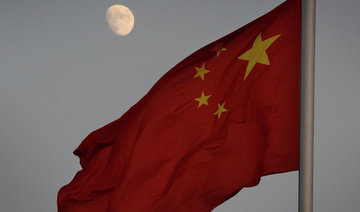
China, the North’s sole major ally, and Russia have both urged restraint, with Beijing’s foreign minister Wang Yi warning that “conflict could break out at any moment.”
The UN Security Council has imposed six sets of sanctions against the North since its first nuclear test in 2006 — all of which have failed to halt its drive for what it insists are defensive weapons.
Pyongyang has carried out five nuclear tests — two of them last year — and multiple missile launches, one of which saw three rockets come down in waters provocatively close to Japan last month.
Pyongyang has yet to formally announce it has an operational ICBM, but experts and intelligence officials have warned it could be less than two years away from achieving an inter-continental strike capability.
Operational submarine-launched devices could give the North the ability to strike without warning from a vessel somewhere in the Pacific Ocean.
They could also reduce the effectiveness of the US Terminal High Altitude Area Defense (THAAD) system, which Washington and Seoul are deploying to the South to counter missile threats, to the fury of Beijing.


![]()

N. Korea missile test fails after showcase parade
N. Korea missile test fails after showcase parade


Latest updates


Recommended


© 2026 SAUDI RESEARCH & PUBLISHING COMPANY, All Rights Reserved And subject to Terms of Use Agreement.