

Britain ‘concerned’ by North Korea missile test

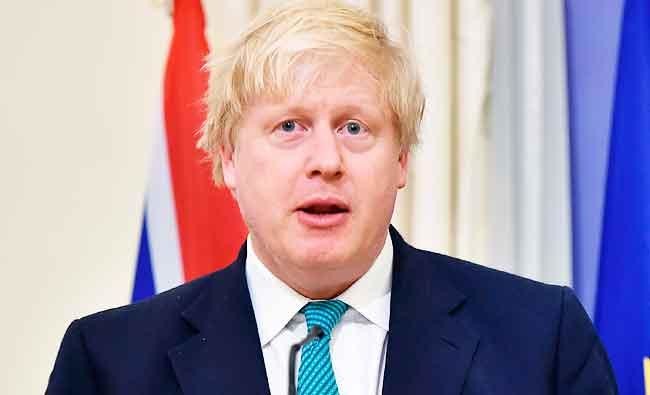
British Foreign Secretary Boris Johnson. (AFP)
Updated 16 April 2017
Follow

Britain ‘concerned’ by North Korea missile test

LONDON: Britain said it was “concerned” by reports that North Korea conducted a missile test on Sunday, which the US Defense Department said blew up almost immediately.

The Foreign Office in London said it was “concerned by reports of a missile test by North Korea” and was “monitoring the situation closely.”

The failed missile came the day after Pyongyang publicly showcased its ballistic arsenal at a giant military parade.

British Foreign Secretary Boris Johnson earlier urged North Korea to abide by UN resolutions and stop its pursuit of nuclear weapons.

“We have been here before but continue to monitor the situation carefully,” Johnson said in a statement.

“We stand alongside our international partners in making clear that North Korea must adhere to UN resolutions designed to secure peace and stability in the region and stop its pursuit of nuclear weapons.”

The nuclear-armed state is under United Nations sanctions over its weapons programs.

North Korea’s weapons of war rolled through Pyongyang on Saturday and a senior figure in the regime said it could “beat down enemies with the power of nuclear justice,” as leader Kim Jong-Un mounted a spectacular show of strength.

Ostensibly Saturday’s event was to mark the 105th anniversary of the North’s founder Kim Il-Sung’s birth.

But it was also intended to send an unmistakable message to Washington about the isolated country’s military might.

Tensions over North Korea’s nuclear ambitions are stretched to the limit, with US President Donald Trump deploying an aircraft carrier battle group to the region.


Italian PM pledges to deepen cooperation with African states

Updated 4 sec ago
Follow

Italian PM pledges to deepen cooperation with African states

  • The plan, launched in 2024, aims to promote investment-led cooperation rather than traditional aid

ADDIS ABABA: Italy pledged to deepen cooperation with African countries at its second Italy-Africa summit, the first held on African soil, to review projects launched in critical sectors such as energy and infrastructure during Italy’s first phase of the Mattei Plan for Africa.

The plan, launched in 2024, aims to promote investment-led cooperation rather than traditional aid.

Italy’s Prime Minister Giorgia Meloni addressed dozens of African heads of state and governments in Ethiopia’s capital, Addis Ababa, and reiterated that a successful partnership would depend on Italy’s “ability to draw from African wisdom” and ensure lessons are learned.

“We want to build things together,” she told African heads of state.  “We want to be more consistent with the needs of the countries involved.”

Ethiopian Prime Minister Abiy Ahmed said Italy had provided Africa with a gateway to Europe through these partnerships.

“This is a moment to move from dialogue to action,” he said. 

“By combining Africa’s energetic and creative population with Europe’s experience, technology, and capital, we can build solutions that deliver prosperity to our continents and beyond.”

After the Italy-Africa summit concluded, African leaders remained in Addis Ababa for the annual African Union Summit.

Kenyan writer and political analyst Nanjala Nyabola said tangible results from such summits depend on preparations made by countries.

African governments often focus on “optics instead of actually making summits a meaningful engagement,” she said.

Instead of waiting for a list of demands, countries should “present the conclusions of an extended period of mapping the national needs” and engage in dialogue to determine how those needs can be met.

Since it was launched two years ago, the Mattei Plan has directly involved 14 African nations and has launched or advanced around 100 projects in crucial sectors, including energy and climate transition, agriculture and food security, physical and digital infrastructure, healthcare, water, culture and education, training, and the development of artificial intelligence, according to the Italian government.