PALM BEACH: Donald Trump hosts Chinese President Xi Jinping at his sun-kissed Mar-a-Lago resort in Florida on Thursday, a high-stakes first summit replete with pitfalls for both leaders.
The stage is set for a carefully choreographed dinners with family and displays of bonhomie, but beneath the facade runs a wary, almost palpable, anxiety, as the men face a make or break moment.
Xi is arriving at the resort with a gift-basket of “tweetable deliverables,” sources say, peace offerings on Trump’s signature issues — trade and jobs — that he hopes will smooth over a relationship that began on shaky ground following disagreements over Taiwan.
In return, he hopes to get assurances from Trump on American sales of arms to the island, as well as trade.
But what Trump wants is less clear.
No one — neither diplomats nor aides — can be sure what will happen when the most powerful Chinese leader in a generation meets a mercurial American president who has been in office less than 100 days and is capable of unraveling the most carefully-laid plans with a single 140-character tweet.
The stakes, both domestic and international, are high.
Disagreements over approaches to North Korea or bilateral trade could, if mishandled, destabilize North East Asia or tank the global economy.
On the domestic front, Xi is heading into a critical political meeting later this year. He needs to show that he can deal with the US leader as an equal and eliminate the potential for unwelcome surprises in the run-up to the event that could assure his power for years to come.
He “cannot afford to lose face while China aspires to be the new center of gravity for the world order,” China political analyst Willy Lam told AFP.
Meanwhile, Trump — who is reeling from legislative defeats, low approval ratings and unrelenting scandals — desperately needs a win.
He may not have much room to maneuver, however, with a country he has castigated for “stealing” American jobs and doing “little” to rein in North Korea’s nuclear program.
Even though the two leaders “want to project themselves as very forceful, very decisive and also getting the best for the benefit of their own countries, they are also anxious not to get into difficult negotiating positions,” according to Lam.
Amid such high stakes, Xi plans to offer “win-win” gifts calculated to make it easy for Trump to make concessions while burnishing his hard-charging, deal-making public persona.
Top of the list, according to a source briefed on Xi’s plans, will be a package of Chinese investments aimed at creating more than 700,000 American jobs — the number pledged to Trump by China’s regional rival Japan, during Prime Minister Abe’s February Mar-a-Lago visit.
There may also be offers to further open China’s auto and agricultural markets, insiders say, and even some concessions on Chinese banks’ transactions with North Korea, a vital financial lifeline for the country.
He may also offer Chinese assistance in Trump’s infrastructure renewal plan and a stake in China’s newly established infrastructure bank.
In exchange, according to the source, Xi will ask Trump to delay planned weapons sales to Taiwan and loosen export restrictions on biotech and water treatment sectors.
Xi’s main objective will not be establishing a relationship “for the next three or four years, but stable ties during the next three quarters” through China’s 19th Party Congress, according to the source.
Trump’s position on the democratically-ruled Taiwan, which China considers a breakaway province, has been a major irritant in the Sino-US relationship since the billionaire politician accepted a protocol-breaking phone call from the Taiwanese president after his election victory.
For Xi, an olive branch on Taiwan is a key objective, according to Shen Dengli, a US-China expert at Shanghai’s Fudan University: “Expect just one thing: Taiwan.”
On the US side, however, North Korea will likely be on the top of the agenda following a provocative missile launch Wednesday — barely 48 hours before the summit was due to start.
The Trump White House worries Pyongyang is just months away from marrying nuclear and long-range missile technology and putting the west coast of the United States within striking distance.
The tough-talking new president has repeatedly and very publicly indicated his openness to military action.
While Beijing has condemned the missile tests, it has hesitated to take dramatic action against Pyongyang, fearing that the country’s collapse would generate a flood of refugees across its borders and leave the US military on its doorstep.
But coming to an agreement on the issue will not be easy, according to Bonnie Glaser, a China expert at the Washington-based Center for Strategic and International Studies (CSIS).
“I don’t think they’re talking about solutions... at the end of the day, their interests are not really the same as the United States’“
Yang Xiyu, a researcher at China Institute of International Studies, agreed: “The Chinese side will not change its positions because of anything Trump says.”


![]()
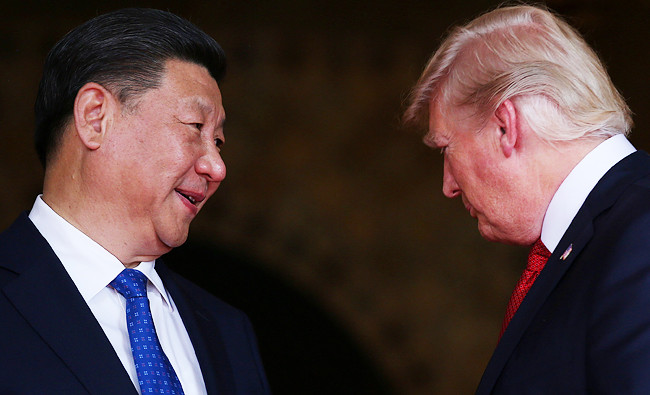
China’s strongman Xi Jinping meets his match in US President Donald Trump
China’s strongman Xi Jinping meets his match in US President Donald Trump
Latest updates


© 2026 SAUDI RESEARCH & PUBLISHING COMPANY, All Rights Reserved And subject to Terms of Use Agreement.