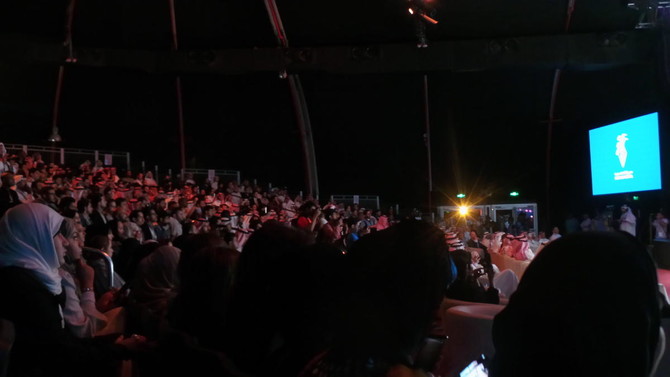
The fourth edition of the Saudi Film Festival kicked off in Dhahran this week and is set to screen 59 Saudi films as part of an initiative to recognize and nurture talented filmmakers in the country.
The event is organized by the Saudi Arabian Society for Culture and Arts, in association with the King Abdulaziz Center for World Culture and the Ministry of Culture and Information.
The Saudi Arabian Society for Culture and Arts is responsible for the preservation of Saudi culture and organized this event in order to develop the local art and culture scene, elevate the quality of Saudi movies and encourage young creative talents to exchange ideas.
The festival is part of a year-round plan that gives filmmakers the opportunity to learn directly from experienced local and international practitioners in the field and provides them with the infrastructure to showcase their films and interact with the public.
The four-day film festival will see filmmakers, producers, actors, film enthusiasts and members of the public come together to celebrate the development of the Saudi filmmaking industry. In total, 59 Saudi films will be screened during the festival and four prizes – for best narrative, best documentary, best scriptwriting and best student film — will be awarded at the end of the festival.
The members of the jury were introduced during the opening ceremony.
Those on the judging panel in the best narrative or feature film competition include artist Ahmed Mater, director Mohamed Rashid Bu Ali and artist Abdelmajeed AlKanani.
In the documentary category, director Awad Alhamzani, writer Hessam Alhilwa and director Nujoom Al Ghanem will judge the entrants.
The scriptwriting awardee will be decided by author Mohammed Alshaier, writer Hassan Hadad and writer Manal Alawibeel.
Meanwhile, the student film competition will be judged by director Hind Alfahhad, artist Khaled Ameen and director Fatima Musharbak.
Members of the festival’s advisory committee were also introduced and include entrepreneur Qusoura Khatib, executive director of “Three Seas” Alaa Youssef, film director Badr Al Hamoud and photographer Awad Al Hamzani.
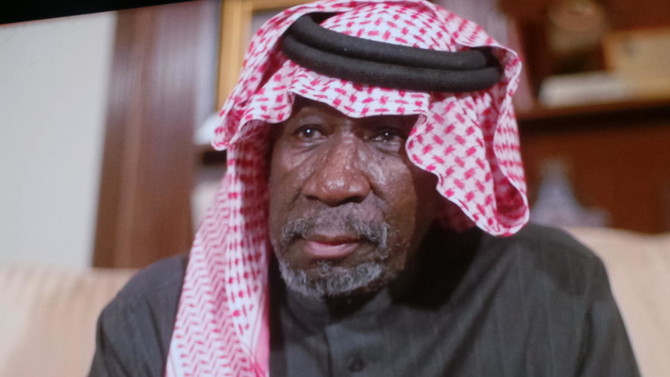
Renowned Saudi director Saad Khadr — who is famous for playing the role of “Faraj Allah” — was presented with a Golden Palm award during the ceremony, celebrating the exemplary role-model that he represents for young filmmakers.
The films run from 10 to 30 minutes, with a new category of films introduced this year— the 50-minute movies. Films will be screened each day at 4 p.m. and will continue up until 10 pm. The festival includes workshops, seminars and networking opportunities, as well as a school-friendly morning program which is held in partnership with the Sharjah Children’s Film Festival.
Some of the workshops set to be conducted this year include “Fundamentals of 3-D Graphic Design” led by director Raed Al Sheikh and “Developing the Structure of the Story and the Development of Personality” by Alexander Woodman, a member of the faculty at the University of Prince Mohammed bin Fahd.
All films will be screened in their original language — either Arabic or English — with subtitles for Arabic movies. The films will be screened in Ithra Tent 1 and Outdoor Screening Area 3 in Ithra, Dhahran.


Saudi Film Festival rolls out the red carpet in Dhahran
Saudi Film Festival rolls out the red carpet in Dhahran



SR 4.5bn raised from 135m donations through the Saudi Ehsan charity platform in 2025
- More than 330m donations made on the platform over past 5 years worth a total of SR14bn, officials reveal in run-up to 6th National Campaign for Charitable Work
- In addition, the Jood Eskan platform that helps low-income families secure housing has raised SR5bn from 4.5m donors since its launch in 2019
RIYADH: Ahead of the launch on March 3 of the sixth National Campaign for Charitable Work on the Ehsan platform, officials on Monday revealed that more than SR4.5 billion ($1.2 billion) was donated through the platform in 2025 alone.
Abdullah Alghamdi, president of the Saudi Data and Artificial Intelligence Authority, said there were 135 million donations last year worth a total daily average of SR12.45 million, compared with about SR2.8 million during the platform’s first campaign in 2021.
Over the past five years, he added, more than 330 million donations have been made through Ehsan, worth a total of SR14 billion.
The platform was built on three main pillars, Alghamdi said: reliability, transparency and ease of use. It uses advanced data analytics and artificial intelligence to verify beneficiary eligibility and prevent duplication of support, he added, and a donation can be completed in less than five seconds.
It was built to “humanize the donation journey,” he said, by ensuring donors can see the direct effects of their contributions, and operates under a framework of governance that includes 13 supervisory entities and five subcommittees.
The Ehsan Waqf Fund, which was introduced to ensure long-term sustainability, so far has collected SR2.2 billion of a SR5 billion target, Alghamdi said.
Majed Al-Hogail, the minister of municipalities and housing, highlighted the expanding role of nonprofit organizations in the housing sector in particular. More than 313 nonprofits now operate within the system, he said, supported by more than 345,000 volunteers working alongside public and private organizations.
Housing initiatives have helped support more than 106,000 families eligible for assistance, he added, and prevented more than 200,000 households from losing their homes. In addition, a rent-support program is assisting about 6,600 families this year, “expanding the reach of support to more households.”
The Jood Eskan housing platform, which enables donors to help people on low incomes secure housing, began by supporting 100 families and now serves more than 50,000 across the Kingdom, Al-Hogail said. Since its launch in 2019, more than 4.5 million donors have contributed more than SR5 billion to housing initiatives, he added.
“This transformation is the result of cumulative efforts built on clear governance, precise eligibility criteria, and electronic integration with relevant entities,” Al-Hogail said.
He also highlighted digital-transformation efforts designed to accelerate the provision of assistance, including the linking of a debt defaulters support platform to the Ministry of Justice, which has reduced processing times for cases from a month to 19 days. Meanwhile an electronic signature service cut the processing time for property-ownership procedures from 14 days to just two.
“In 2025, more than 150,000 digital operations were implemented and the needs of over 400,000 beneficiary families were studied through the integration of national databases,” Al-Hogail said.


