FRANKFURT AM MAIN: Former Royal Air Force airman Paul Hughes never imagined saying it, but he admits that he was almost “ashamed of my fellow countrymen” when Britons voted to leave the EU last June.
“I was devastated,” he tells AFP.
Since the fateful referendum last summer, 34-year-old Hughes — along with a growing fraction of the roughly 106,000 British citizens in Germany — has taken the unexpected step of applying for German citizenship.
“I’d prefer not to have to go through the process and the rigmarole of doing it, but I want to keep the rights and the ability to travel within Europe,” he explains.
Over the past three and a half years, the former serviceman has made extensive use of the EU freedom to live and work in any of the bloc’s 28 member countries, moving with his German wife first to Amsterdam and then to Wiesbaden, near Frankfurt.
But that freedom has come under a cloud in recent weeks, as the British government has refused calls to guarantee the rights of EU citizens to remain in Britain once Brexit goes ahead.
That leaves unresolved the question of a reciprocal guarantee from Brussels for the roughly one million Brits living in other EU countries.
Hughes says he realized that in London, “nobody’s looking out for us, nobody cares” — prompting his first visit to the immigration office.
Authorities in Hamburg, Berlin, Bavarian capital Munich and the federal state of Hesse told AFP growing numbers of Brits are doing the same.
So long as Britain remains an EU member, those who don’t want to give up their allegiance to Queen and country can become dual citizens, adding a German passport emblazoned with the austere federal eagle to the UK’s lion-and-unicorn coat of arms.
But Germany does not allow dual citizenship for non-EU nationals, except in certain circumstances: such as children with one German and one foreign parent or descendants of those persecuted by the Nazis.
That window of acquiring a second passport is therefore fast closing as Prime Minister Theresa May is set to trigger two-year exit negotiations this month.
“I wouldn’t give up my citizenship,” says former airman Hughes, thinking of his medals and service history in Iraq.
Nevertheless, he says that the Brexit vote has made him less likely to move back in the near future.
When he visits family and friends in Swindon, “we can’t talk about Brexit around the table, because it turns into a fight.”
The subject is touchy enough that Hughes has so far avoided bringing up his plan to become German on visits back to the UK.
German citizenship in particular throws up challenging questions for modern-day Brits.
Hamburg-based journalist, author and translator Brian Melican recounts how friends in France and the UK — countries with deep memories of war with Germany — noticed he had begun saying “we” when referring to his adopted homeland.
New Germans “take on not guilt but responsibility” for their country’s inescapable history, the 32-year-old feels. “It’s changed the way I view myself.”
Living in Germany for nine years and fluent in the language, Melican’s intention to apply for citizenship crystallized when then-Prime Minister David Cameron claimed a surprise majority in 2015 elections, after promising voters a referendum on EU membership.
He found himself at a naturalization ceremony by December that year.
“I certainly feel less British now” he muses. “It’s just a big change, it’s on a par with marriage and having children. It’s one of the biggest changes of status you can have.”
A big part of the sense of responsibility the naturalization process hammered home is engaging with politics and civil society.
“Now I’m observing elections as somebody who will be taking people at their word. It’s made me take more of a stake here,” he says.
For 39-year-old teacher and translator Becky Allenby, there were two very important reasons why she applied for German citizenship — her children.
“They were born here and they would say to people that they’re German,” the Berlin resident of nine years’ standing explains.
“I wanted them to have the paper that went with their emotional attachment.”
Before last June, questions of national identity were not pressing for Allenby, her two young sons, and her Australian-born partner, all Britons.
“Before, as a European citizen, I could juggle my world, my family, my friends, and my neighborhood, and it’s all fine. And it’s like suddenly with Brexit someone drew a line across all that,” she goes on.
Allenby too has avoided discussing the process with her Brexit-supporting parents — although not for fear of hostility to Germany.
“They just want their grandkids to be British, and they would also love us to go back,” she says.
Even if the family does return, their dual nationality will just formalize something Allenby already feels before getting her German papers.
“Part of me will always feel German now,” she says.
“I’ve lived such crucial years of my life here — I will always feel like I’ve got one foot in both places.”


![]()
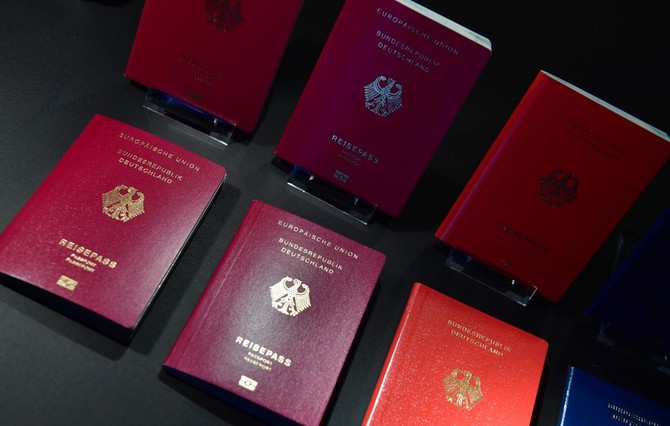

Brits in Germany put down roots to weather Brexit
Brits in Germany put down roots to weather Brexit

Asia rings in 2026 and Australia is defiant after its worst mass shooting
- Australia holds defiant celebrations after its worst mass shooting in nearly 30 years
- Hong Kong holds a subdued event after a deadly fire in tower blocks
MELBOURNE, Australia: Auckland was the first major city to ring in 2026 with a fireworks display launched from New Zealand’s tallest structure, Sky Tower, followed by a defiant celebration in Australia in the aftermath of its worst mass shooting.
South Pacific countries were the first to bid farewell to 2025. Clocks stuck midnight in Auckland 18 hours before the famous ball drop in New York’s Times Square. The five-minute display involved 3,500 fireworks.
Defiant celebration in Australia after worst mass shooting
Australia’s east coast welcomed 2026 two hours after New Zealand. In Sydney, the country’s largest city, celebrations were held under the pall of Australia’s worst mass shooting in almost 30 years. Two gunmen targeted a Hannukah celebration at Bondi Beach on Dec. 14, killing 15 and wounding 40.
A heavy police presence monitored the thousands who thronged to the waterfront to watch a fireworks show centered on the Sydney Harbor Bridge. Many officers openly carried rapid-fire rifles, a first for the annual event.
An hour before midnight, the massacre victims were commemorated with a minute of silence while images of a menorah were projected on the bridge pylons. The crowd was invited to show solidarity with Australia’s Jewish community.
New South Wales Premier Chris Minns urged Sydney residents not to stay away through fear, saying extremists would interpret smaller crowds at New Year’s Eve festivities as a victory.
“We have to show defiance in the face of this terrible crime and say that we’re not going to be cowered by this kind of terrorism,” he said.
Indonesia and Hong Kong hold subdued events
In Indonesia, one of Australia’s nearest neighbors, cities scaled back festivities as a gesture of solidarity with communities devastated by floods and landslides that struck parts of Sumatra island a month ago, claiming more than 1,100 lives.
The capital, Jakarta, was not ringing in 2026 with its usual fanfare, choosing subdued celebrations with a program centered on prayers for victims, city Gov. Pramono Anung said last week.
Makassar Mayor Munafri Arifuddin urged residents of one of Indonesia’s largest cities to forgo parties, calling for prayer and reflection. “Empathy and restraint are more meaningful than fireworks and crowds,” he said.
Concerts and fireworks on Indonesia’s tourist island of Bali were canceled and replaced with a cultural arts event featuring traditional dances.
Hong Kong, too, was ringing in 2026 without the usual spectacle in the sky over iconic Victoria Harbor, after a massive fire in November killed at least 161 people.
The facades of eight landmarks were turning into giant countdown clocks presenting a three-minute light show at midnight.
Many parts of Asia welcome the new year by observing age-old traditions.
In Japan, crowds were gathering at a Buddhist temple in Tokyo for a bell striking at midnight. In the South Korean capital, Seoul, a bell tolling and countdown ceremony were being held at the Bosingak Pavilion.
Berliners celebrate in snowfall
Tourists and Berliners alike marked the end of 2025 by enjoying snowfall, taking selfies and making snowmen in front of the German capital’s cathedral and the iconic Brandenburg Gate. The Berlin TV Tower was nearly invisible thanks to the falling flakes and fog.
Quieter celebrations in Greece and Cyprus
Greece and Cyprus were ringing in 2026 by turning down the volume, replacing traditional fireworks with low-noise pyrotechnics, light shows and drone displays in capital cities. Low-noise fireworks avoid the explosive bursts that generate the loud cracks of traditional displays.
Officials in the countries said the change is intended to make celebrations more welcoming for children and pets, particularly animals sensitive to loud noise.
Additional security in New York City
Police in New York City will have additional anti-terrorism measures at the Times Square ball drop, with “mobile screening teams” in search of suspicious activity. It is not in response to a specific threat, according to NYPD Commissioner Jessica Tisch.
After the ball drops in Times Square, it will rise once again, sparking in red, white and blue, to mark the country’s upcoming 250th birthday celebration. It will be one of several patriotic flourishes throughout the night, organizers said.
Zohran Mamdani will take office as mayor at the start of 2026. Two swearing-in ceremonies are planned, starting with a private ceremonial event around midnight in an old subway station.
South Pacific countries were the first to bid farewell to 2025. Clocks stuck midnight in Auckland 18 hours before the famous ball drop in New York’s Times Square. The five-minute display involved 3,500 fireworks.
Defiant celebration in Australia after worst mass shooting
Australia’s east coast welcomed 2026 two hours after New Zealand. In Sydney, the country’s largest city, celebrations were held under the pall of Australia’s worst mass shooting in almost 30 years. Two gunmen targeted a Hannukah celebration at Bondi Beach on Dec. 14, killing 15 and wounding 40.
A heavy police presence monitored the thousands who thronged to the waterfront to watch a fireworks show centered on the Sydney Harbor Bridge. Many officers openly carried rapid-fire rifles, a first for the annual event.
An hour before midnight, the massacre victims were commemorated with a minute of silence while images of a menorah were projected on the bridge pylons. The crowd was invited to show solidarity with Australia’s Jewish community.
New South Wales Premier Chris Minns urged Sydney residents not to stay away through fear, saying extremists would interpret smaller crowds at New Year’s Eve festivities as a victory.
“We have to show defiance in the face of this terrible crime and say that we’re not going to be cowered by this kind of terrorism,” he said.
Indonesia and Hong Kong hold subdued events
In Indonesia, one of Australia’s nearest neighbors, cities scaled back festivities as a gesture of solidarity with communities devastated by floods and landslides that struck parts of Sumatra island a month ago, claiming more than 1,100 lives.
The capital, Jakarta, was not ringing in 2026 with its usual fanfare, choosing subdued celebrations with a program centered on prayers for victims, city Gov. Pramono Anung said last week.
Makassar Mayor Munafri Arifuddin urged residents of one of Indonesia’s largest cities to forgo parties, calling for prayer and reflection. “Empathy and restraint are more meaningful than fireworks and crowds,” he said.
Concerts and fireworks on Indonesia’s tourist island of Bali were canceled and replaced with a cultural arts event featuring traditional dances.
Hong Kong, too, was ringing in 2026 without the usual spectacle in the sky over iconic Victoria Harbor, after a massive fire in November killed at least 161 people.
The facades of eight landmarks were turning into giant countdown clocks presenting a three-minute light show at midnight.
Many parts of Asia welcome the new year by observing age-old traditions.
In Japan, crowds were gathering at a Buddhist temple in Tokyo for a bell striking at midnight. In the South Korean capital, Seoul, a bell tolling and countdown ceremony were being held at the Bosingak Pavilion.
Berliners celebrate in snowfall
Tourists and Berliners alike marked the end of 2025 by enjoying snowfall, taking selfies and making snowmen in front of the German capital’s cathedral and the iconic Brandenburg Gate. The Berlin TV Tower was nearly invisible thanks to the falling flakes and fog.
Quieter celebrations in Greece and Cyprus
Greece and Cyprus were ringing in 2026 by turning down the volume, replacing traditional fireworks with low-noise pyrotechnics, light shows and drone displays in capital cities. Low-noise fireworks avoid the explosive bursts that generate the loud cracks of traditional displays.
Officials in the countries said the change is intended to make celebrations more welcoming for children and pets, particularly animals sensitive to loud noise.
Additional security in New York City
Police in New York City will have additional anti-terrorism measures at the Times Square ball drop, with “mobile screening teams” in search of suspicious activity. It is not in response to a specific threat, according to NYPD Commissioner Jessica Tisch.
After the ball drops in Times Square, it will rise once again, sparking in red, white and blue, to mark the country’s upcoming 250th birthday celebration. It will be one of several patriotic flourishes throughout the night, organizers said.
Zohran Mamdani will take office as mayor at the start of 2026. Two swearing-in ceremonies are planned, starting with a private ceremonial event around midnight in an old subway station.
Latest updates


© 2025 SAUDI RESEARCH & PUBLISHING COMPANY, All Rights Reserved And subject to Terms of Use Agreement.