RIYADH: A senior Pakistani official said that Saudi Arabia and Pakistan will work closely within the framework of the Saudi Vision 2030 to provide the momentum to propel the Saudi nation toward a new era of prosperity.
Tariq Fatemi, special assistant to the Pakistani prime minister on foreign affairs, said: “Pakistan, which has a lot to offer, is currently talking to Saudi Arabia on a range topics for cooperation.”
Fatemi, who delivered a key lecture on diplomacy with special reference to Saudi-Pakistani ties, said that the two countries have had an “element of trust,” which helps them to strengthen the ties year on year. Fatemi was visiting the Kingdom in response to an invitation from Adel Al-Jubeir, foreign minister. Mohammed Hassan Wazir, charge d’affaires at the Pakistan Embassy, was also present during Fatemi’s discussion with local press at the Pakistan Embassy.
Fatemi said the two countries have had substantial cooperation in “counter-terrorism, security and intelligence sharing.” Now, Riyadh and Islamabad would identify new areas of economic cooperation that will further boost commercial links. He pointed out that “Pakistan’s economy is projected to grow by 5.5 percent next year, and by 6 percent in the year after.
“In terms of power generation, the Pakistani government is working on several projects,” said Fatemi, while adding that “about 9,000 megawatts will be added to the national grid by March 2018.”


Saudi Arabia, Pakistan to work closely within ‘Vision 2030’
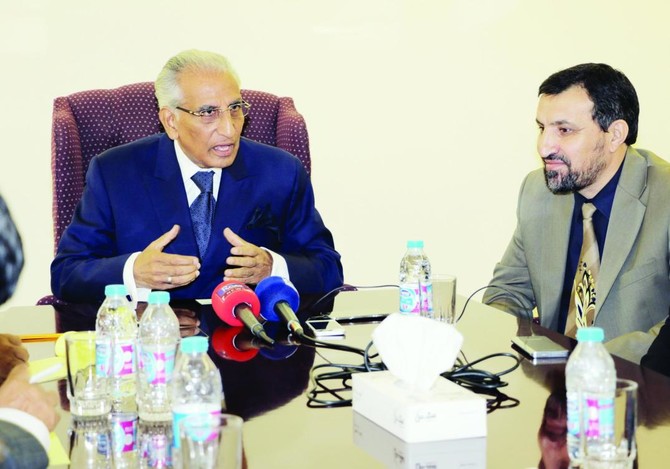
Saudi Arabia, Pakistan to work closely within ‘Vision 2030’

SDAIA president says Saudi Arabia is building an integrated AI ecosystem
RIYADH: Saudi Data and Artificial Intelligence Authority President Abdullah Al-Ghamdi says that Saudi Arabia is moving steadily to establish artificial intelligence as a trusted national capability, the Saudi Press Agency reported.
Guided by the objectives of Saudi Vision 2030, Al-Ghamdi said the goal is to use AI to help develop government services, enhance competitiveness, build human capacity and improve quality of life through a comprehensive strategy based on three main pillars that unlock the potential of this technology and achieve sustainable developmental impact.
“The first pillar focuses on building human capacity and enhancing readiness to engage with AI technologies,” he said.
The second pillar is building an integrated national AI ecosystem that drives expansion and innovation by developing advanced digital infrastructure that enables various sectors to adopt AI applications efficiently, consistently and with effective governance, Al-Ghamdi said.
The third pillar, he said, is governance that ensures responsible and measurable AI through a national framework aligned with international standards.
This came during Al-Ghamdi’s speech at a high-level ministerial session held on Thursday on the sidelines of the AI Impact Summit 2026 in New Delhi.
He is heading the Saudi delegation, and the session saw broad participation from heads of state, decision-makers and technology leaders from around the world.
Al-Ghamdi also had a meeting with Indian Prime Minister Narendra Modi on Thursday evening, discussed AI cooperation and expressed his gratitude for hosting the summit and for the hospitality extended to the participants.