AMMAN: Houthi “interference” has prompted Doctors Without Borders to start withdrawing from a hospital in Yemen, a senior official said.
The military presence at the Al-Thawra hospital, in the governorate of Ibb, is violating the sanctity of the medical profession, the official told Arab News.
The Houthi presence has prompted Doctors Without Borders, which is known by its French acronym MSF, to terminate provision of services and withdraw from the hospital.
Speaking by phone from Zurich, the organization’s deputy director, medical doctor Tammam Al-Oudat, said the Houthis continue to obstruct the work of the MSF teams, as well as of other medics operating at the hospital.
This is impeding them from performing their duties and from providing proper medical services to patients, he said.
“We have asked the (Houthi militias) to guarantee full and free access to patients to hospitals, as well as end the military presence in the hospital and stop interfering with the medics’ decision-making process,” Al-Oudat told Arab News.
“They refused to meet our demands and therefore the MSF decided to gradually end its services and leave the hospital over the next three months.”
Meanwhile, the Yemeni press quoted Local Affairs Minister Abdul Raqib Fattah as saying that Houthi militia had broken into the Al-Thawra hospital and threatened workers at gunpoint.
He called on relevant UN organizations to condemn Houthi aggression against the medical teams in areas under their control.
Al-Oudat said MSF medical teams will continue to provide medical services to locals in the Al-Shifa hospital, in the same governorate, which receives patients from Taiz.
According to Al-Oudat, the Al-Thawra hospital will continue to operate, but under the supervision and administration of Yemeni medical staff.
The MSF has been working at the hospital since 2015.
Al-Oudat said that over the past month, MSF has received over 41,000 patients at the Al-Thawra hospital, with more than 50,000 surgeries conducted on citizens from across Yemen since the war broke out nearly two years ago.
MSF teams are also providing medical services to Yemenis in eight governorates across Yemen.
Access to quality, affordable health care is severely compromised, Al-Oudat said, and after almost two years of war, humanitarian and medical aid is still failing to meet people’s most basic needs.
In a separate development, a Saudi soldier was killed by a missile fired by the Houthis that struck a military base near the border, the Interior Ministry said Friday.
The missile was launched late Thursday from a rebel-controlled area in Yemen and hit a base in Dhahran South, killing border guard Atallah Yassine Al-Anzi, according to a statement carried by the Saudi Press Agency (SPA).


![]()
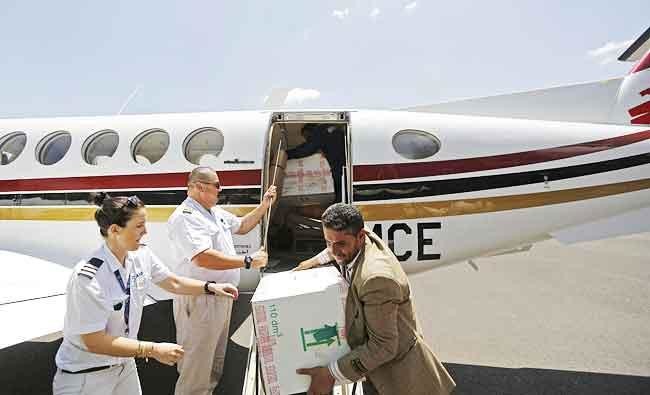
MSF leaving Yemen hospital where Houthis ‘threatened workers at gunpoint’
MSF leaving Yemen hospital where Houthis ‘threatened workers at gunpoint’



Latest updates




© 2026 SAUDI RESEARCH & PUBLISHING COMPANY, All Rights Reserved And subject to Terms of Use Agreement.