SANAA: Yemen’s war has killed around 7,700 people and wounded 42,500 others, according to UN figures, since a Saudi-led Arab coalition intervened in support of the government two years ago.
The conflict underscores the regional rivalry between Iran, a supporter of Yemen’s Shiite Houthi rebels, and Saudi Arabia, which heads the nine-member coalition. An overview:
• On March 26, 2015, the coalition launches operation “Decisive Storm” with airstrikes on Houthi rebels to defend embattled President Abedrabbo Mansour Hadi, who seeks shelter in Riyadh. The coalition also comprises the Gulf countries Bahrain, Kuwait, Qatar and the UAE along with Egypt, Jordan, Morocco and Sudan. A month later, it is renamed operation “Restoring Hope.” The goal is to defeat the Shiite rebels who have controlled the capital since September 2014 in addition to large swathes of land in northern, central and western Yemen.
• On July 17, 2015, the government announces the liberation of southern Aden province after more than four months of fighting; in August 2015, the coalition supplements its air power with hundreds of ground troops; by mid-August, loyalist forces have retaken the south, but face a growing presence of militants from Al-Qaeda and Daesh.
• In February 2016, Riyadh says loyalist forces control “more than three quarters” of Yemen, despite trouble advancing in the southwestern province of Taiz and in Marib, central Yemen. Three months of UN-brokered peace talks in Kuwait end in stalemate, and coalition aircraft resume strikes on Sanaa on Aug. 9, 2016.
• On Jan. 7, pro-government troops backed by coalition planes and ships launch operation “Golden Spear” around the strategic Bab Al-Mandab Strait, between the Red Sea and the Gulf of Aden.
• The UN and US organize three rounds of fruitless peace talks, in June and December 2015 in Switzerland and in April 2016 in Kuwait.
Seven truces are agreed, but all broken.
The severing in January 2016 of diplomatic relations between Saudi Arabia and Iran complicates the task for diplomats.
• The internationally-recognized government, led by Hadi, establishes a “provisional” base in the port city of Aden in late September 2016.
Two months later, the rebels and allied forces of former President Ali Abdullah Saleh form a government of their own in Sanaa, dousing hopes of a UN-brokered national unity government.
• On Sept. 28, 2015, an airstrike smashes a wedding hall in southwestern Mokha, killing 131 people. The coalition denies responsibility.
On Aug. 15, 2016, a coalition planes bomb a hospital in Abs, northwestern Yemen, the fourth strike in a year on a medical facility run by the non-governmental organization Medecins Sans Frontieres (MSF), or Doctors Without Borders. MSF says 19 people died and 24 were wounded.
• On Oct. 8, 2016, an airstrike kills 140 people and wounds 525 others at a funeral in Sanaa. The coalition belatedly acknowledges responsibility. Washington steps up airstrikes against Al-Qaeda in the Arabian Peninsula (AQAP), which has benefitted from the chaos to gain influence.
• AQAP loses territory to the Daesh which on March 20, 2015 claims responsibility for the first time for attacks against two Shiite mosques in Sanaa that kill 142 people.
A botched Jan. 29 anti-AQAP raid by US special forces results in the deaths of a US Navy SEAL and multiple civilians — including women and children.
According to the UN, the fighting has displaced more than three million people, and more than two thirds of Yemen’s population of around 18.8 million people need aid.
Some 7.3 million people are estimated to be close to starvation and 462,000 children suffer from serious malnutrition. Without $2.1 billion in international aid, the UN warns that Yemen will suffer a famine in 2017.


![]()
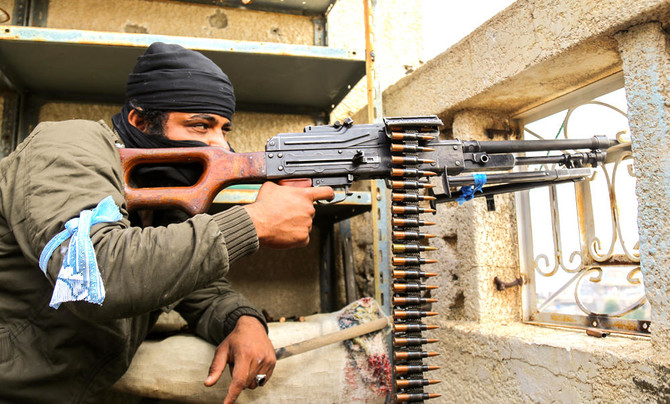
Yemen war leaves 7,700 dead: UN
Yemen war leaves 7,700 dead: UN
Latest updates


© 2026 SAUDI RESEARCH & PUBLISHING COMPANY, All Rights Reserved And subject to Terms of Use Agreement.