


RIYADH: Saudi Arabia is moving toward achieving its ultimate goal of becoming not only a world leader, but also an exporter of renewable energy with government investments of $30-$50 billion by 2023.
As the Kingdom moves to reduce its reliance on oil as the main source of energy, turning the National Renewable Energy Program’s (NREP) objectives into reality is increasingly becoming a necessity.
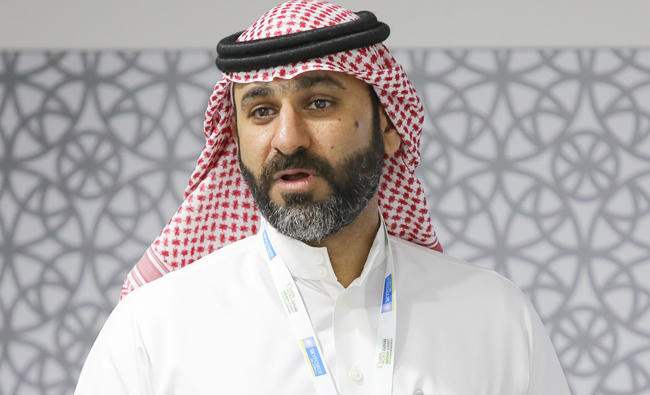
The program comes at a time when “everybody wants to get into clean energy” making it a good time to invest more in it, Turki Al-Shehri, head of the NREP told Arab News.
“The Kingdom came at a very good time because renewables is competitive today. It will come in at competitive prices… The framework is in place. There is obviously room for further development and further knowhow, (but) this is the time to capture all this… to become a global leader in renewables,” he added.
Energy Minister Khalid Al-Falih launched the NREP in July 2016. The program, which falls under the Ministry of Energy, Industry and Mineral Resources, is working toward achieving the target of 3.45 Gigawatts (GW) of renewables by 2020 and 9.5GW by 2023 stipulated in Saudi Vision 2030
Al-Shehri said that although the move was recently highlighted in Vision 2030, Saudi Arabia began experimenting in renewables in the 1970s, starting with solar energy. “We (Saudi Arabia) were among the first to get into renewables,” he said.
Back then, renewables as an industry was expensive and the technology was developing, but times have changed as it has garnered global interest.
The ministry works with organizations that have already been involved in projects in the same field. These include King Abdullah City for Atomic and Renewable Energy (KACARE), King Abdullah City for Science and Technology (KACST), Aramco, the Saudi Electricity Co. (SEC), and the Electricity and Cogeneration Regulatory Authority (ECRA).
Al-Shehri said Al-Falih “united all these efforts.” Last July, a framework was formulated on how exactly the program was to be executed.
“The execution phase will take us to a new level that we need to get to in order to further build our capabilities,” the NREP chief said.
As the project is still in its early stages, communication is taking place with local and international parties that can contribute to it. The ministry was accepting proposals for its first round of requests for qualifications (RFQ) until today.
Last month, Renewable Energy Project Development Office (REPDO) provided an opportunity for regional and international developers with expertise in renewables to contribute to the NREP by bidding for 700 megawatts (MW) of the project. Over 400 candidates from some 35 countries have registered so far.
After announcing the first round of RFQ in February, Al-Falih said at a press conference: “It is our goal to make the National Renewable Energy Program among the most attractive, competitive and well-executed government renewable energy investment programs in the world, and we have all the necessary infrastructure in place to ensure that is the case.”
The pre-qualified bidders will be announced on April 10 before they enter the first round of the request for proposal (RFP) stage. The winning bidders are expected to be awarded in September.
Types of renewable energy
The $30-$50 billion investment includes all types of technologies and infrastructure required for renewables.
“Because Saudi Arabia is mostly a sunny country, people think it is only solar, but the city of Midyan (in the Eastern Province) is one of the top sites on a global scale for wind,” Al-Shehri said.
Two wind turbine project have already been initiated, one by Aramco and another by the SEC. “These are part of the test pilots in the Kingdom that will further reinforce the overall program,” he said.
“There will always be a need for hydrocarbons. There will always be a need for fossil fuels, whether it is gas or heavy fuel oils, because renewables are still developing technology,” he added.
“They will complement each other in meeting our future demand and growing development… We need to maximize what we have in the Kingdom from hydrocarbons to renewables.”
Renewables: A job creator
As the renewables program moves toward its target, the need for qualified human capital increases.
Al-Shehri said a scholarship program would be launched in this regard. Eventually, the goal is to have the private sector take the lead in renewables, he added.
The government creates the policy, framework and planning, and the private sector will develop this in the near future.
“So we hope to see lots of job opportunities in the upcoming years for renewables,” he said.
“The program has expertise from several backgrounds, including engineering, science, finance, economics and computer science.”
The industry will also offer opportunities for women, as the program leader said at least five or six female engineers are already involved in the project.
“The opportunities are open to both men and women… and it is not restricted to one type of degree. Different skills can be used in renewables,” he added.
According to a 2016 report by the International Renewable Energy Agency (IRENA), achieving Gulf Cooperation Council (GCC) renewable energy targets could create an average of 140,000 direct jobs per year.
Challenges
Saudi Arabia is working toward localizing a big portion of the renewable energy sector, from the research phase to implementation.
Vision 2030 states: “We will also seek to localize a significant portion of the renewable energy value chain in the Saudi economy, including research and development, and manufacturing, among other stages.”
This comes as a challenge, as the program is still in its early stages and international expertise is still required.
“It is challenging to have manufacturing facilities because they don’t exist today, but once (they) are developed, that means we’ve met our objective,” Al-Shehri said. “We have lots of enablers that will help us meet these challenges.”
Universities, such as King Abdullah University of Science and Technology (KAUST), King Fahd University of Petroleum and Minerals (KFUPM) and King Abdulaziz University (KAU) are the local research and development hubs for the renewables program. These entities can work with the ministry to form and create research initiatives related to the Kingdom.
“We rely on their support in creating solutions that suit the Kingdom’s needs,” Al-Shehri said, adding that there is an enormous opportunity for learning and development.
“The sooner we start, the sooner we have people involved and the sooner we get everyone on board, the sooner we’ll be able to meet our goals.”


