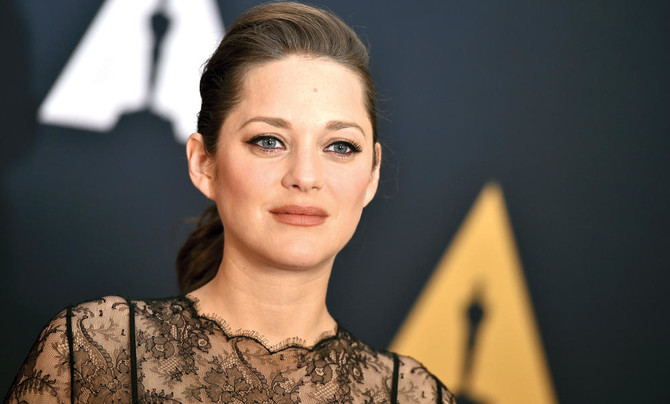
LOS ANGELES: Marion Cotillard is now a mother of two.
The French actress’ representative has confirmed a People magazine report that she and partner Guillaume Canet have welcomed a daughter. The couple also has a 5-year-old son.
The 41-year-old Cotillard has not revealed the baby’s name.
Cotillard starred alongside Canet in the French-Belgian film “Love Me If You Dare” in 2003. They began dating in 2007.
Cotillard announced that she was expecting in a September Instagram post and called Canet “my love, my best friend, the only one that I need.”
Last year, Marion insisted she was not offended by the Brad Pitt affair rumors.
Marion was forced to speak out to address speculation about her closeness to her Allied co-star when he split from wife Angelina Jolie in September, but she never took the gossip “personally” because she had “nothing to do” with the situation.

Marion Cotillard, partner welcome baby girl
Makkah museum displays world’s largest Qur’an
MAKKAH: The Holy Qur’an Museum at the Hira Cultural District in Makkah is showcasing a monumental handwritten copy of the Holy Qur’an, recognized as the largest Qur’an of its kind in the world.
The manuscript measures 312 cm by 220 cm and comprises 700 pages, earning the museum recognition from Guinness World Records for displaying the world’s largest Qur’an, the Saudi Press Agency reported.
The manuscript is a magnified reproduction of a historic Qur’an dating back to the 16th century, the SPA stated.
The original copy measures 45 cm by 30 cm, with the chapters written primarily in Thuluth script, while Surah Al-Fatiha was penned in Naskh, reflecting the refined artistic choices and calligraphic diversity of the era.
The Qur’an is a unique example of Arabic calligraphy, gilding and bookbinding, showcasing Islamic art through intricate decorations, sun-shaped motifs on the opening folio, and elaborately designed frontispiece and title pages that reflect a high level of artistic mastery.
The manuscript was endowed as a waqf in 1883. Its original version is currently preserved at the King Abdulaziz Complex for Endowment Libraries, serving as a lasting testament to Muslims’ enduring reverence for the Qur’an and the richness of Islamic arts across the centuries.