GENEVA: As Britain prepares to leave the EU, some carmakers are considering softening the blow of any tariffs by sourcing more parts locally and producing more models they can sell domestically rather than export.
Eighty percent of UK-assembled vehicles are exported and they could face tariffs of up to 10 percent if Britain has to fall back on World Trade Organization (WTO) rules, with some components subject to multiple varying tariffs each time they cross a border.
“If we do find there are tariffs on sending cars out, or there are tariffs on bringing components in, then that would be a motivator to repatriate some component production to the UK,” McLaren Automotive Chief Executive Mike Flewitt told Reuters at the Geneva motor show.
The country’s largely foreign-owned car industry is due to hit a record high production of around 2 million units by the turn of the decade, making it one of Europe’s largest, and some firms have warned tariffs could push production abroad.
The sector is a major employer which British Prime Minister Theresa May has pledged to champion in the Brexit negotiations with the EU she plans to trigger this month; executives are concerned uncertainty could persist beyond the two-year process.
A local sourcing push would help mitigate some of the risks of leaving the EU’s single market and be a bonanza for smaller UK parts makers but a headache for international suppliers, whose manufacturing footprints are reliant on free trade.
Only 41 percent of the parts in British-built cars are made within the country on average, less than the typical 50 to 55 percent local content requirement, which Britain would have to agree to in some bilateral trade deals. The proportion of parts sourced locally varies among automakers, making it easier for some to meet the “Made in Britain” threshold than others.
McLaren expects to reach a 58 percent “localization rate” by the end of the decade from around 50 percent now, under a plan that pre-dates the June Brexit vote. Jaguar Land Rover (JLR) also sources around half its content locally.
The level falls to less than 40 percent at German luxury carmaker BMW’s Mini plant in southern England, while Opel/Vauxhall Astras built in the UK contain only 25 percent British parts.
French carmaker PSA Group, which this week announced a deal to buy Opel and Vauxhall from General Motors (GM), said trade barriers in the event Britain loses access to the single market would push it to increase the percentage of local components.
“If it is a hard Brexit then of course the supplier base needs to be developed and I think this is something that the UK government completely understands,” Chief Executive Carlos Tavares told reporters in Geneva.
The jury is out on how feasible this might be.
Ralf Speth, the CEO of JLR, doubts Britain produces enough mass-market vehicles to attract the major supplier investments it would need to cross the 50 percent localization threshold. It and other carmakers have been slowly boosting UK parts content for years.
Britain’s Society of Motor Manufacturers and Traders (BSMMT), however, believes UK-built cars could source up to 80 percent of parts domestically. The fall in the pound since the Brexit referendum has raised import costs, adding a further incentive.
Matt Boyle, the chief executive of electrified powertrain specialist Sevcon, based in England’s northeast, said it had seen rising demand since the referendum and is able to respond quickly through the use of flexible third-party sites.
Over £4 billion ($4.9 billion) worth of components such as engine castings, steering systems and seat parts could be sourced in Britain, according to a joint industry-government report published in 2015, adding to roughly £10 billion currently spent by car firms on UK suppliers.


![]()
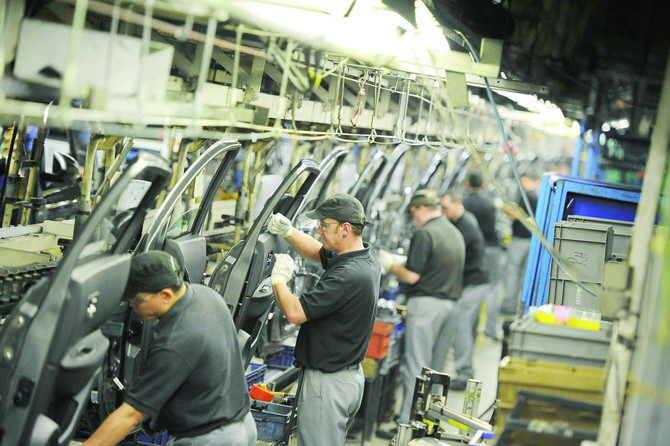
Carmakers eye more UK suppliers to handle Brexit
Carmakers eye more UK suppliers to handle Brexit
Latest updates


Recommended


© 2026 SAUDI RESEARCH & PUBLISHING COMPANY, All Rights Reserved And subject to Terms of Use Agreement.