



Girls learn ballet steps in conservative Upper Egypt

1 / 9
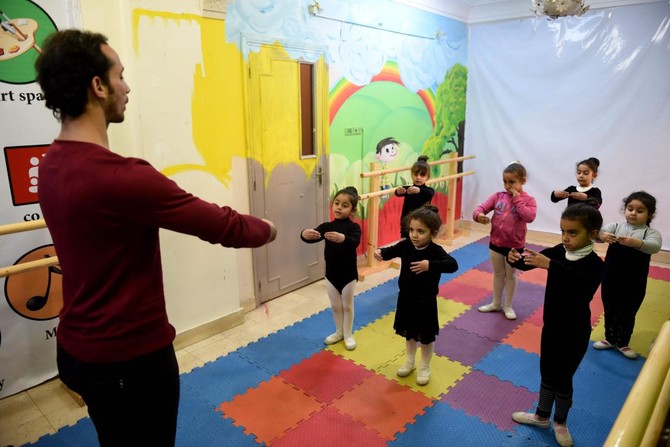
An Egyptian girl practices ballet moves as other classmates watch during her training at Alwanat Cutlural Center in the Upper Egyptian city of Minya. (AFP)
2 / 9
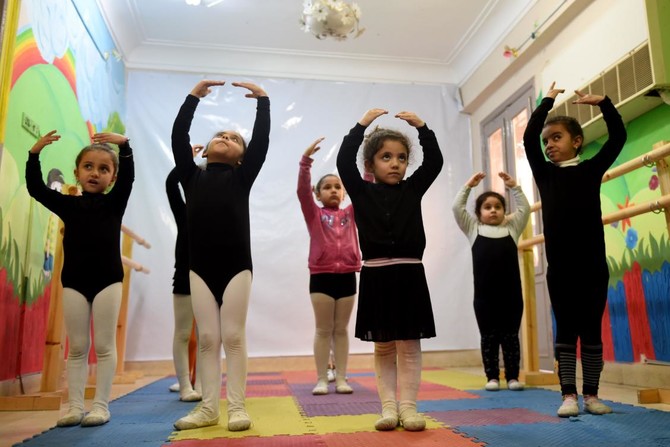
Egyptian girls practice ballet moves during their training at Alwanat Cutlural Center in the Upper Egyptian city of Minya. (AFP)
3 / 9
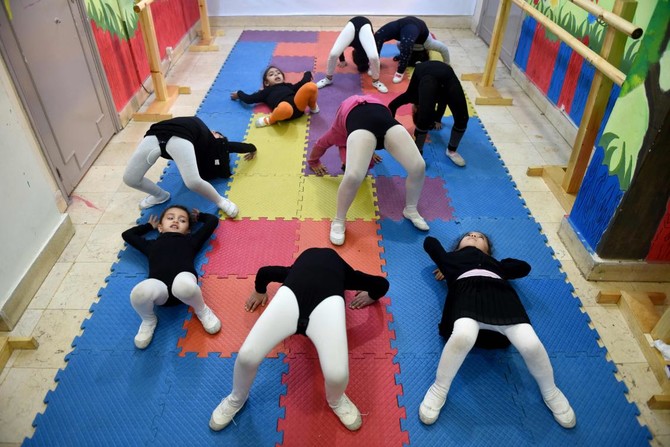
Egyptian girls practice ballet moves during their training at Alwanat Cutlural Center in the Upper Egyptian city of Minya. (AFP)
4 / 9
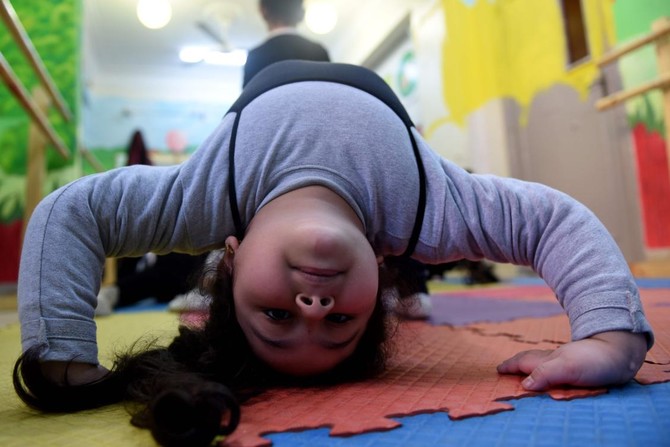
An Egyptian girl practices ballet moves during her training at Alwanat Cutlural Center in the Upper Egyptian city of Minya. (AFP)
5 / 9
An Egyptian girl practices ballet moves as other classmates watch during her training at Alwanat Cutlural Center in the Upper Egyptian city of Minya. (AFP)
6 / 9
Egyptian girls practice ballet moves during their training at Alwanat Cutlural Center in the Upper Egyptian city of Minya. (AFP)
7 / 9
Egyptian children sit during a ballet class at Alwanat Cutlural Center in the Upper Egyptian city of Minya, about 277 km south of the capital Cairo, on February 17. (AFP)
8 / 9
An Egyptian girl practices ballet moves as other classmates watch during her training at Alwanat Cutlural Center in the Upper Egyptian city of Minya. (AFP)
9 / 9
Egyptian girls practice ballet moves during their training at Alwanat Cutlural Center in the Upper Egyptian city of Minya. (AFP)
Updated 02 March 2017
Follow

Girls learn ballet steps in conservative Upper Egypt

EGYPT: In Egypt’s conservative southern province of Minya, young girls in black leotards and white tights wobble on their tip toes to classical music in a room painted with colorful motifs.
“Look forward, stretch your arms,” a male instructor calls out to the girls aged four and above.
They try to mimic their teacher, a professional ballet dancer from the capital, as he gracefully raises his arms over his head.
It’s a surprising scene in the traditional province, which more often makes headlines for family feuds or sectarian violence against its large Coptic Christian minority.
But the founders of the Alwanat Center in Minya city are determined to make it the first ballet school in the wider Upper Egyptian province of the same name.
“Society is a bit insular in Minya. They say there’s some extremism here,” says Marco Adel, one of the center’s founders.
“We want children to be more open to life, to like art,” says the 33-year-old law graduate, who is an avid drawer.
In the almost two years since ballet lessons started at the center, they have become a great success, with parents driving up to one hour from nearby towns to bring their children to lessons.
Christine Essam, whose daughter Eleina is learning ballet steps at the center, says she and her husband thought carefully about signing their four-year-old up for classes.
“Most people around us — whether family or friends — were against it. They’d say: ‘Couldn’t you find anything other than ballet?’“
“Girls in Upper Egypt are expected to wear modest clothes,” the 26-year-old pharmacist says, adding it is a “bit hard” to make dance socially acceptable.

Around 160 students aged four to 26 — including boys — now flock to lessons at the center, Adel says, up from 15 after classes were launched in May 2015.
Most Muslim girls and women who come to learn ballet wear a headscarf, he says, and they can choose to learn with one of the center’s three female instructors, including two who also don the Islamic hijab.
But for more than a month, the center has also had a male instructor.
Mamdouh Hassan, a professional dancer with the Cairo Opera Ballet Company, travels the 240 kilometers (150 miles) from Cairo every weekend to teach the next generation.
Adel says a few parents have complained about a man teaching their daughters, but eventually, the instructor was accepted.
“At first, we were a little surprised. But we were told he was very experienced and we trust the center,” Essam says.
Vivianne Sobhi, the mother of seven-year-old Farah, says social barriers have started to break down in Minya.
“These days girls go swimming in swimsuits,” the 27-year-old teacher says.
Running a ballet school hundreds of kilometers from the capital is not without its challenges.
Male instructor Hassan was once two hours late because the motorway from Cairo was closed due to fog, and the center had to order ballet shoes from the capital as none were available in the southern city.
Adel says the Alwanat Center — which also offers Zumba and music classes, as well as theater and cinema workshops — was born of “personal efforts.”
“But the culture ministry or sponsors are welcome to help,” Adel says, pointing to the center’s small rooms.
But parents seem happy.
As he helps his five-year-old daughter Heaven arch her back for a gymnastics move called a bridge, Adel Gerges says he is thrilled with her experience at the center.
“We were deprived of all of this during our childhood,” says the 35-year-old pharmacist.
“We won’t make the same mistake with our daughter.”


How Netflix won Hollywood’s biggest prize, Warner Bros Discovery

Updated 06 December 2025
Follow

How Netflix won Hollywood’s biggest prize, Warner Bros Discovery

  • Board rejected Paramount’s $30 a share bid amid funding concerns, sources say
  • Warner Bros board met daily before accepting Netflix’s binding offer

LOS ANGELES/NEW YORK: What started as a fact-finding mission for Netflix culminated in one of the biggest media deals in the last decade and one that stands to reshape the global entertainment business landscape, people with direct knowledge of the deal told Reuters. Netflix announced on Friday it had reached a deal to buy Warner Bros Discovery’s TV, film studios and streaming division for $72 billion. Although Netflix had publicly downplayed speculation about buying a major Hollywood studio as recently as October, the streaming pioneer threw its hat in the ring when Warner Bros Discovery kicked off an auction on October 21, after rejecting a trio of unsolicited offers from Paramount Skydance .
Details of Netflix’s plan and the Warner Bros board’s deliberations, based on interviews with seven advisers and executives, are reported here for the first time.
Initially motivated by curiosity about its business, Netflix executives quickly recognized the opportunity presented by Warner Bros, beyond the ability to offer the century-old studio’s deep catalog of movies and television shows to Netflix subscribers. Library titles are valuable to streaming services as these movies and shows can account for 80 percent of viewing, according to one person familiar with the business.
Warner Bros’ business units — particularly its theatrical distribution and promotion unit and its studio — were complementary to Netflix. The HBO Max streaming service also would benefit from insights learned years ago by streaming leader Netflix that would accelerate HBO’s growth, according to one person familiar with the situation. Netflix began flirting with the idea of acquiring the studio and streaming assets, another source familiar with the process told Reuters, after WBD announced plans in June to split into two publicly traded companies, separating its fading but cash-generating cable television networks from the legendary Warner Bros studios, HBO and the HBO Max streaming service.
Netflix and Warner Bros did not reply to requests for comment.
The work intensified this autumn, as Netflix began vying for the assets against Paramount and NBCUniversal’s parent company, Comcast.
Warner Bros kicked off the public auction in October, after Paramount submitted the first of three escalating offers for the media company in September. Sources familiar with the offer said Paramount aimed to pre-empt the planned separation because the split would undercut its ability to combine the traditional television networks businesses and increase the risk of being outbid for the studio by the likes of Netflix.
Around that time, banker JPMorgan Chase & Co. was advising Warner Bros Discovery CEO David Zaslav to consider reversing the order of the planned spin, shedding the Discovery Global unit comprising the company’s cable television assets first. This would give the company more flexibility, including the option to sell the studio, streaming and content assets, which advisers believed would draw strong interest, according to sources familiar with the matter.
Executives for the streaming service and its advisory team, which included the investment banks Moelis & Company, Wells Fargo and the law firm Skadden, Arps, Slate, Meagher & Flom, had been holding daily morning calls for the past two months, sources said. The group worked throughout Thanksgiving week — including multiple calls on Thanksgiving Day — to prepare a bid by the December 1 deadline.
Warner Bros’ board similarly convened every day for the last eight days leading up to the decision on Thursday, when Netflix presented the final offer that sources described as the only offer they considered binding and complete, sources familiar with the deliberations said.
The board favored Netflix’s deal, which would yield more immediate benefits over one by Comcast. The NBCUniversal parent proposed merging its entertainment division with Warner Bros Discovery, creating a much larger unit that would rival Walt Disney. But it would have taken years to execute, the sources said.
Comcast declined to comment.
Although Paramount raised its offer to $30 per share on Thursday for the entire company, for an equity value of $78 billion, according to sources familiar with the deal, the Warner Bros board had concerns about the financing, other sources said.
Paramount declined comment.
To reassure the seller over what is expected to be a significant regulatory review, Netflix put forward one of the largest breakup fees in M&A history of $5.8 billion, a sign of its belief it would win regulatory approval, the sources said. “No one lights $6 billion on fire without that conviction,” one of the sources said.
Until the moment late on Thursday night when Netflix learned its offer had been accepted — news that was greeted by clapping and cheering on a group call — one Netflix executive confided that they thought they had only a 50-50 chance.