


JEDDAH: It is the rainy season in Saudi Arabia and the month of November brings back memories of the 2009 floods that took the lives of over 120 people — a day that has come to be known as "Black Wednesday."
The heavy rain at that time soon turned into floods, destroying doors and walls, sweeping away people and cars, mainly in the Quwaiza neighborhood of South Jeddah. Those who lost relatives and property received compensation from the government. However, struggles with terrible memories still remain. 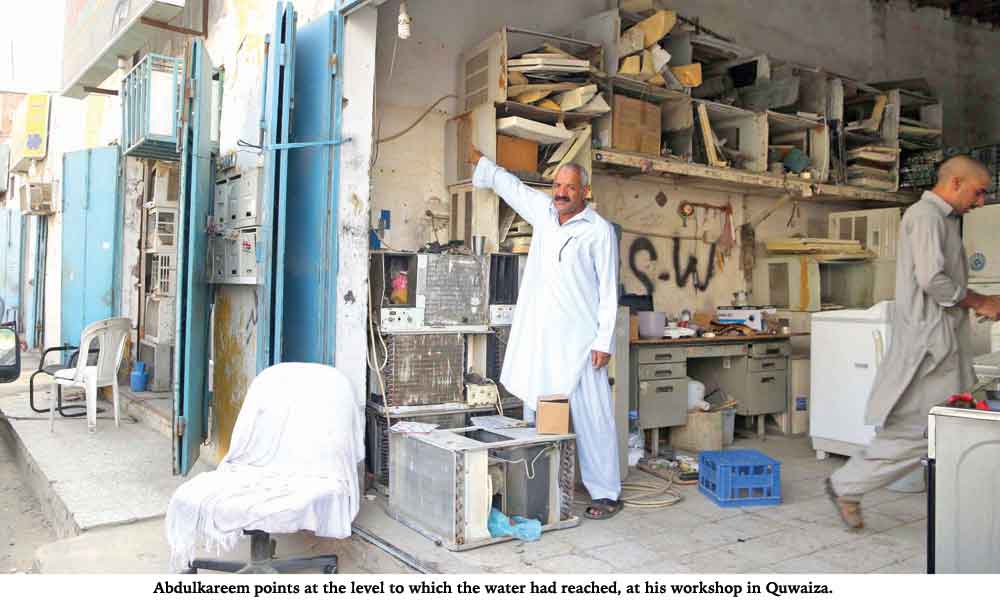
“Yes, the government did compensate us for our losses. But the psychological impact remains deeply rooted in women and children, especially knowing that we live in this area that is likely to be affected by floods again. My children get frightened every time it rains,” Adel Al-Sulami, a landlord and resident of Quwaiza, told Arab News.
In the past week, rain has fallen in different parts of Saudi Arabia and is expected to continue this week. In Riyadh, heavy rainstorms that have lashed the city since last Wednesday claimed the life of one person, according to the Civil Defense Directorate.
Al-Sulami and many others expressed their mixed feelings of fear and cautious optimism to Arab News on a visit to Quwaiza and its infamous Jack Street.
Abdulkareem, a Pakistani resident who works in an air conditioning and refrigerator repair workshop, pointed at the workshop’s wall showing where the water reached on Black Wednesday. “The water level was this high. The workshop had to shut down for a while,” he said.
When asked about what would happen if it rained again, he said: “What will we do? We will leave it to Allah.” He added that if it rained heavily, he believes the workshop would be flooded again. “If it rains heavily again, I will go up the mountain or somewhere high.”
After the November floods in 2009, many residents of Quwaiza left the area that had been home to them for years. They sold their houses and properties, and moved to other parts of the city where they felt safer.
It is something that Al-Sulami, who chose to stay in Quwaiza despite his losses, wished the authorities had offered people in the area. He wished that they had been moved to safer areas as part of the compensation.
“When we bought our houses here decades ago, we did not know that the area was prone to having floods. The Amana (Jeddah Municipality) knew but did not inform people,” said Al-Sulami. He owns three ground floor apartments which were all flooded. In addition, he and his family lost six cars.
“After all those years, I am still not at peace with regard to the investigations. We were expecting integrity and transparency from the officials. We still do not know who was responsible for all this and whether they will be punished or not,” he added.
The rainwater and flood drainage system and the recently built dams are supposed to prevent floods and they offer a sense of security to many of those Arab News talked to. Many said, however, that a rainy day could turn Quwaiza into a ghost town. Cars are parked far away.
Schools are left empty because parents refuse to send their children. And those who live in ground floor apartments leave home until the rain stops.
“Things are better and safer now since the new projects have been completed,” said Mousa Obaidan who has been in the area since 1987. He lives on a ground floor that had water flowing into his apartment. He still lives there but he had to replace his furniture and in spite of government reassurances, he prefers to take precautionary actions in case of heavy rainfall.
“If it does rain heavily again, I will go to an upper floor or to the roof. I will call the Civil Defense which interacts with us very effectively,” he added.


