- At least 30 people killed, 8 injured in ballistic missile strike on Waziyah district
- Attack ‘a clear reflection of the militia’s approach of targeting civilians,’ military spokesman says
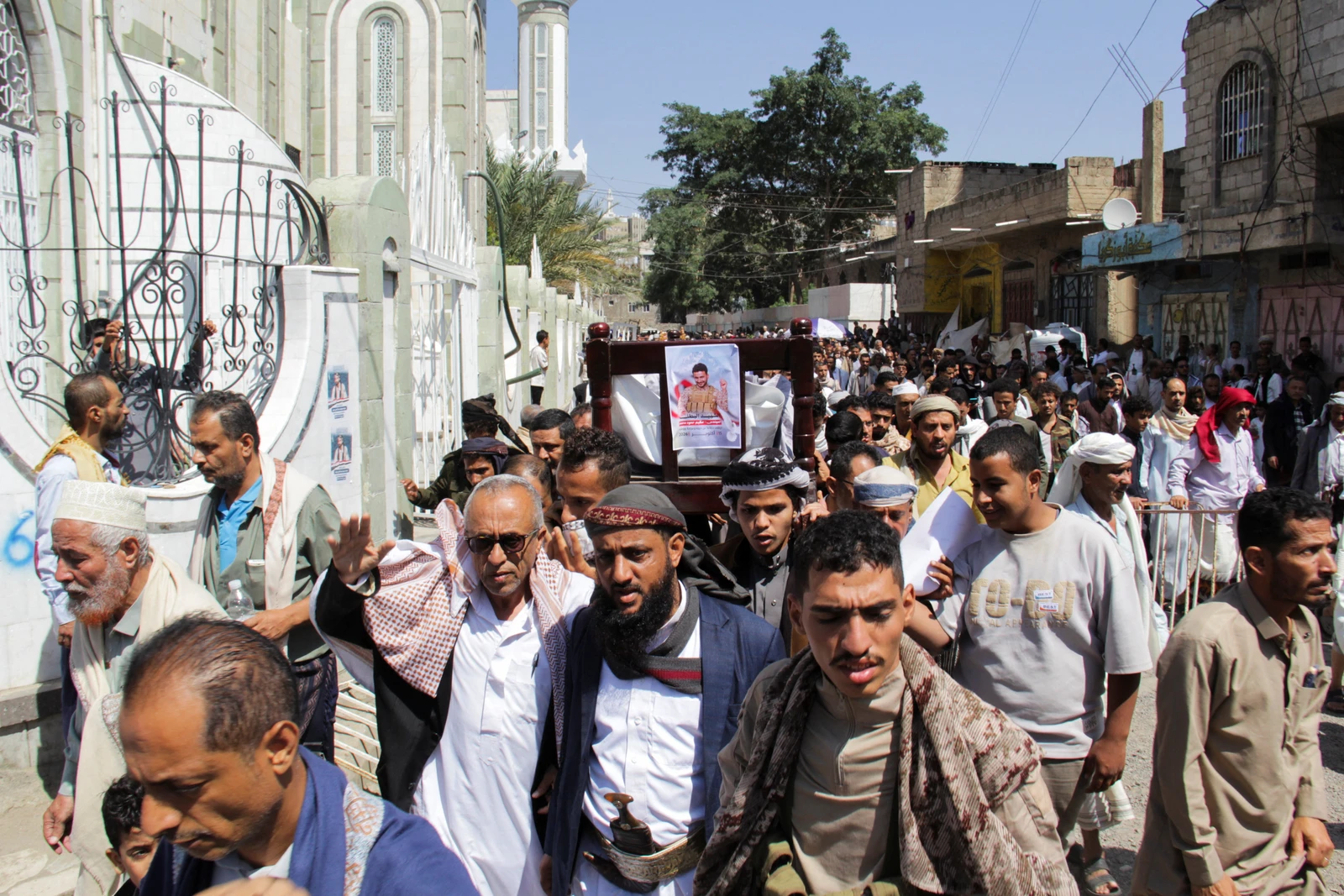
AL-MUKALLA: Yemen’s armed forces on Friday accused the Iran-backed Houthis of a deadly attack on a crowded market in the southwestern Taiz province that killed at least 30 civilians and injured eight others.
Yemeni military spokesperson Majed Al-Nuzaili said that the Houthis fired a ballistic missile at Al-Hadara market in Waziyah district.
He described the attack as a war crime and called for those responsible for planning and implementing it to be held accountable.
“This crime is a clear reflection of the militia’s approach of targeting civilians whenever it suffers defeats on the battlefield or its missile launches fail,” Al-Nuzaili said.
He urged the international community to take stronger action against the Houthis by cutting off their funding and weapons supplies and ensuring accountability for attacks on civilians.
He said that the attack would strengthen the army’s determination to continue its Operation Dawn of Yemen, which is aimed at combating the Houthis and protecting civilians, regional security and international shipping routes.
Local authorities in Taiz also blamed the Houthis for the attack, saying that no military aircraft had carried out strikes in Waziyah on Friday. They called for an independent examination of evidence from the scene.
The attack comes amid intensified fighting between the Iran-backed Houthis and forces loyal to Yemen’s internationally recognized government, particularly in Taiz, where renewed hostilities have worsened an already severe humanitarian crisis.
The Houthis have tightened their siege of Taiz city, cutting off major supply routes and severely disrupting deliveries of food, fuel, water and medical supplies.
The UN World Food Programme warned last month that escalating fighting had cut off more than 800,000 people from food assistance, while shortages of fuel and medical supplies threatened hospitals and other essential services.
The UN also warned that the city’s health system was close to collapse, with shortages of oxygen and fuel putting hundreds of patients at risk.