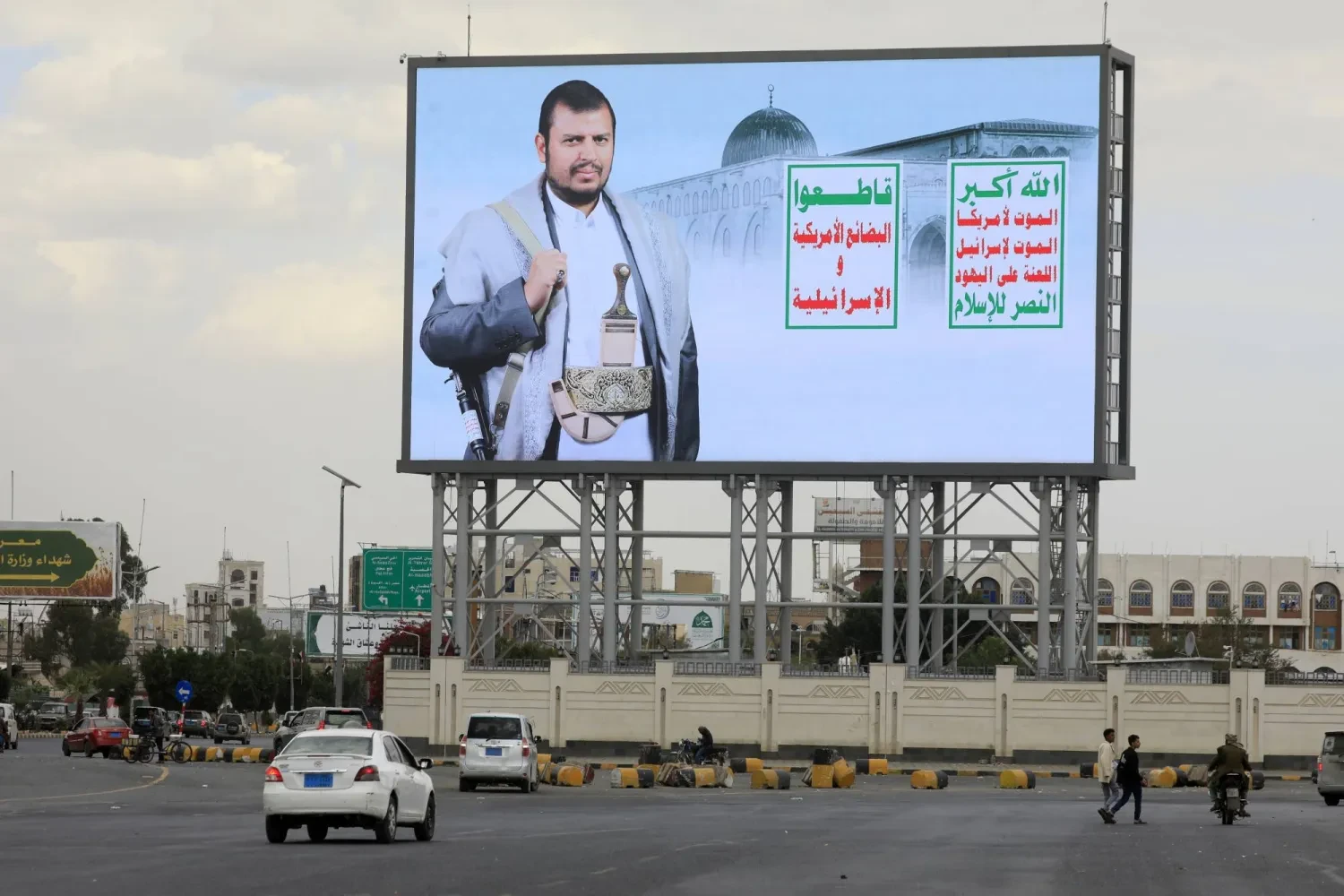
ADEN: Yemen's government has moved beyond designating the Houthi group a terrorist organization to establishing a broad legal framework aimed at criminalizing its activities and prosecuting its leaders, financiers and affiliated entities.
The legislation brings the group's financing, recruitment and arms supply networks, as well as attacks on civilians and international shipping, within the scope of criminal accountability. It also gives authorities legal tools to trace assets and funds both inside Yemen and abroad.
On Wednesday, Rashad al-Alimi, Chairman of Yemen's Presidential Leadership Council, issued Law No. 1 of 2026 on the designation of the Houthi group as a terrorist organization and the criminalization of its activities and financing, following approval by the Cabinet and Parliament.
The legislation puts the terrorist designation into effect across the group's political, military, security and administrative structures, establishing a series of criminal, financial and administrative measures alongside mechanisms for international judicial cooperation.
The law goes beyond criminalizing direct military actions to encompass the organizational, economic and media structures operating on the group's behalf. It establishes individual and institutional responsibility according to the nature of their roles and proven connections, while introducing legal safeguards to prevent the designation from imposing collective liability on civilians or legitimate activities in Houthi-controlled areas.
Under Article 4, the law designates the Houthi group, which calls itself Ansar Allah, a terrorist organization in all its organizational structures and formations, including individuals and groups.
The designation extends to affiliated entities, including political, military, security and administrative leadership, as well as partisan, civil, cultural, social, media and economic organizations, where organizational links to the group have been established.
The legislation extends beyond the official names and front organizations the Houthis may use to conduct their activities or reorganize their structures.
An entity is considered affiliated with the group if evidence establishes that the Houthis created, manage or exercise direct or indirect organizational control over it, or that it operates in their name or on their behalf as part of their organizational structure.
However, the law places an important restriction on the scope of liability. It states that the designation does not constitute a conviction of any particular individual or eliminate the requirement to prove the elements of an alleged offense.
Nor does the designation automatically extend to individuals or entities merely because they maintain commercial or social relationships with the group or its members, or reside in areas under its control.
The law therefore distinguishes between proven organizational affiliation and legitimate civil and economic dealings. Decisions to list affiliated entities, along with measures taken against them, are subject to objections and appeals before the competent courts.
Severe Penalties
The legislation defines a broad range of acts as terrorist offenses, including using armed force to seize state authority or undermine constitutional institutions, besieging cities and villages, starving populations, targeting civilians, public facilities and private property, planting landmines, and attacking or disrupting international shipping.
Penalties for these offenses range from 20 to 30 years in prison to the death penalty. Under the law, the death penalty applies when offenses specified in Articles 5 through 10 result in death or permanent disability.
Criminal liability is not limited to actions carried out on the ground. The law also criminalizes membership in or joining the Houthi group, prescribing prison sentences of 10 to 15 years.
Those exercising effective leadership within the group face the death penalty, whether they hold a publicly declared leadership position or exercise significant authority over issuing orders, managing resources, supervising personnel or making organizational decisions.
The legislation also prohibits providing, collecting or making available funds and economic resources with knowledge that they will be used to finance the group. Violations are punishable by death or imprisonment for 15 to 25 years.
Criminalized activities also include supplying or smuggling weapons, military equipment and dual-use materials, facilitating access to such items, and providing logistical support or intelligence. These offenses can carry the death penalty.
In relation to recruitment, the law criminalizes recruiting, training, arming and enrolling individuals in Houthi military and security formations, prescribing the death penalty.
It provides for particularly severe treatment of cases involving child recruitment, coercion, threats or deception, as well as the exploitation of schools, educational and religious institutions, summer centers and care facilities for recruitment and military or security training.
The legislation includes specific protections for children, defining a child as anyone under the age of 18.
It provides safeguards against their recruitment, training, arming or use in military and security activities, while prioritizing the rehabilitation and reintegration of children who have been exploited and ensuring they are not held to the same standards of criminal responsibility as adults.
Cutting Off Funding and Reversing Confiscations
Disrupting the group's sources of financing is a central pillar of the legislation, which goes beyond criminalizing financial support to target entities established or reconstituted to represent the Houthis or provide legal, political, financial or media cover for the continuation of their organizational activities.
The law also criminalizes providing premises, facilities, equipment and services to the group and its affiliates.
It prohibits circumventing asset seizure and freezing orders by transferring, selling or concealing assets, changing their ownership or allowing third parties to benefit from them with the intention of obstructing enforcement.
To implement these measures, the legislation provides for the establishment of a permanent technical unit within the Office of the Prosecutor General to oversee the terrorist designation and related lists.
The unit will include representatives from the Public Prosecution, the ministries of Justice, Interior, Foreign Affairs, Finance, and Industry and Trade, the Central Bank of Yemen, the Central State Security Apparatus and the Financial Intelligence Unit.
Its responsibilities will include gathering information, verifying sources, examining organizational ties and command-and-control relationships, preparing files on individuals and entities proposed for terrorist listing, and submitting recommendations to the Prosecutor General.
The Prosecutor General will issue reasoned listing decisions after reviewing the files, while the relevant authorities will implement financial measures, including freezing funds and assets proven to be linked to designated individuals and entities.
These measures cover assets held directly or indirectly or controlled by the beneficial owner, while safeguarding the rights of third parties acting in good faith.
The legislation draws a clear distinction between freezing and confiscation. Permanent confiscation requires a final court ruling, and the inclusion of an individual or entity on a terrorist list does not, by itself, result in the confiscation of their assets.
At the same time, the law invalidates the legal, financial and administrative effects of rulings issued by the Houthis against state leaders, political parties, opposition figures, activists, journalists and human rights advocates, including the confiscation of their funds and property.
The provisions also cover amendments the group has introduced to laws, educational curricula and institutions, as well as confiscation orders issued under the authority of the so-called "judicial custodian."
The law requires the return of funds, property and rights to the state or their rightful owners where ownership is established, while allowing claims for compensation before the competent courts.
Protecting Trade and Humanitarian Aid
In a country where millions of people depend on the movement of goods and humanitarian assistance, the legislation dedicates a separate chapter to protecting economic activity and humanitarian operations.
It establishes restrictions on the application of measures that could harm civilians or disrupt access to essential supplies.
The law states that engaging in legitimate commercial, industrial, agricultural or service activities, including transporting food, medicine and fuel, does not in itself constitute a crime or evidence of financing or cooperating with the Houthis, even when such activities take place in areas under the group's control.
It requires the government, central bank and relevant authorities to take the necessary measures to ensure the continued flow of essential goods, facilitate humanitarian assistance and prevent legal measures from harming civilians or legitimate economic activities.
The legislation also exempts neutral humanitarian, medical and relief operations conducted by the United Nations and its agencies, the International Committee of the Red Cross, and licensed international and local organizations.
It emphasizes that providing food, medical treatment or humanitarian assistance to people in need does not constitute financing the group merely because the recipients reside in Houthi-controlled areas.
However, these exemptions do not provide immunity for activities used as a cover to finance the group or supply it with prohibited support. Criminal liability remains applicable where the elements of an offense are established.
International Prosecution
The legislation also expands the scope of cooperation with judicial, security and financial authorities outside Yemen.
It directs the Public Prosecution and relevant agencies, in coordination with the ministries of Foreign Affairs and Interior, to pursue legal action against suspects and convicted individuals residing abroad.
This includes requesting their arrest and extradition and seeking enforcement of relevant judicial rulings and orders.
International cooperation will encompass the exchange of information and evidence, requests for legal and judicial assistance, and coordination with the International Criminal Police Organization (Interpol), foreign law enforcement agencies and judicial authorities.
It also provides for requests to trace, seize, freeze, confiscate or recover funds and assets located outside Yemen in accordance with applicable legal procedures.
The law further requires the government to activate the Arab Convention on the Suppression of Terrorism and relevant international treaties to cut off the group's sources of financing and prevent it from obtaining weapons.
On the political front, the legislation stipulates that no future political settlement may grant criminal immunity to Houthi leaders or members implicated in crimes and serious violations.
However, it explicitly excludes authorized official negotiations and communications conducted for the purposes of peace, ceasefires, prisoner exchanges and addressing humanitarian issues from criminalization.
Yemen law criminalizes Houthi activities, opens door to domestic and international prosecution