- From expensive dolls to kites children are too scared to fly, war is depriving Gaza of play
- Psychologists say play is critical to children’s cognitive and social development
LONDON: In a market in Gaza, Maysa Yousef offered her children a choice: a slice of cake, or a toy.
They wanted the toy, she said, she could see it in their eyes, but they chose cake instead. They understood what toys cost now and did not want to embarrass her in front of the shopkeeper.
“Children’s toys are unbelievably expensive,” Yousef, an artist and mother-of-three in central Gaza Strip, told Arab News.
Before the war, a small doll cost $2 or $3. Now, nearly three years into Israel’s war in the Palestinian enclave, a small toy can cost $10, a slightly larger one $15, and a football that once sold for $30 can be as much as $250.
Her children have learned to calculate what the family cannot afford before she has to explain it.
“Our children have lost everything,” Yousef said. “When they go down to the market and see that things are available, they ask for them. They know that everything in our lives is expensive, so they say, ‘It’s okay, Mom — it’s only a toy’.”
For many families, even basic playthings have become unattainable.
Lamis, who asked to be identified only by her first name, recently went to the market to buy a toy for her toddler. Simple building blocks were selling for as much as 400 shekels, or about $120.
“The same quality used to cost between 5 and 7 shekels before the war,” she told Arab News.
The steep prices reflect the difficulty of bringing toys and materials into Gaza under Israeli restrictions, residents say. Supplies used to make toys or support children’s creative activities are also scarce.
“Strings and yarn are prohibited,” she said. “Anything that could be used for kites — scissors or anything containing a piece of metal, even pencil sharpeners — is banned because it is classified as dual-use.”
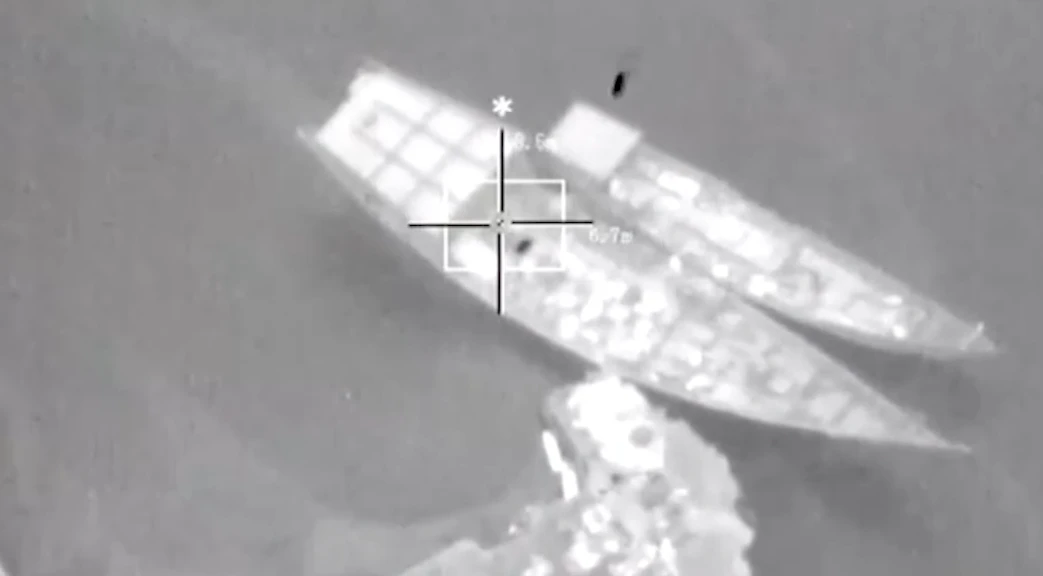
Restrictions on kites have further narrowed children’s already limited opportunities for play. Israeli officials have made what UN rights office spokeswoman Ravina Shamdasani described as “outrageous” threats over kites, balloons and drones crossing from Gaza into Israeli territory.
Israeli Prime Minister Benjamin Netanyahu and Defense Minister Israel Katz said on Sunday that Israel would intensify attacks and force Palestinians to evacuate areas of Gaza if kites, balloons and drones continued to reach Israeli territory.
Katz said Israel would treat a kite like a drone “whether it carries explosives or not” and instructed the military to respond to further launches.
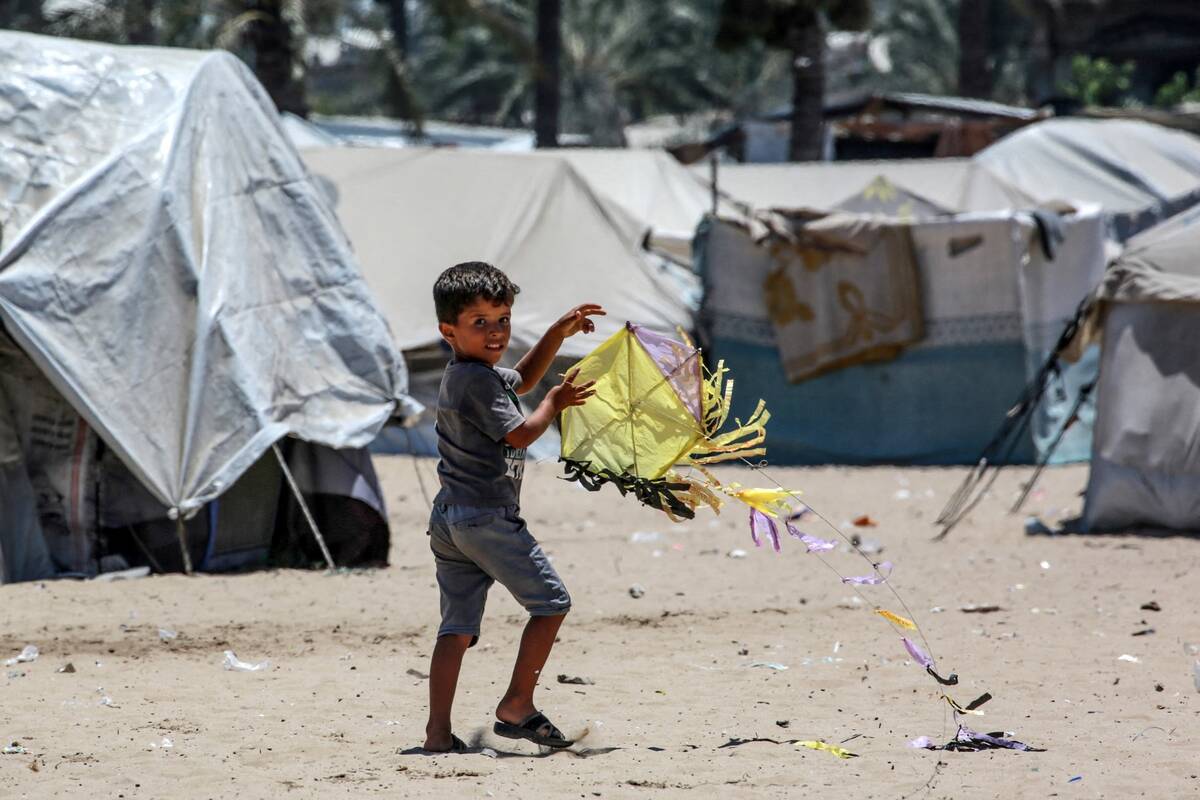
For one young boy, the threats turned a cherished possession into a source of fear.
Dalal, whose name has been changed for security reasons, said her son slept in her arms for two nights after hearing the officials’ remarks. He worried that Israeli drones hovering over the enclave would discover he had a kite.
Though she told him he could keep it as long as he did not fly it, he became anxious and began having nightmares. The next day, she told Arab News, he tore the kite apart and buried it, despite never having flown it.
Even newly available treats have become luxuries. Kinder Eggs containing toys, along with candy sold with small toys, have appeared recently in markets, Yousef said — but a single item can cost $10 or more.
“It may seem trivial, but for a child, a toy is their whole world,” she said. “Children love to play and become attached to things they see in the market.”
Child psychologists say play is not a trivial concern, particularly for children living through war, displacement and deprivation.
“Children are remarkably creative and can play with very simple or improvised materials,” Dr. Rim Ajjour, a Lebanon-based child psychologist, told Arab News.
“What matters is not only access to commercially produced toys, but access to safe materials, space, time and, most importantly, supportive relationships. A ball, paper and crayons, a doll, blocks, storytelling, music or imaginative games can all become valuable tools for expression and development.”
Dr. Jeeda Alhakim, a specialist counseling psychologist at City St. George’s, University of London, said play supported children’s cognitive, emotional and social development.
“It helps children process their day-to-day experiences, build trust and relationships, and sharpen their thinking skills,” Alhakim told Arab News. “It supports their ability to problem-solve, plan and self-regulate.”
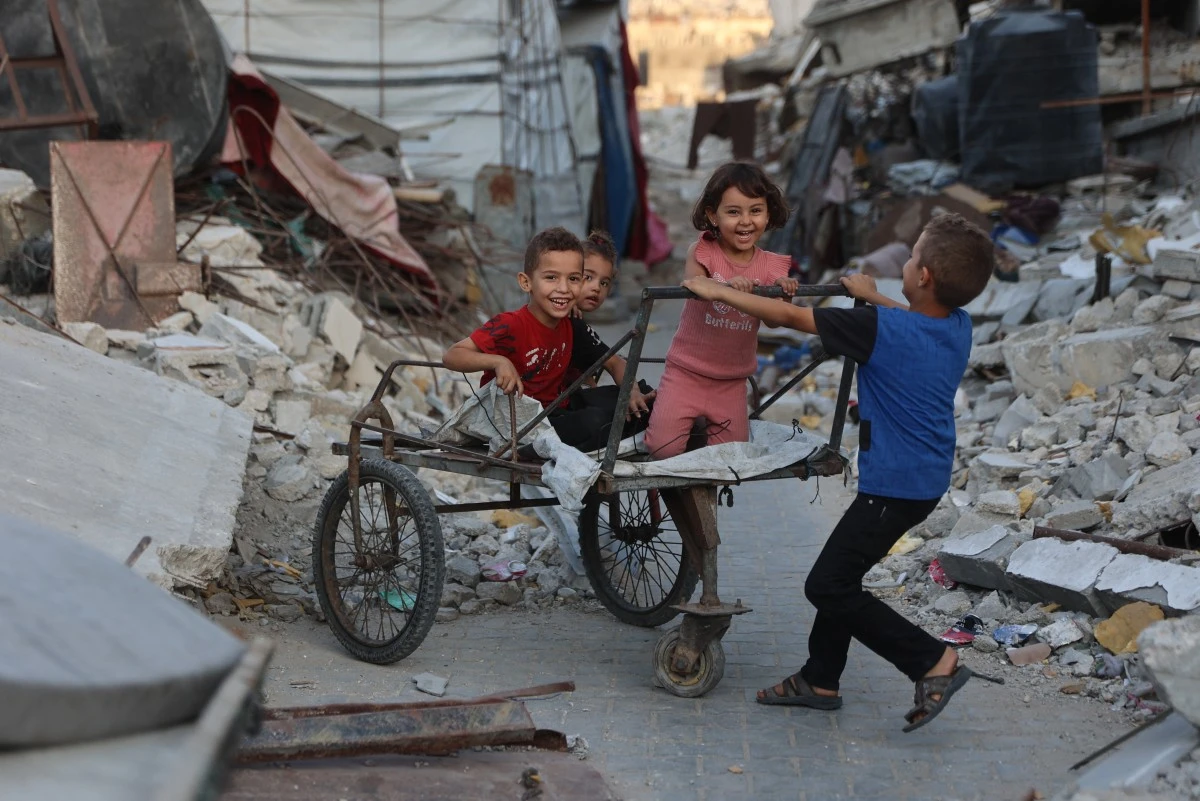
In Gaza, however, childhood has largely been put on hold. Children have lost family members, friends, homes, schools and access to basic necessities, while many have taken on responsibilities normally carried by adults.
They face war, hunger and trauma each day. More than 42,000 people in Gaza have sustained life-changing injuries during the war, according to the World Health Organization, and one in four of them is a child.
Ajjour said that “in times of crises and in conflict zones, play can be especially significant for children living through war, displacement and chronic insecurity.”
“Children do not always have the words or emotional capacity to explain frightening or overwhelming experiences,” she added. Play can offer “moments of relief, predictability, connection and a temporary sense of normalcy in an otherwise unstable environment.”
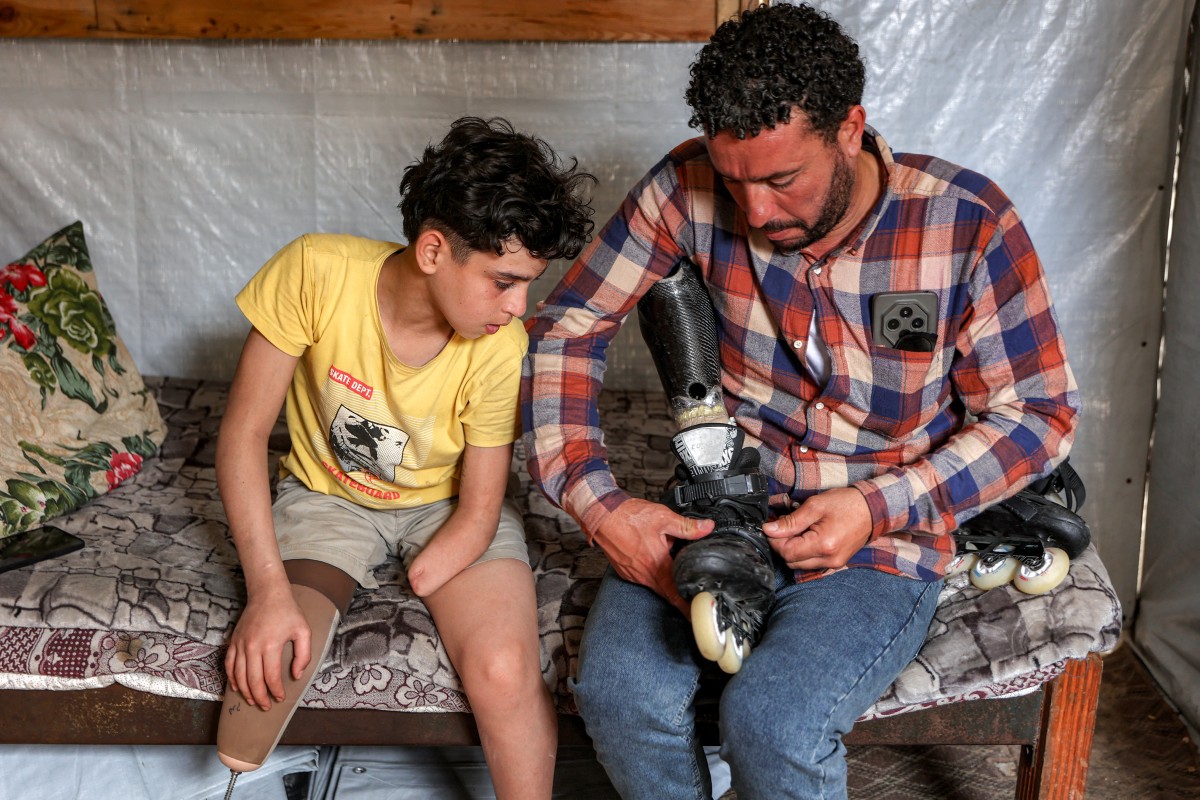
Yet safe spaces, materials and time for play remain out of reach for Gaza’s children.
A recent UNICEF survey found that one in eight children was chronically malnourished, or stunted, after more than two years of war, despite an increase in humanitarian aid following the fragile October 2025 ceasefire.
UNICEF said last week that at least 300 children had reportedly been killed in Gaza in roughly as many days since the ceasefire agreement took effect.
“Of course, play cannot erase trauma or compensate for the absence of basic necessities and safety,” Ajjour said. “It should never be presented as a substitute for protection, food, healthcare or psychological support.”
Still, she said, children’s psychosocial needs do not disappear during humanitarian crises.
“Supporting play alongside meeting basic needs recognizes something fundamental. Even in the most devastating circumstances, children remain children,” Ajjour said. “Protecting their right and opportunity to play is also part of protecting their development, dignity and emotional well-being.”
For now, how long Gaza’s children will be forced to choose food over toys or destroy the kites they are too afraid to fly, remains unknown.