- Catherine Russell says child-focused investment is key to Syria’s recovery
- Highlights education, health and water needs in exclusive interview with SANA
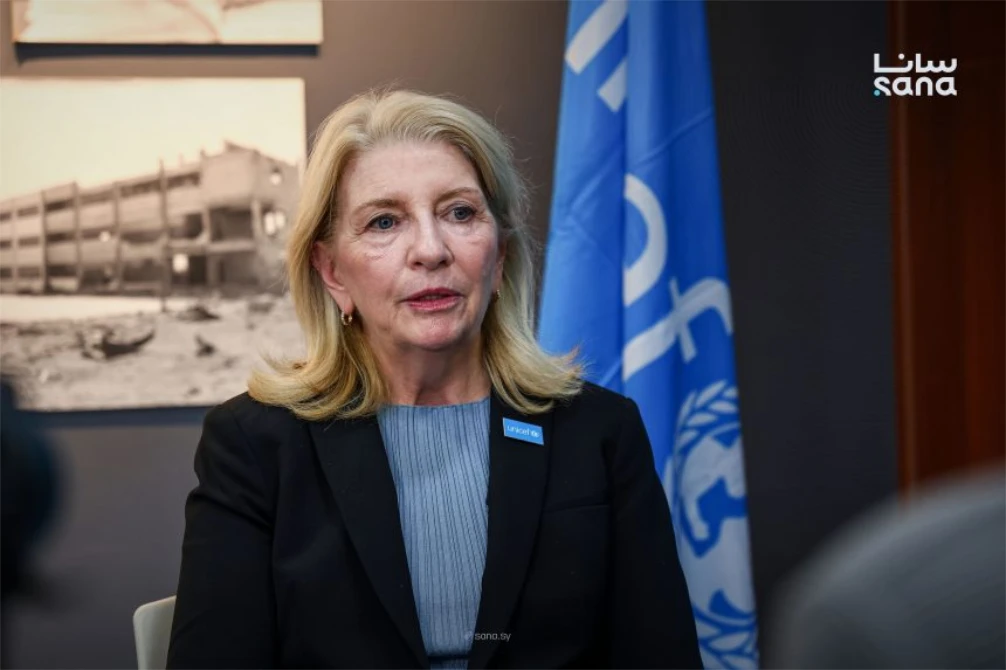
DAMASCUS: UNICEF Executive Director Catherine Russell said Wednesday that 6.9 million Syrian children are in urgent need of humanitarian assistance, as the UN agency works with the Syrian government and local partners to rebuild child-support systems and restore essential services across the country.
In an exclusive interview with SANA during her official field visit to Syria, Russell said her mission was focused on reviewing UNICEF’s operations, strengthening technical partnerships and expanding institutional capacity to address the growing needs of children.
Restoring essential services
Russell highlighted UNICEF programs across Syria, including school rehabilitation, routine childhood immunization campaigns and nutritional support for vulnerable families.
She also cited UNICEF’s technical support for reactivating the Jobar water pumping station in Damascus, which restored access to safe drinking water for more than 1 million residents in the capital and surrounding countryside.
Access to quality education, primary healthcare, clean water and adequate sanitation, as well as formal schooling, remains fundamental to children’s well-being, development and long-term economic prospects, Russell said.
Supporting returnees
On the return of displaced families and children to their home communities, Russell said every refugee or displaced person she had met expressed a strong desire to return home.
She described facilitating the voluntary return of families to Syria as critical, while noting that a key challenge is supporting state institutions in helping returnees, particularly children, reintegrate into normal life.
UNICEF’s work extends beyond primary education to vocational skills training and youth empowerment, she said.
Russell stressed that investment in children is essential to Syria’s recovery and reaffirmed UNICEF’s commitment to strengthening government capacity and institutional systems to better serve children.
Working with Syrian authorities
Russell said UNICEF is drawing on its global expertise and long-standing experience in Syria to support children across the country.
The organization achieves its strongest results when working directly with national governments, she said, noting that governments bear ultimate responsibility for their young populations.
She described UNICEF’s partnership with Syrian authorities as strong and expressed appreciation for continued coordination in health, education and child protection.
Optimism for Syria’s future
Russell said she had seen a strong sense of optimism and enormous potential across Syria.
International partners must work together to create an environment where children can grow and thrive, she said, reaffirming UNICEF’s commitment to helping secure a better future for Syria’s next generation.