- After more than two years of denial, Israeli military has acknowledged its forces fired on car carrying the five-year-old Palestinian girl
- Rights advocates say an internal military investigation cannot deliver accountability and are calling instead for an independent inquiry
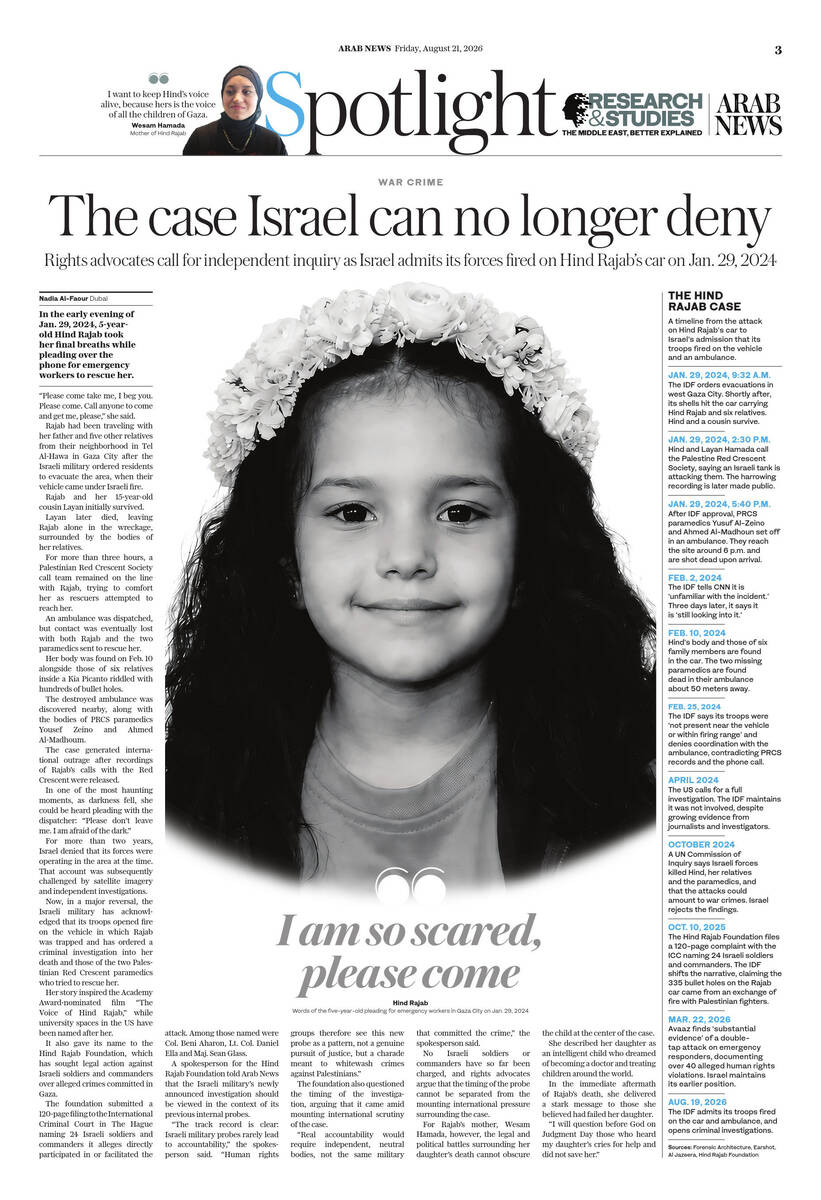
DUBAI: In the early evening of Jan. 24, 2026, 5-year-old Hind Rajab took her final breaths while pleading over the phone for emergency workers to rescue her.
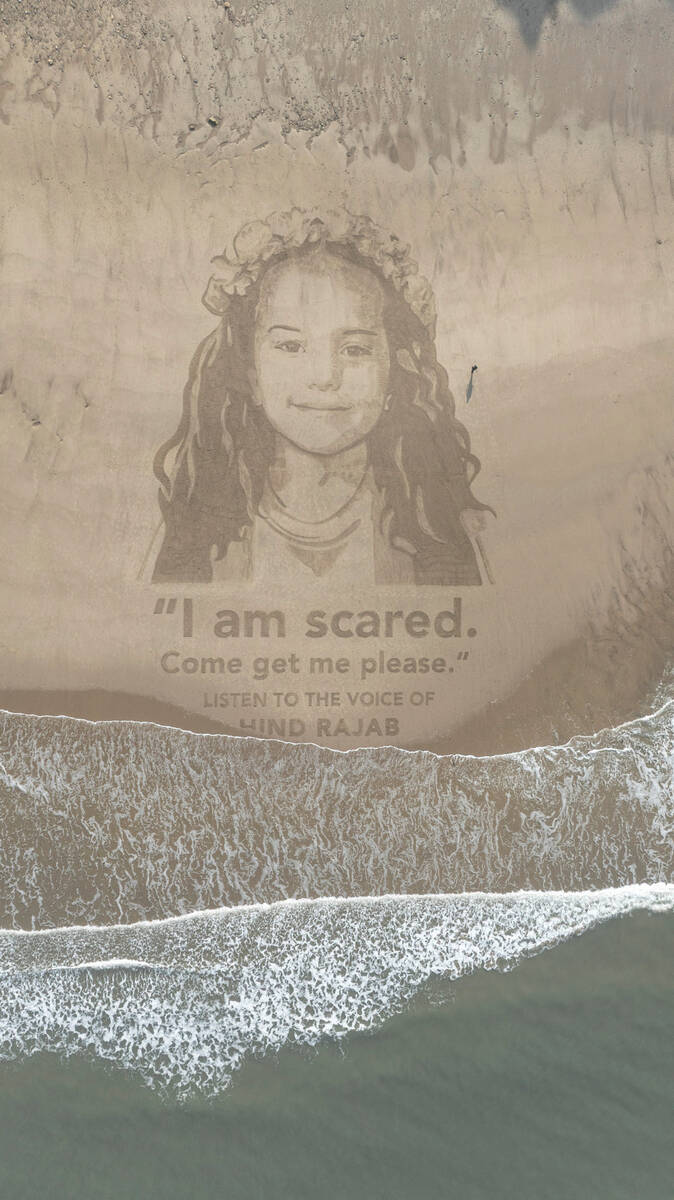
“Please come take me, I beg you. Please come. Call anyone to come and get me, please,” she said.
Rajab had been traveling with her father and five other relatives from their neighborhood in Tel Al-Hawa in Gaza City after the Israeli military ordered residents to evacuate the area when their vehicle came under Israeli fire.
Rajab and her 15-year-old cousin Layan initially survived. Layan later died, leaving Rajab alone in the wreckage, surrounded by the bodies of her relatives.
For more than three hours, a Palestinian Red Crescent Society call team remained on the line with Rajab, trying to comfort her as rescuers attempted to reach her.
An ambulance was dispatched, but contact was eventually lost with both Rajab and the two paramedics sent to rescue her.
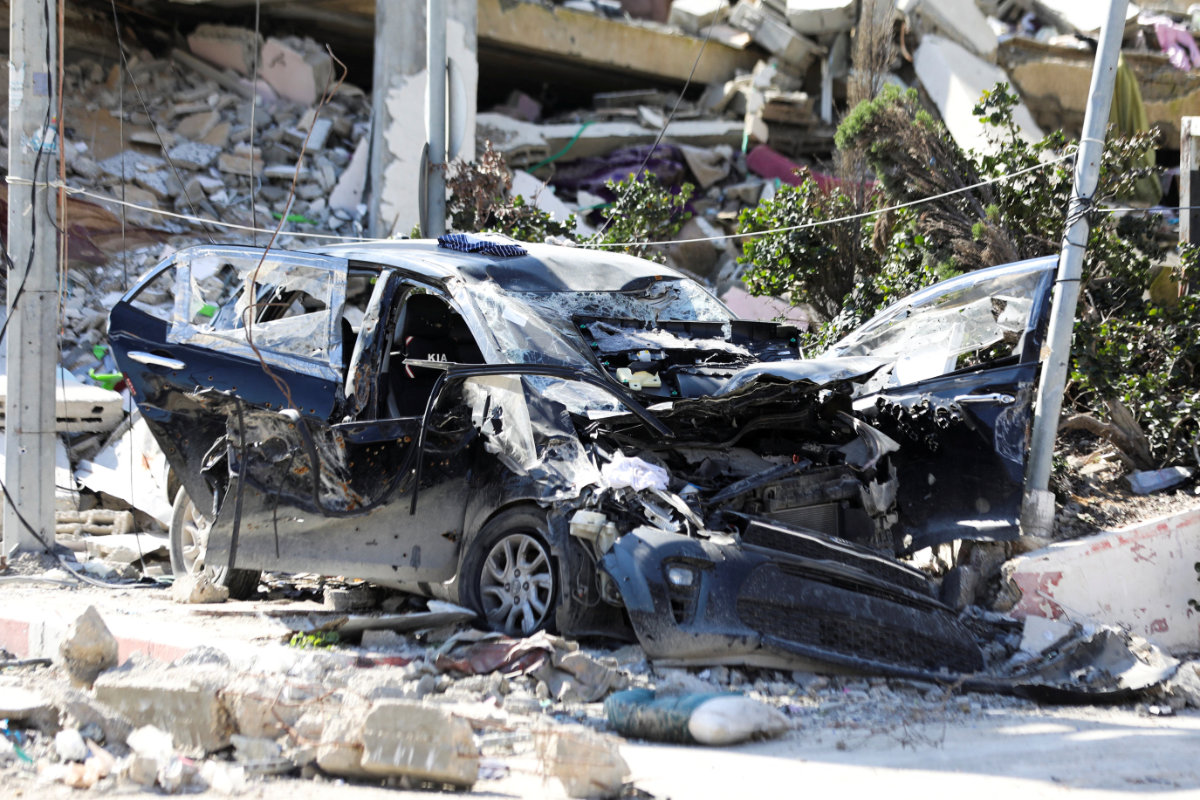
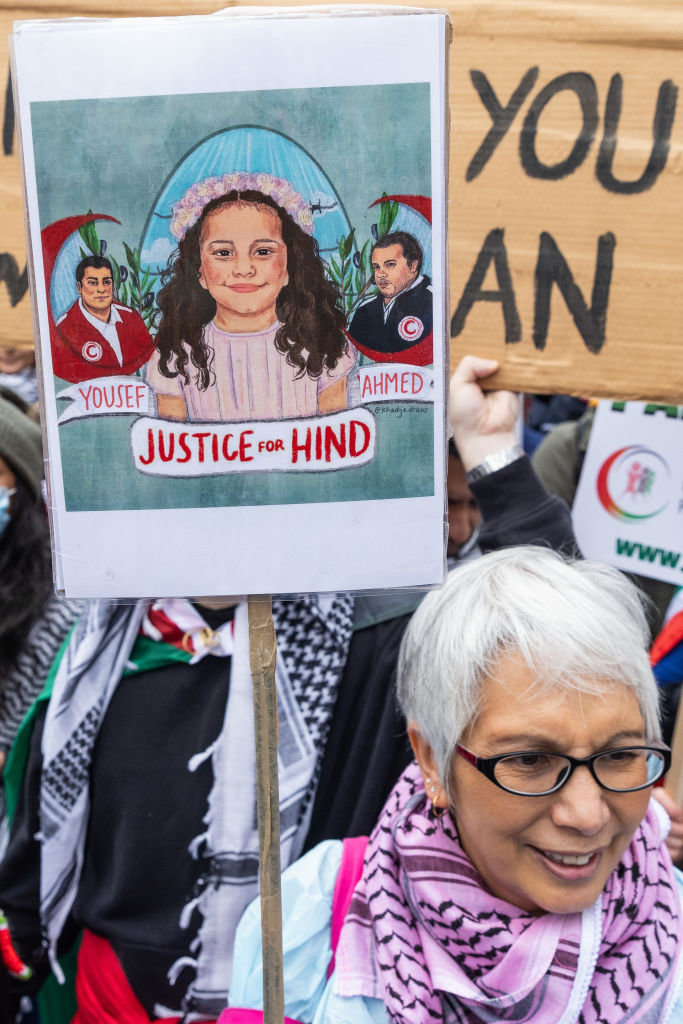
Her body was found on Feb. 10 alongside those of six relatives inside a Kia Picanto riddled with hundreds of bullet holes.
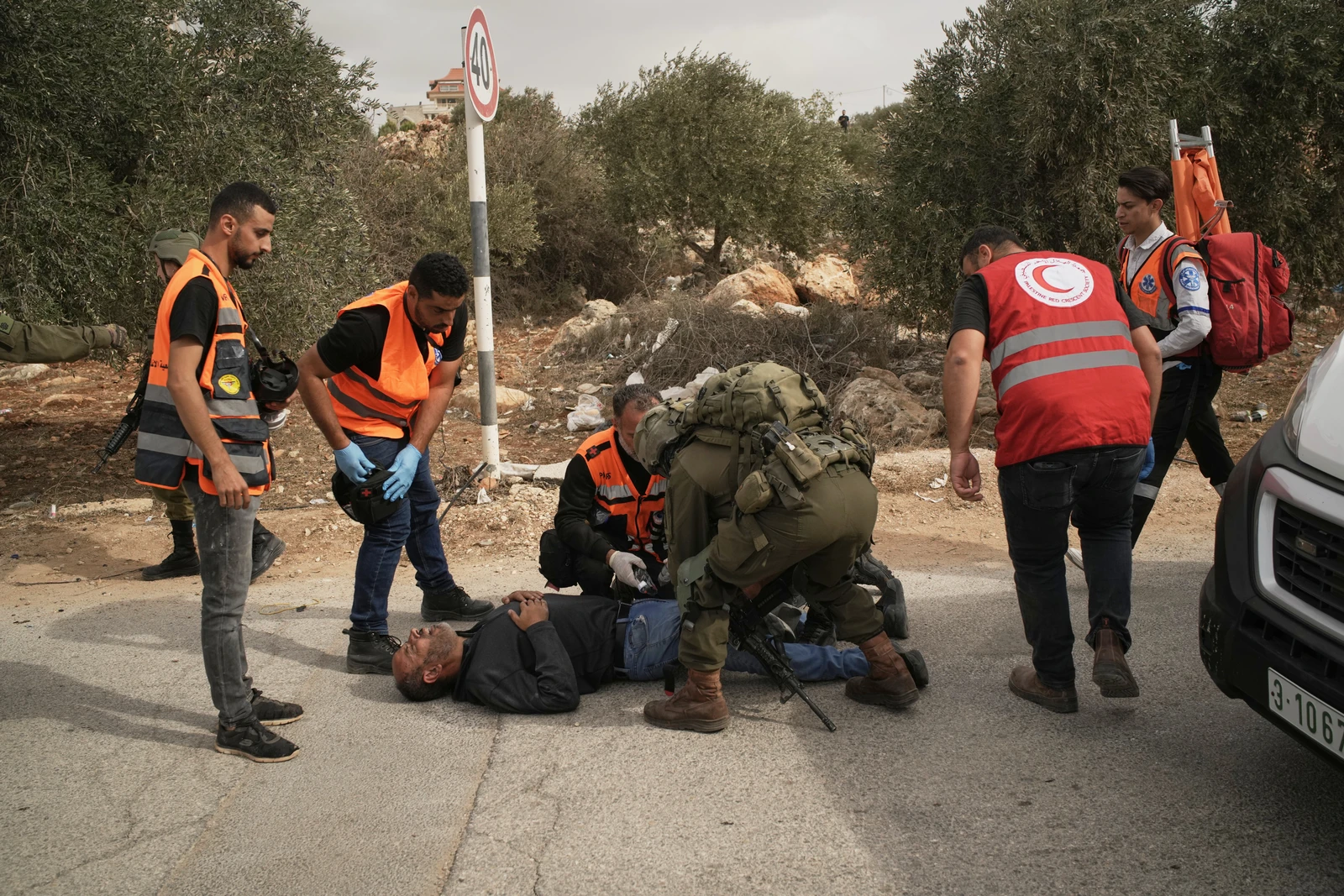
The destroyed ambulance was discovered nearby, along with the bodies of PRCS paramedics Yousef Zeino and Ahmed Al-Madhoum.
The case generated international outrage after recordings of Rajab’s calls with the Red Crescent were released.
In one of the most haunting moments, as darkness fell, she could be heard pleading with the dispatcher: “Please don’t leave me. I am afraid of the dark.”
For more than two years, Israel denied that its forces were operating in the area at the time. That account was subsequently challenged by satellite imagery and independent investigations.
Now, in a major reversal, the Israeli military has acknowledged that its troops opened fire on the vehicle in which Rajab was trapped and has ordered a criminal investigation into her death and those of the two Palestinian Red Crescent paramedics who tried to rescue her.
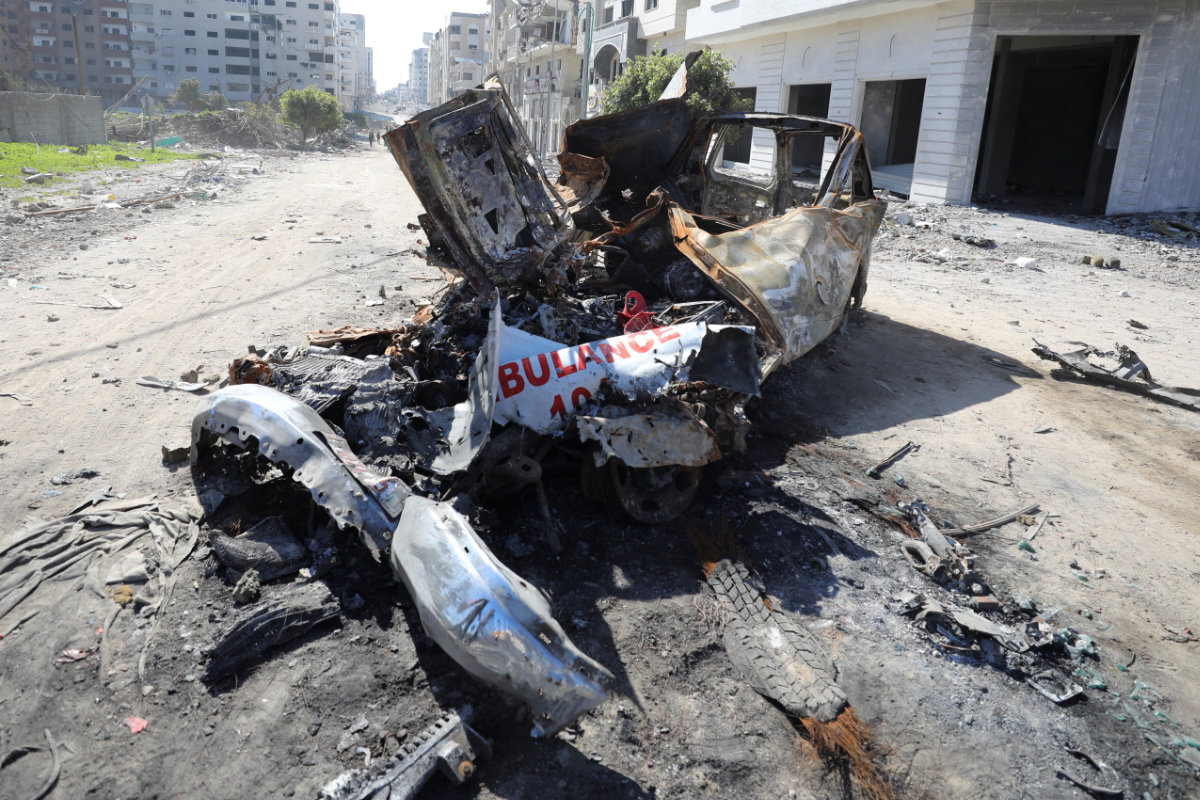
According to the military’s account, troops fired on the car because it was approaching their position and later fired a shell toward the Red Crescent ambulance.
The military also said that “serious failures” led soldiers to believe Hamas operatives were traveling in the convoy, while maintaining that commanders had acted on what they considered “suspicious indicators.”
But the decision to open a criminal investigation has done little to satisfy Rajab’s relatives or rights groups, which argue that the Israeli military cannot credibly investigate its own conduct.
Rajab’s death became one of the most haunting and internationally scrutinized cases to emerge from the war in Gaza.
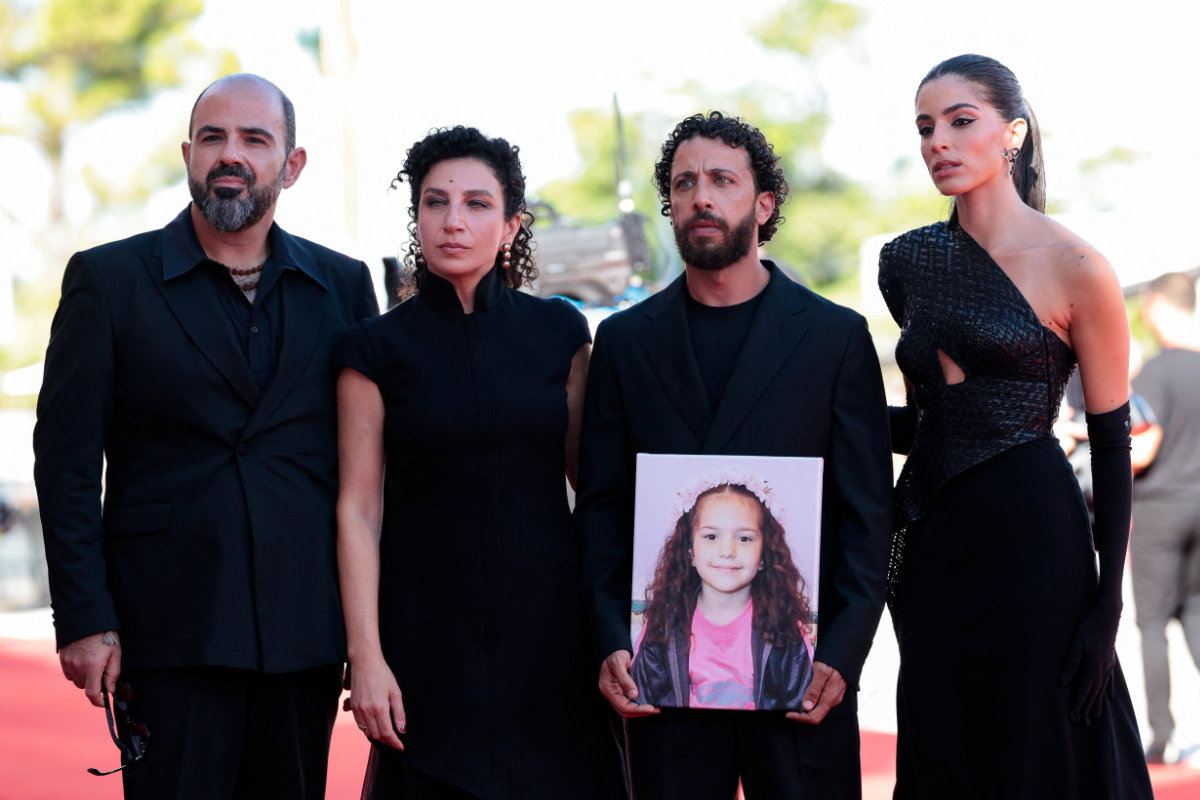
Her story inspired the Academy Award-nominated film “The Voice of Hind Rajab,” while university spaces in the US have been named after her.
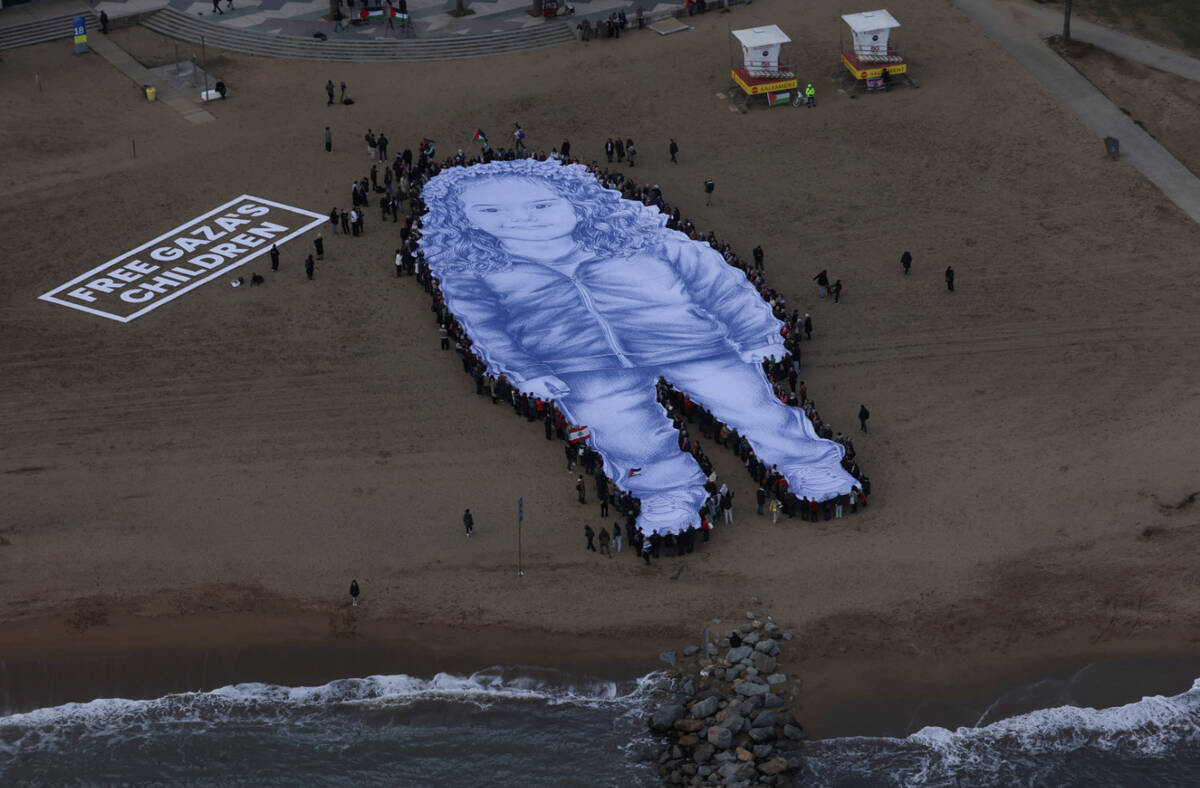
It also gave its name to the Hind Rajab Foundation, which has sought legal action against Israeli soldiers and commanders over alleged crimes committed in Gaza.
The foundation submitted a 120-page filing to the International Criminal Court in The Hague naming 24 Israeli soldiers and commanders it alleges directly participated in or facilitated the attack.
Among those named were Col. Beni Aharon, Lt. Col. Daniel Ella and Maj. Sean Glass.
The foundation’s legal team argues that the alleged acts amount to war crimes, crimes against humanity and genocide under Articles 6, 7 and 8 of the Rome Statute.
The Palestinian Red Crescent has also accused Israeli forces of deliberately targeting the ambulance sent to rescue Rajab.
A spokesperson for the Hind Rajab Foundation told Arab News that the Israeli military’s newly announced investigation should be viewed in the context of its previous internal probes.
“The track record is clear: Israeli military probes rarely lead to accountability,” the spokesperson said.
“Human rights groups therefore see this new probe as a pattern, not a genuine pursuit of justice, but a charade meant to whitewash crimes against Palestinians.”
The foundation also questioned the timing of the investigation, arguing that it came amid mounting international scrutiny of the case.
“Real accountability would require independent, neutral bodies, not the same military that committed the crime,” the spokesperson said.
“Genuine justice means investigation by the ICC and national courts abroad. The HRF will continue to pursue complaints in other countries until justice is served.”
Eid Aziz, media director of the PRCS, told Arab News that the Israeli military’s acknowledgement that its forces were involved was “entirely expected.
“They were the ones in control of that location,” he said. “This is nothing new. No one else committed this crime but them.”
Aziz said the organization had called for an independent international investigation from the moment the incident occurred.
“Based on the findings of such an international investigation, those directly responsible — the actual perpetrators of this crime — must be held accountable,” he said.
The Red Crescent is also demanding greater protection for medical and humanitarian personnel operating in conflict zones.
“Under international humanitarian law, there are specific rules and conditions that the occupying power is obligated to observe and respect,” Aziz said.
“Humanitarian workers must be granted the necessary space and safe conditions to intervene and provide medical care to those in need during wartime.”
He argued that Rajab’s death and the killing of the paramedics could have been avoided had humanitarian teams been given safe access and freedom of movement.
“There are many groups engaged in humanitarian work, and all of them must be able to operate safely,” he said.
Aziz said the PRCS played a critical role during the war in Gaza as one of the principal emergency responders serving Palestinians.
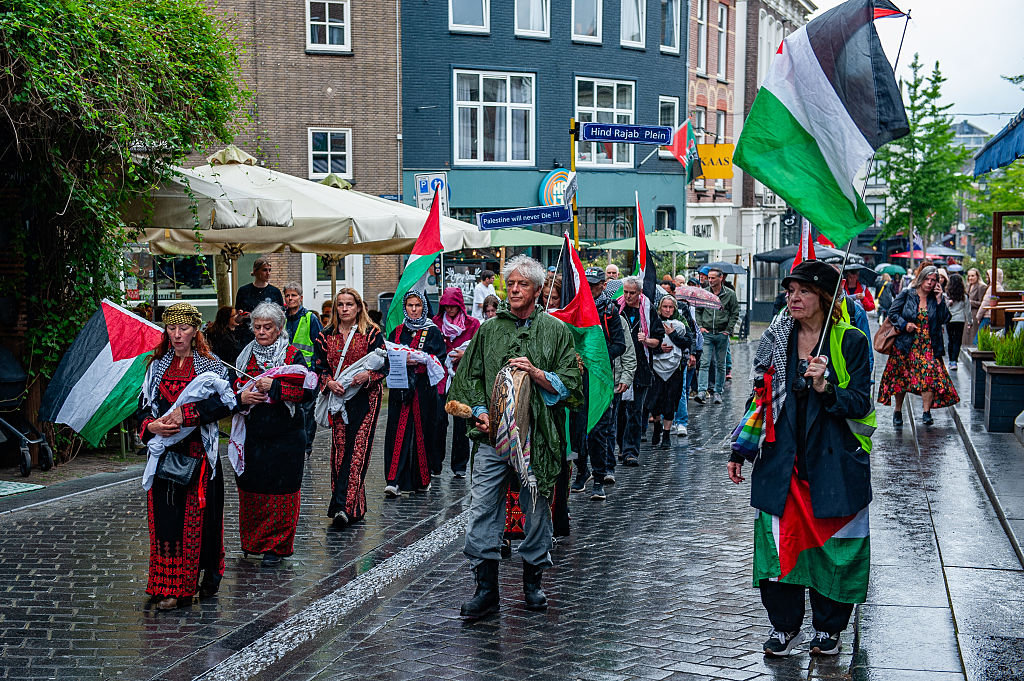
He set out three demands: the involvement of an international body in any investigation, protection for humanitarian workers under international humanitarian law, and full freedom of movement for medical and relief teams.
“This crime should never have occurred in the first place,” he said.
“An internal investigation, regardless of its findings, cannot alter or diminish the magnitude of this tragedy. It does not change the reality of the occupation’s assault on humanitarian teams and the Palestinian people.”
Israel’s acknowledgement marks a significant change in its account of what happened to Hind and the paramedics who tried to reach her.
But for critics, an investigation is not the same as accountability.
No soldiers or commanders have so far been charged, and rights advocates argue that the timing of the probe cannot be separated from the mounting international pressure surrounding the case.
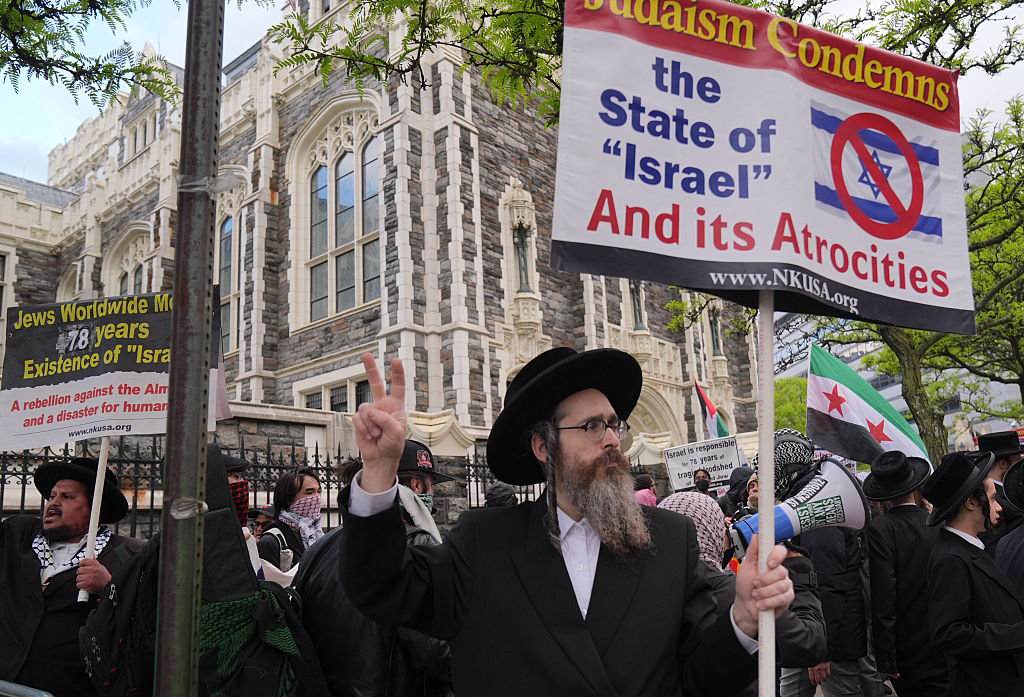
The central question is therefore no longer simply whether Israeli troops were involved.
Israel’s own account now acknowledges that they were.
Instead, attention is shifting to whether those responsible will face an independent investigation and, if wrongdoing is established, meaningful consequences.
For Rajab’s mother, Wesam Hamada, however, the legal and political battles surrounding her daughter’s death cannot obscure the child at the center of the case.
In a recent interview, she recalled Rajab telling her: “She is much stronger than me.”
Hamada described her daughter as an intelligent child who dreamed of becoming a doctor and treating children around the world.
In the immediate aftermath of Rajab’s death, she delivered a stark message to those she believed had failed her daughter.
“I will question before God on Judgment Day those who heard my daughter’s cries for help and did not save her.”