LONDON: Children displaced by Lebanon’s war are losing skills they had already mastered, including toileting, speech and independence, as developmental regression takes hold among some of the country’s youngest war survivors, a child psychologist has warned.
Rim Ajjour, a Lebanon-based child psychologist, said she has repeatedly observed the pattern among children who spent months displaced in shelters or public schools converted into temporary housing.
Some children are struggling to reach new developmental milestones. Others have become more withdrawn, agitated or dependent on their parents, she said.
The changes are rooted in the sudden loss of routines, familiar surroundings and the people who once gave shape to daily life.
“Children have shown delays in different areas of development because they have not been exposed to regular or typical environments where they can develop, be raised and grow normally,” Ajjour said. “In addition, many children have shown regression in milestones they had already achieved.”
Ajjour said the regression can affect speech and adaptive skills, including toilet training and independence.
“I have noticed not only delays, but also regression in areas such as speaking and adaptive skills, including toilet training and autonomy,” she said. “Children have become more reliant on their parents because this gives them a sense of security and normalcy.”
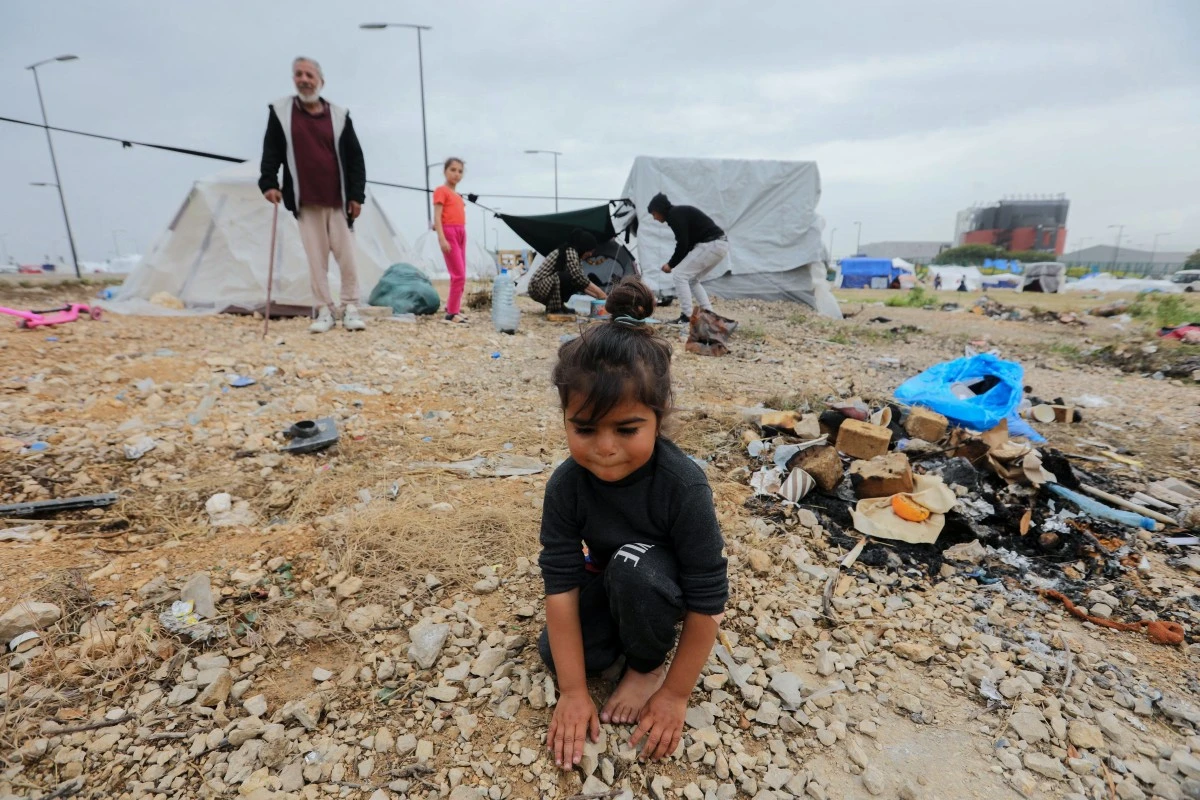
The consequences are emerging as thousands of families remain unable to return to towns in southern Lebanon six months after a new war erupted between Israel’s military and the Iran-backed Hezbollah group. Many displaced people are still living in schools turned into shelters, while others have squeezed into rented apartments or relatives’ homes.
For Fatima, a displaced mother whose name has been changed at her request, the effects have been most visible in her 6-year-old daughter.
After Israeli evacuation orders prompted the family to flee in April, Fatima and her two daughters moved in with relatives in Sidon. Her daughter, once more outgoing, has become unusually quiet and withdrawn.
“She hides behind the sofa or the curtain for hours,” Fatima told Arab News. “Even though there are other children in the house to play with, she prefers to be alone.”
Her daughter’s withdrawal reflects a wider crisis that has continued despite a fragile ceasefire announced in June. About 348,800 people remain internally displaced across Lebanon.
The conflict’s toll on children has also been direct. Lebanon’s Ministry of Public Health said Israeli airstrikes had killed at least 257 children and injured 1,039 others.
But for many children who survive the strikes and flee their homes, the damage unfolds more quietly through disrupted sleep, altered behavior, interrupted learning and an erosion of the abilities they had begun to develop.
“Among children who were displaced or spent several months in public schools or shelters, there has been a noticeable increase in aggressive behavior, agitation, short tempers and stubbornness,” Ajjour said.
The behavior is often a response to losing the places and relationships that once anchored children’s lives, she added.
“They have been taken away from their comfort zones — their homes, schools, family members and friends they used to see daily or weekly,” she said.
The disruption may deepen as the school year approaches.
At least 100,000 children could miss the school year beginning Sept. 15 without urgent action to restore the education system, according to a nationwide assessment by the Ministry of Education and Higher Education. The assessment found that 340 schools had been damaged or destroyed in the war.
Almost 80 public schools were still being used as shelters as the academic year approached. Lebanon’s Education Ministry told Reuters on Sept. 4 that almost half had been cleared and would reopen as schools. About 30 schools will partially reopen while continuing to house displaced families, leaving nine still fully used as shelters.
The psychological strain is not confined to families who fled their homes.
Ajjour said children living in comparatively safer parts of Lebanon are also grappling with uncertainty, disrupted schooling and restricted movement.
“Children who have not been displaced have also experienced uncertainty because of school disruption and changes in their routines, particularly as some areas they used to visit have become inaccessible,” she said. “They have many questions and spend a lot of time wondering about what is happening.”
Parents have responded differently: Some explain the conflict in detail, while others withhold information in an effort to protect their children. But Ajjour said children remain aware of the fear and disruption around them, even when adults do not fully explain it.
Even in relatively safe areas, the sound of distant bombardment can unsettle children, Ajjour said.
“Parents have found it difficult to explain the difference between being in a safe area and still hearing these sounds, or to reassure children that they are safe,” she said.
For Lebanon’s children, an end to the fighting would not by itself end the harm. Months of displacement, interrupted schooling and persistent fear have already reshaped daily life for a generation growing up without the stability needed to learn, play and recover.
Psychologist warns war-displaced Lebanese children are losing developmental skills