- The young men used stones to protect Heidi Levine during attack by settlers in West Bank that left her with 4 fractured vertebrae, 2 broken ribs and 4 puncture wounds
- American journalist Jasper Nathaniel writes: ‘Had the shabab (Palestinian youths) not stepped up to protect her, she might well be dead’
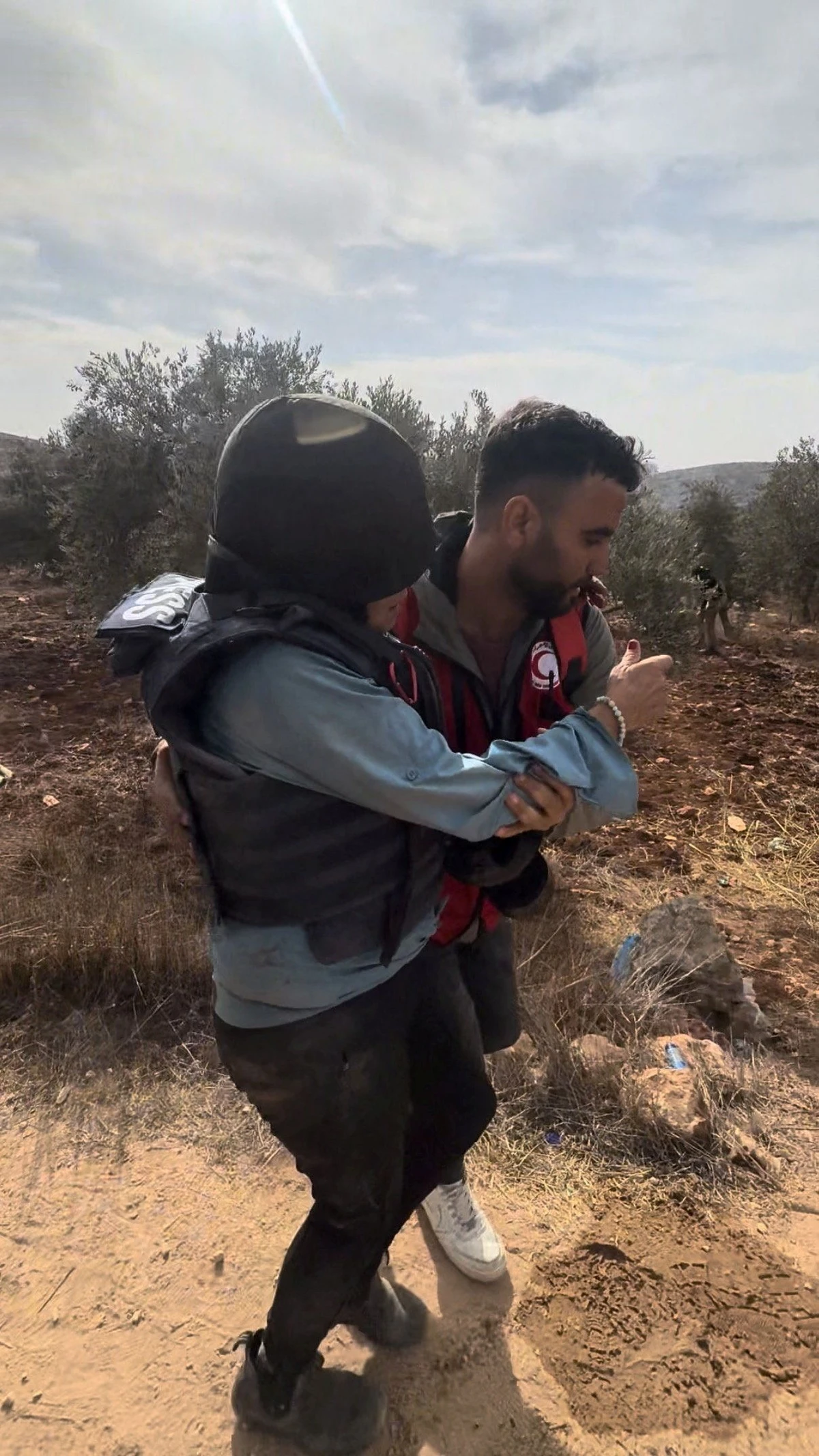
LONDON: Young Palestinian men armed with slingshots and stones helped save Washington Post photojournalist Heidi Levine from Israeli settlers who beat her while she was covering the olive harvest in the occupied West Bank, The Guardian newspaper reported.
Levine, 64, suffered four fractured vertebrae, two broken ribs and four puncture wounds during the assault on Friday in Abu Falah, a Palestinian village north of Ramallah. She said masked settlers knocked her down and hit her repeatedly with wooden clubs.
Witnesses said the Palestinian youths drove the settlers back, allowing American journalist Jasper Nathaniel and other reporters to reach Levine and help her to safety.
Levine told The Guardian: “The shabab (Palestinian youths) put themselves in front and were trying to keep them (the settlers) away, keep a protective shield, which was amazing. It was like a biblical battle.”
Nathaniel credited the young men with saving Levine’s life.
“Had the shabab not stepped up to protect her, she might well be dead,” he wrote. “It is no exaggeration to say that young Palestinians armed only with stones risked their lives to save Heidi Levine’s.”
Israeli soldiers pursued the Palestinians after the attack rather than the settlers, he added.
Levine said the harvest began peacefully, with journalists and human rights activists accompanying Palestinian farmers. Young masked settlers then appeared on a nearby hilltop, watching the group, she added, but the attack began only after Israeli soldiers arrived.
“Then all hell broke loose,” she said. As the farmers began to gather their tarps and bags of olives, she heard gunfire and saw tear gas in the distance.
She ran but as she did so about a dozen attackers charged toward her, Levine said. She ended up face-down on the ground as they kicked her and struck her with sticks.
“I actually tried playing dead so that they would stop,” she said. “But it didn’t work.”
It was at this point that the Palestinian youths intervened to stop the attack. Levine said a witness reported seeing nails protruding from some of the attackers’ clubs. Speaking shortly before she was discharged from a hospital in the Israeli city of Petah Tikva on Wednesday, she said her protective helmet and body armor probably saved her life.
“I probably would have been dead because, for sure, it doesn’t take much to kill a person with blows to the head,” she added.
The Palestinians do not have such protection, she said, and more than 20 have been killed in settler attacks so far this year.
“Every single journalist who looked at (the attack on me) are thinking they, and I, have gone to so many funerals of Palestinians killed by settlers,” Levine said.
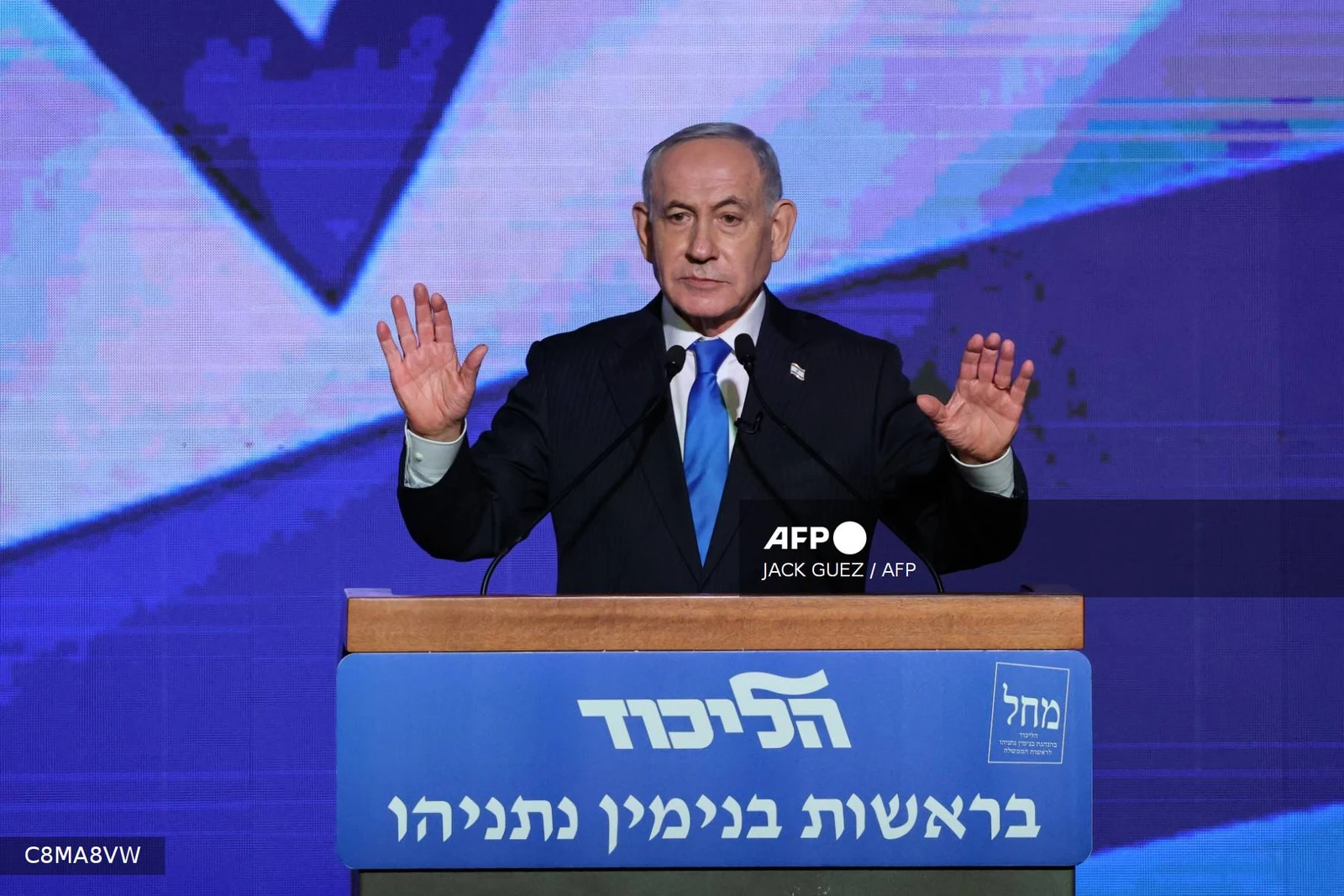
The office of the Israeli prime minister, Benjamin Netanyahu, questioned the accounts of the assault. In a statement posted on social media platform X, which referred to an “alleged attack,” it said some of the footage “appears to show Levine knocked down and immediately helped to her feet by the same unidentified individual.”
Levine rejected this interpretation; her attackers had lifted her up to steal her belongings before throwing her back onto the ground and resuming the beating, she said.
“They helped me up because they couldn’t get my things off of me. That’s why,” she said.
She added that the attackers stole a pouch containing her US passport, other documents and a credit card, along with a camera memory disk and a small camera bag containing two lenses.
The US ambassador to Israel, Mike Huckabee, condemned the assault as a “despicable act of terror” and demanded prosecutions.
Israeli police arrested 10 suspects following the attack in Abu Falah and a separate incident on Saturday that targeted European diplomats near the West Bank village of Taybeh. On Wednesday, an Israeli court released four of the suspects in the attack on Levine to house arrest, citing insufficient evidence to hold them in custody.
Asked how confident she was that her attackers would face justice, Levine rated the possibility as “two out of 10.” She said authorities needed to pursue not only the attackers but also their leaders and organizers.
Levine, who has lived in Israel for four decades, said she intended to return to reporting in the West Bank when she recovered.
“My work is important,” she said. “They have bruised me, broken some bones, but they haven’t cracked my spirit.”