- Government considers police recruitment, funding for 12 districts under emergency rule
- New police command to coordinate counter-terrorism operations with army, official says
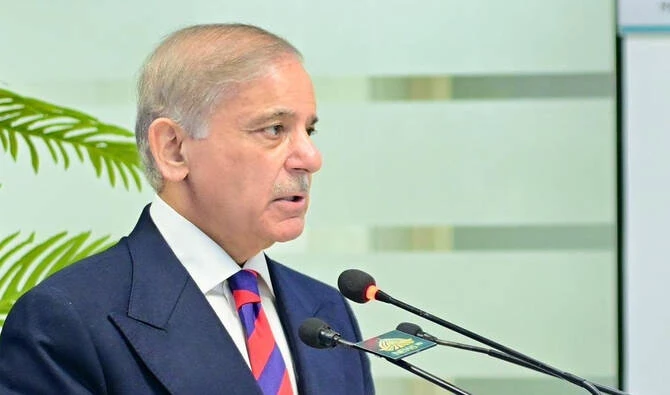
ISLAMABAD: Pakistan Prime Minister Shehbaz Sharif will review security arrangements and police requirements during his visit to the northwestern Khyber Pakhtunkhwa (KP) province on Thursday, an official said, as the government considers additional recruitment and funding following imposition of an emergency in the militancy-hit region.
The development follows the imposition of governor’s rule and an emergency in KP on Oct. 11, which placed the province under a federal-backed administration, sidelining the government of jailed former prime minister Imran Khan’s Pakistan Tehreek-e-Insaf (PTI) party. It also brought 12 designated districts under a dedicated administrative and development framework as part of an emergency, amid a surge in militant attacks.
These designated districts comprise eight districts of the former Federally Administered Tribal Areas (FATA), including Bajaur, Khyber, Mohmand, Orakzai, Kurram, North Waziristan, Upper South Waziristan and Lower South Waziristan, as well as four southern districts of Dera Ismail Khan, Tank, Lakki Marwat and Bannu that have seen a spate of militant violence in recent months.
Security was the main point of contention in negotiations between the federal government and the opposition, which collapsed before the emergency was imposed, according to Mehmood Jan Babar, information adviser to the council overseeing the 12 designated districts. The proposals to strengthen policing in KP were ready for consideration during Sharif’s planned visit to the provincial capital of Peshawar.
“The prime minister will visit Peshawar tomorrow to review the security situation in province and take decisions to strengthen police among other important steps,” Babar told Arab News on Wednesday.
Pakistan has witnessed a surge in militant attacks in KP, most of which Islamabad says were carried out by Afghanistan-based militant groups. Kabul denies it.
Interior Minister Attaullah Tarar this month told foreign media that 3,774 militant attacks were recorded in Khyber Pakhtunkhwa in 2025, followed by 2,857 in the first nine months of 2026. He also confirmed 3,512 deaths in 2025 and 2,775 in the first nine months of this year in militancy-related incidents.
Islamabad accused the PTI provincial government of failing to cooperate on counter-terrorism efforts and not adopting a unified policy toward Afghanistan. The PTI rejected the allegations and described the move as an “undemocratic” one imposed at a time when thousands of PTI supporters were marching toward the capital to demand the release of their jailed leader.
POLICE OVERHAUL
Babar said authorities had introduced a new command structure, including the appointment of an additional inspector general of police tasked specifically with overseeing policing in the 12 designated districts.
Officials of police, army and Federal Constabulary would jointly plan operations and counter-terrorism campaigns in designated areas, he said.
“Under the previous government, police were not given permission to operate with a free hand alongside the army,” Babar said.
Reached for comment, PTI provincial spokesperson Shaukat Yousafzai didn’t immediately respond to Babar’s remarks, but his party has denied the allegation of inaction against militant groups, mainly the Tehreek-e-Taliban Pakistan (TTP).
Babar said the new arrangements would allow police to participate in joint operations and address staffing shortages, particularly in the former tribal districts along the Afghan border.
“The Additional IG will ensure sufficient and equipped police force needed in these 12 districts, especially the erstwhile tribal areas where police recruitments hadn’t taken place,” he said, adding that the provincial inspector general would retain the overall command of the police force, while the additional inspector general would focus on the designated districts.
Federal Interior Minister Mohsin Naqvi has pledged the center’s support for the police overhaul, according to Babar.
Ten armored personnel carriers have been transferred to provincial police units engaged in counter-terrorism duties in KP, while authorities have also imposed restrictions on public gatherings and protests under Section 144 of Pakistan’s Code of Criminal Procedure in the designated areas.
DEVELOPMENT FRAMEWORK
Alongside security measures, the government has introduced an administrative and development framework for the 12 designated districts under the supervision of the prime minister.
The framework brings together local representatives, a dedicated development secretariat and relevant government departments to identify priorities, formulate projects and coordinate their implementation, according to Babar.
Its key areas of focus include education, health care, infrastructure, employment generation, institutional capacity-building and improved governance.
The federal takeover followed the breakdown of talks between the government and the opposition. PTI has challenged the emergency and governor’s rule in the Peshawar High Court, arguing that the measures “violate provincial autonomy and its electoral mandate.”
The federal government has said the measures are intended to restore security and administration in the province.