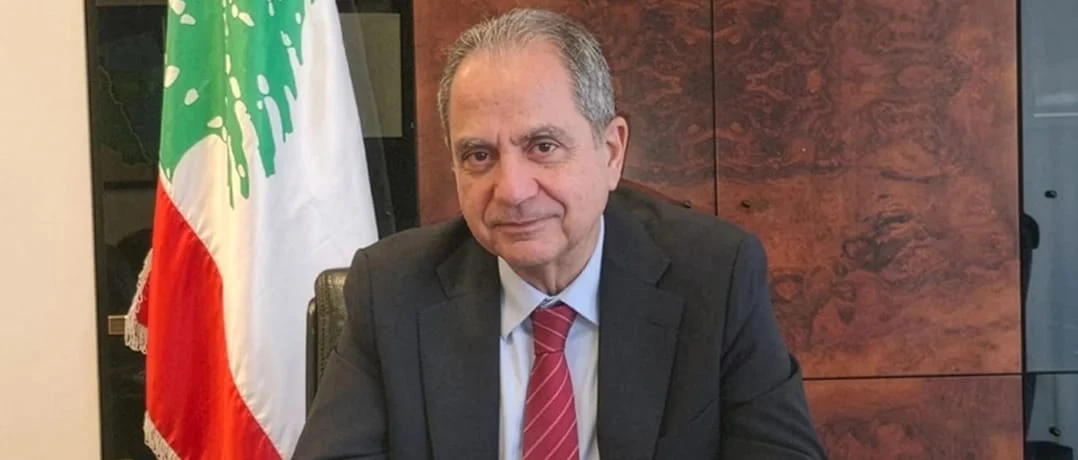
- Qatari grant finances substantial portion of work on section of pipeline between Tripoli and Syrian border, as Lebanon seeks to resume gas imports to fuel power plants
- Country also in discussions with Iraq about joining a regional oil-pipeline project to revive a historic route to Tripoli via Syria, Saddi said
LONDON: Lebanon has completed repairs to its section of a gas pipeline that runs from the northern coastal city of Tripoli to the Syrian border, the minister of energy and water, Joe Saddi, said.
The work was financed by the Lebanese government and a Qatari grant, with the latter covering a substantial share of the cost, he told Asharq Bloomberg on Monday at the Abu Dhabi International Petroleum Exhibition and Conference.
Lebanese authorities seek to resume natural gas imports to fuel the country’s power plants after similar initiatives stalled in previous years, the media outlet said. The path of the pipeline continues onward in Syria to Al-Rayan compressor station, a distribution facility in Homs Province.
Lebanon is also in talks with Iraq about joining a regional oil-pipeline project that would revive a historic route through Syria to Tripoli, Saddi said. A meeting between Lebanese officials and Iraq’s prime minister about two months ago produced a preliminary understanding of Lebanon’s participation, in particular concerning the route it would follow to Tripoli, he added.
A consortium that includes US energy corporation Chevron was conducting studies to determine the next steps and a timetable for the project but no date has been set for work to begin, Saddi said.
The repairs to the gas pipeline followed an agreement in May on gas exchanges between Jordan, Syria and Lebanon. The Jordanian minister of energy and mineral resources, Saleh Al-Kharabsheh, said at the time the countries were finalizing their technical preparations and contracts, and studying repairs to gas-transmission networks.
Speaking during a joint news conference with Saddi and the Syrian energy minister, Mohammed Al-Bashir, Al-Kharabsheh said Jordan would use its infrastructure to import liquefied natural gas, convert it back into a gaseous state and deliver it to Syria through the Arab Gas Pipeline. The ministers also discussed the expansion of electricity interconnections and use of existing infrastructure.
Saddi said the aim of the gas and electricity projects was to secure more reliable energy supplies at lower costs.