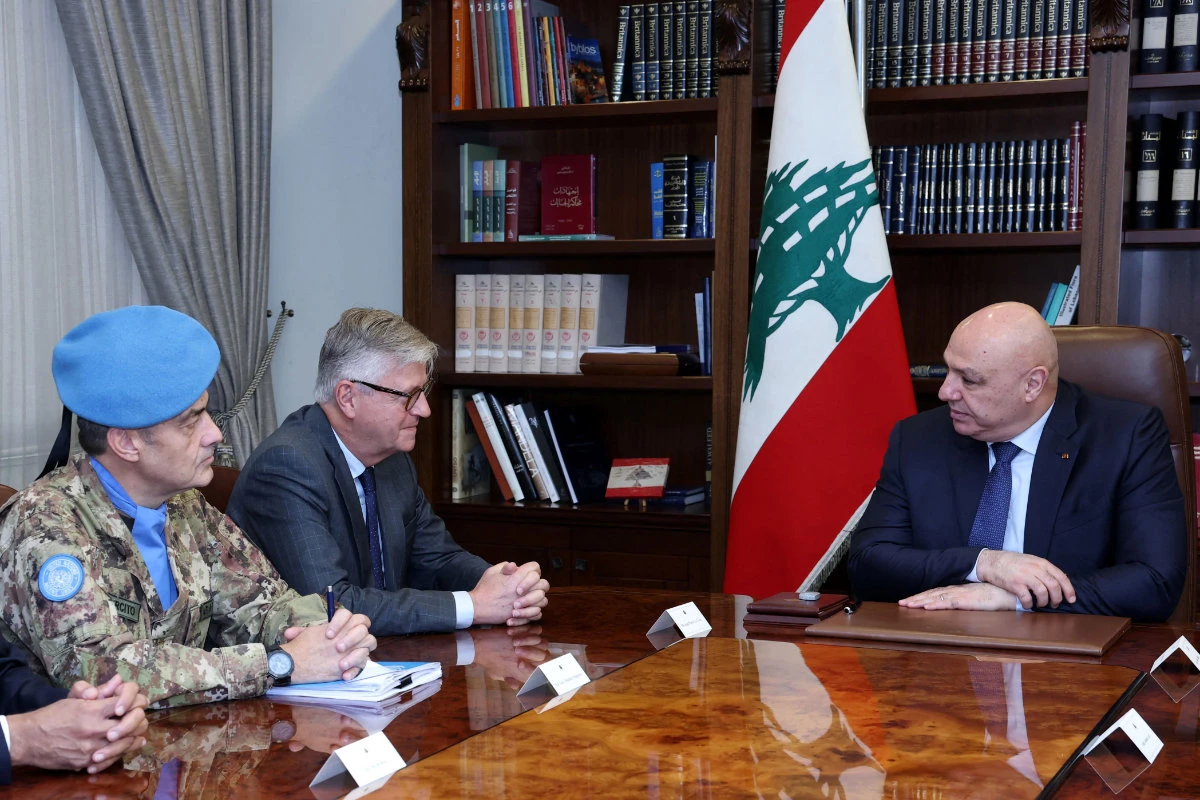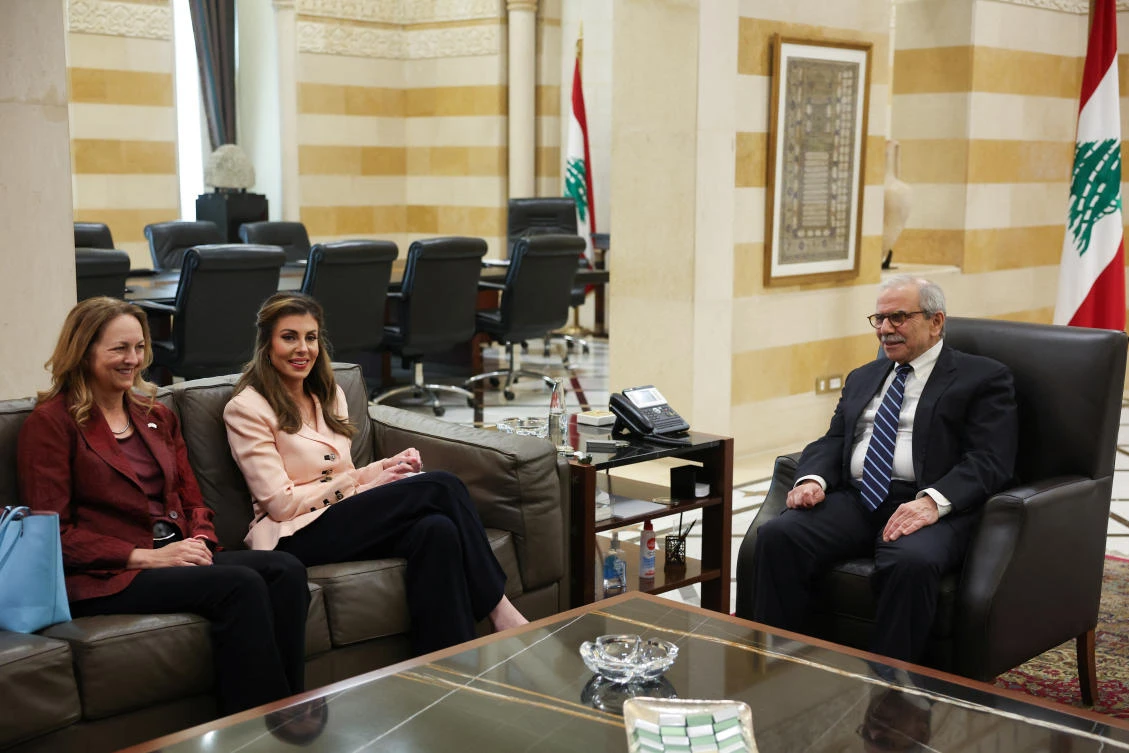
- Aoun and Ortagus discussed “south Lebanon, the work of the international monitoring committee and the Israeli withdrawal” from Lebanese territory
- Salam’s office also said the discussions with the envoy were “positive“
BEIRUT: Senior Lebanese officials said Saturday’s talks with visiting US deputy special envoy for the Middle East Morgan Ortagus were positive, focusing on south Lebanon amid a fragile truce between Israel and Hezbollah.
President Joseph Aoun and Ortagus discussed “south Lebanon, the work of the international monitoring committee and the Israeli withdrawal” from Lebanese territory, a statement from the presidency said, characterising the talks as constructive.
Prime Minister Nawaf Salam’s office, in a statement, also said the discussions with the envoy were “positive.”
Ortagus’s second visit to Lebanon after her appointment by US President Donald Trump comes as Israel continues to carry out strikes in Lebanon despite a November 27 ceasefire with Hezbollah, and as its troops remain in several points in the country’s south.
The United States chairs a committee, which also includes France, that is tasked with overseeing the ceasefire that ended more than a year of hostilities including two months of all-out war between Israel and Hezbollah.
Under the truce, Hezbollah was to redeploy its forces north of the Litani River, about 30 kilometers (20 miles) from the Israeli border, and dismantle any remaining military infrastructure in the south.
Israel was due to complete its withdrawal from Lebanon by February 18 after missing a January deadline, but it has kept troops in five places it deems “strategic.”
Lebanon’s army has been deploying in areas the Israeli military has withdrawn from.
Ortagus and Salam discussed the Lebanese army’s work in implementing United Nations Security Council Resolution 1701, which ended a 2006 war between Israel and Hezbollah and formed the basis of the November truce, his office said.
The resolution says Lebanese troops and UN peacekeepers should be the only forces in south Lebanon, and called for the disarmament of all non-state armed groups.
Ortagus also met on Saturday with parliament speaker Nabih Berri, a key Hezbollah ally, and army chief Rodolphe Haykal.
On her first visit in February, Ortagus sparked anger among Hezbollah supporters by saying the group had been “defeated by Israel,” declaring “the end of Hezbollah’s reign of terror.”
The Iran-backed group was heavily weakened during the war with Israel, but remains active.
Last month, Ortagus told Lebanese TV channel Al-Jadeed that the US and France had set up working groups that would address the border disputes between the two countries, as well as Israel’s continued presence south Lebanon.
“We want to get a political resolution, finally, to the border disputes,” Ortagus had said.