BEIRUT: The Lebanese army on Wednesday rejected Israeli criticism of its performance in southern Lebanon, insisting that its troops were carrying out their assigned duties despite continuing Israeli military activity.
The army command said its personnel remained committed to their orders and responsibilities, acting out of “their belief in their national duty to defend Lebanon’s sovereignty, security and stability, without regard to any other calculations or considerations.”
It added that the military continued to enjoy the confidence of friendly and brotherly countries that support the institution because of the importance of its role, particularly amid the exceptional circumstances and challenges facing Lebanon.
The statement followed claims carried by Israeli media criticizing the Lebanese army’s performance and its activities in the south.
A Lebanese military source told Arab News that the army was carrying out its responsibilities both inside and outside designated pilot areas, while accusing Israel of failing to fulfill its own commitments.
“The Lebanese army is carrying out the role assigned to it inside and outside the pilot areas, but it is the Israeli army that is failing to do what it committed to,” the source said.
“It is preventing residents from returning, preventing reconstruction of destroyed homes and, above all, blocking the establishment of a verification mechanism and rejecting every country proposed by Lebanon to participate in it.”
The source rejected Israeli allegations that the Lebanese army was failing to inspect coordinates provided by Israel or that some officers were unwilling to carry out such missions.
“This is completely untrue,” the source said. “How can the Lebanese army conduct reconnaissance while Israeli missiles are over our heads?”
The claims come amid continuing concern over Israel’s military presence in southern Lebanon.
“In the past months, we’ve seen the consolidation and fortification of Israeli positions, construction of protective infrastructure and other engineering works,” Kandice Ardiel, a spokeswoman for UNIFIL, told the BBC.
“We have also observed what appear to be Israeli civilian personnel carrying out demolition and engineering activities in support of military activities in south Lebanon.”
UNIFIL, the United Nations Interim Force in Lebanon, is the UN peacekeeping mission deployed in southern Lebanon. Established in 1978, it is tasked with monitoring the situation along the Lebanon-Israel frontier and, under UN Security Council Resolution 1701, supporting the Lebanese Armed Forces as they extend state authority in the south.
In its statement, the Lebanese army command said the timing of the Israeli allegations, at what it described as an extremely delicate and sensitive stage, demonstrated the danger of attempts to undermine the military and its leadership, sow doubt within its ranks and weaken public confidence in the institution.
It described the claims as part of “disinformation campaigns” that would not affect the army’s cohesion or prevent it from carrying out its responsibilities to maintain Lebanon’s security.
Israel’s public broadcaster reported on Tuesday that there was dissatisfaction with the Lebanese army’s performance so far in the pilot areas.
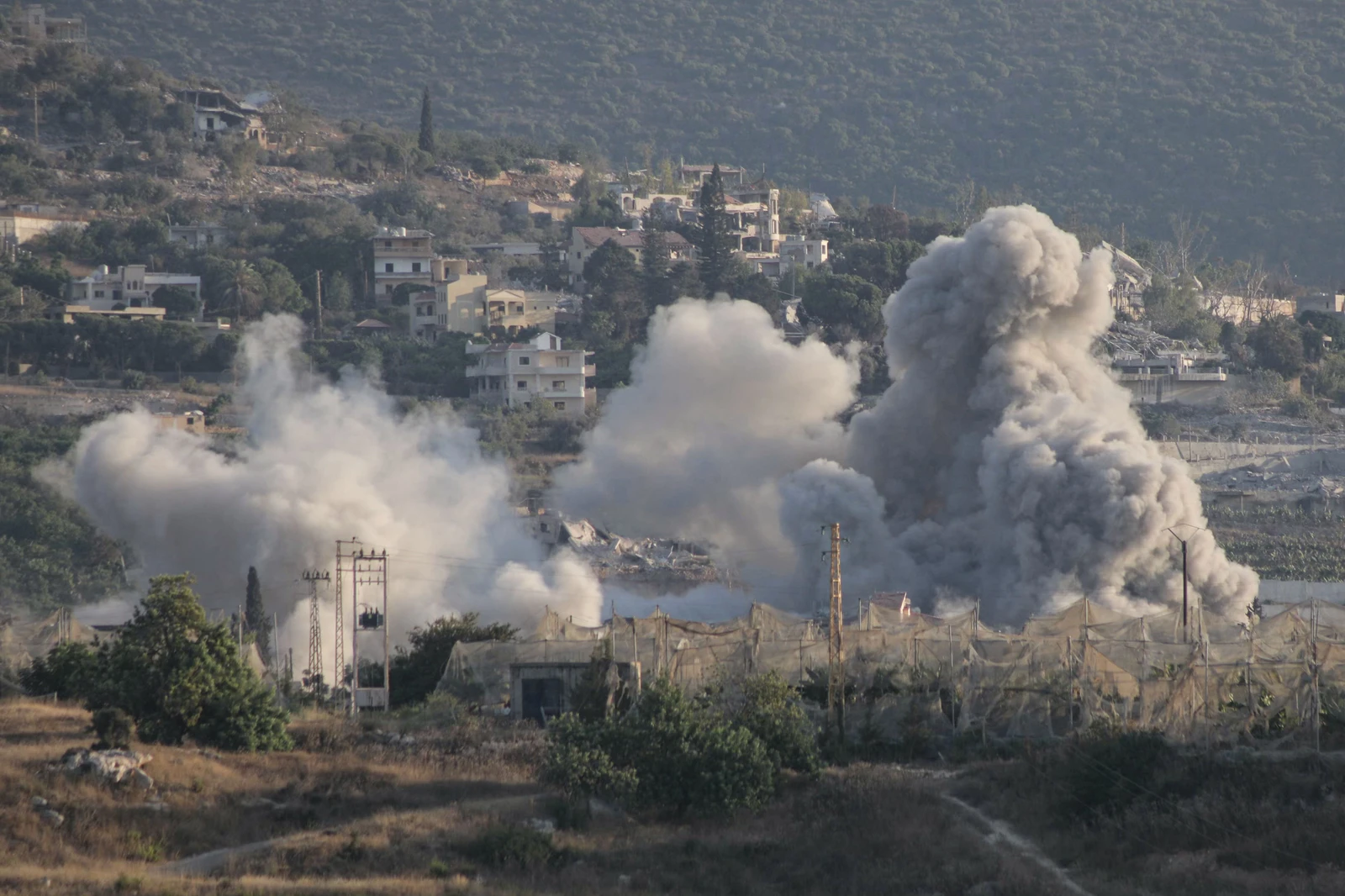
The dispute comes as the Ali Al-Taher Ridge in southern Lebanon remain at the center of Israeli military operations, with its forces targeting a purported network of Hezbollah tunnels and underground infrastructure.
The area witnessed renewed escalation early Wednesday after the Israeli military said Hezbollah had launched two explosive-laden drones toward Israeli forces operating in the area overnight.
Israel said its troops opened fire and downed one of the drones, with no injuries reported among Israeli forces.
At about 4 a.m., Israel struck a house in a neighborhood of Nabatieh, outside what the source described as the Israeli-held “yellow zone,” killing one person and wounding another.
The Israeli military said it had struck Hezbollah infrastructure in the Nabatieh area that was being used to plan and direct operations against Israeli forces in the security zone. It said the strikes were intended to remove an immediate threat.
Israel also carried out a series of airstrikes on Kfar Rumman, Nabatieh Al-Fawqa and Arabsalim.
Lebanese media described the bombardment as the heaviest in the area since military operations subsided in June.
According to Lebanon’s Ministry of Public Health, Israeli attacks between March 2 and Sept. 1 have killed 4,353 people and wounded 12,323.
The ministry said the overall toll in Lebanon since Oct. 8, 2023, when Hezbollah opened a front with Israel in support of Gaza, had reached 8,920 dead and 30,559 wounded.
Separately, a Lebanese judicial source told Arab News that the Internal Security Forces’ Information Branch was conducting a security and judicial investigation into an alleged organized military network operating between Lebanon and Syria.
The investigation is being supervised directly by Public Prosecutor Judge Ahmad Rami Al-Hajj, the source said.
According to the source, investigators uncovered a network allegedly run by a former Syrian regime general based in Moscow that was involved in smuggling people and weapons across Lebanon’s northern border and arranging military training at camps affiliated with Hezbollah in the northern Bekaa Valley.
“The detainees explicitly admitted that the camp was established and activated for the purpose of preparing groups to carry out security and military operations in Syria’s coastal region under the supervision of Hezbollah members,” the judicial source said.
The investigation has so far led to the arrest of five alleged core members of the network, while efforts are continuing to locate others suspected of involvement.
Three of those detained are Syrian nationals, including Ali Safi, a former colonel in the Syrian regime who, according to the source, previously held a senior air force position in Syria’s coastal region.
The source said Safi had been hiding in Akkar in northern Lebanon while posing as a coffee seller.
The other two detainees are Lebanese brothers.
One was previously dismissed from the Internal Security Forces over alleged involvement in the kidnapping of Syrian opposition figures on Lebanese territory, according to the judicial source.
His brother works as a bodyguard for a Lebanese political figure and is a member of Lebanon’s State Security agency, the source added.
Investigators have documented the alleged smuggling routes and located weapons caches in Akkar.
The judicial source said the network had been under surveillance for about two weeks.
Investigators found that Syrian members were allegedly being brought across illegal crossings on the Lebanon-Syria border in small groups of no more than five people before being transported to Beirut’s southern suburbs, and then to training camps in the northern Bekaa.
Security forces seized what the source described as large quantities of assault rifles, high-precision sniper rifles and hand grenades during the investigation.
Lebanese army hits back at criticism amid Israeli military expansion in south