LONDON: Israel’s Civil Administration Settlement Subcommittee is set to discuss plans for three West Bank settlements totaling 747 housing units, according to the Israeli rights group Bimkom — Planners for Planning Rights.
The deliberations come less than 24 hours after 12 Western countries, including the UK, announced plans to restrict trade with Israeli settlements and called on Israel to immediately halt settlement expansion and settler violence.
The largest proposal, Plan 320/6, would establish the Yitav West settlement in the Jordan Valley. It calls for 281 housing units on about 200,000 sq. meters, Bimkom said.
The planned settlement would be built less than 100 meters from the existing settlement of Yitav and next to the area where the Palestinian herding community of Ras Ein Al-Auja lived. The community had used land included in the proposal for grazing and agriculture.
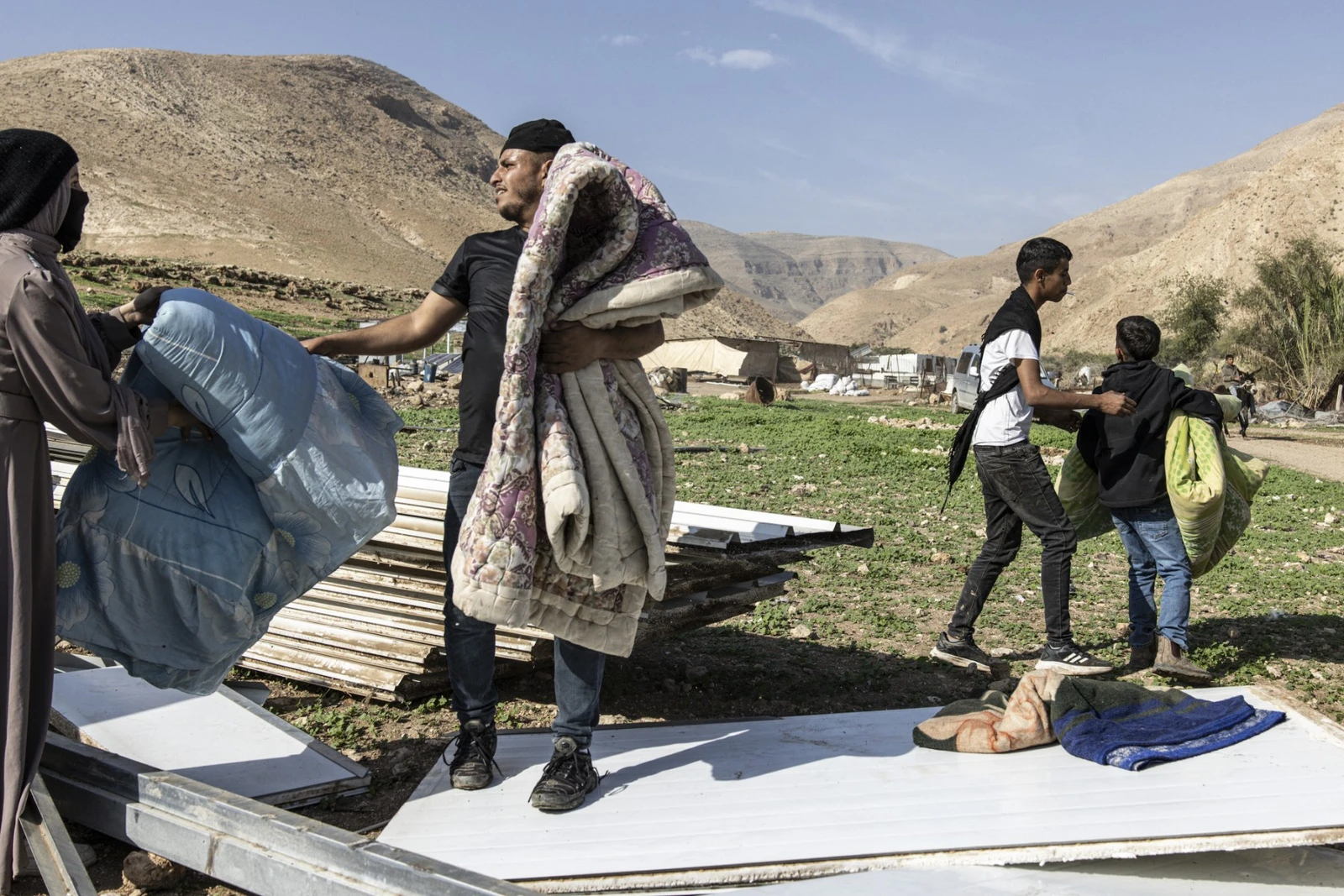
Ras Ein Al-Auja, which used to be the West Bank’s largest Palestinian herding community, was forced to leave in late January after sustained settler violence and pressure.
The proposal’s location, Bimkom said, underscores the relationship between settler violence and Israeli settlement policy.
“The Yitav West plan starkly illustrates the connection between settler violence and the government’s settlement policy,” said Asaf Peled of Bimkom.
“While the residents of Ras Ein Al-Auja were still struggling to remain in their community in the face of relentless violence and harassment, the government had already decided to establish a new settlement alongside it.
“Just months after the community was displaced, the state is moving rapidly ahead with the settlement, further entrenching the exclusion of Palestinians from recreational sites in the area. Instead of protecting the community from the violence that drove it out, the state is effectively rewarding settlers for their efforts to displace it.”
Planning for Yitav West began while Ras Ein Al-Auja residents were still seeking to remain in the area.
The Israeli government decided to establish the settlement on Dec. 11, 2025. The head of the Israeli military’s Central Command approved its jurisdictional boundaries on Dec. 28, and the plan cleared the planning bureau’s preliminary requirements within a week, Bimkom said.
The proposal is scheduled to come before the Settlement Subcommittee on Wednesday for a deposit hearing.
Planning documents identify Al-Watan Ltd. as the owner of the land covered by the proposal. Media reports have linked the company to Amana, a settler organization that has been reportedly used to buy land from Palestinians.
Yitav West would be built only a few dozen meters from the Al-Auja waterfall. Before Ras Ein Al-Auja was displaced, the nearby spring and waterfall were popular recreational sites for Palestinians.
Bimkom said Palestinians had largely stopped visiting the area as the settler presence has expanded and settlers have taken over surrounding land.
The group said a settlement near Wadi Al-Auja would severely hinder the return of Ras Ein Al-Auja families, who lived in the area and grazed their herds there for about five decades. It would also deepen Palestinians’ exclusion from nearby recreational sites.
The committee is also set to consider two plans to formalize long-standing outposts as independent settlements.
Plan 139 would formalize the Maoz Zvi outpost, near Jenin, as an independent settlement called Maoz. The proposal calls for 99 housing units on about 240,000 sq. meters, according to Bimkom.
The outpost was established in 2001, and the government decided in May 2025 to recognize it as an independent settlement.
Plan 252/2 would formalize the Adei Ad outpost, established in 1998, with 367 housing units on about 672,000 sq. meters. The government also approved its recognition as an independent settlement in May 2025.
Peled said the timing of the committee’s deliberations, less than a day after the Western countries’ announcement, “underscores just how sharply the government’s policy is moving in the opposite direction.”
Israel to discuss 3 West Bank settlement plans after 12 Western countries announce trade restrictions