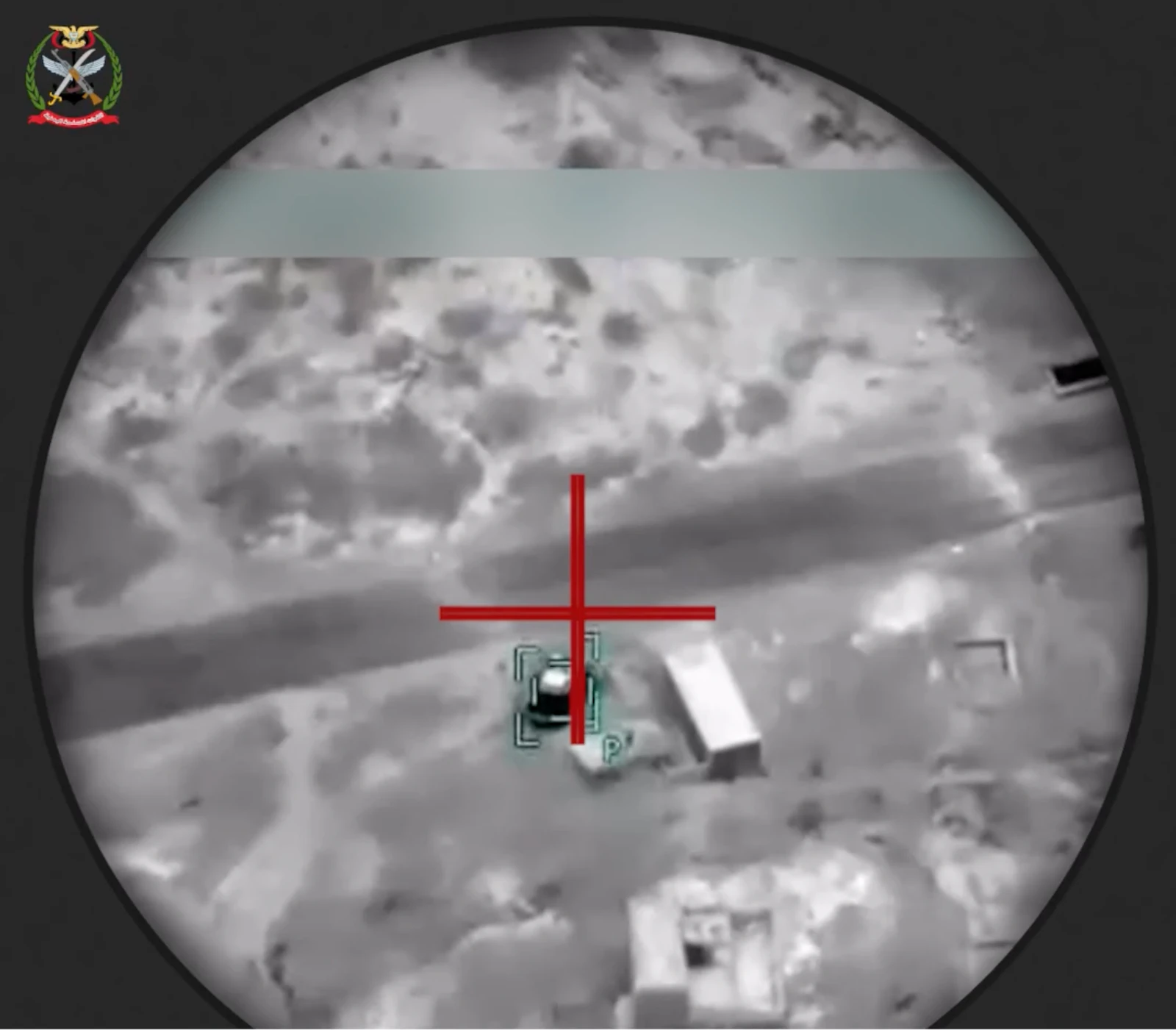
AL-MUKALLA: Special forces from the Arab coalition and Yemen’s counterterrorism units killed Daesh spokesperson Abu Hudhayfah Al-Ansari in a raid in the eastern city of Seiyun on Tuesday, Yemen’s state-run SABA news agency reported.
The operation has again drawn attention to Daesh and other extremist groups in Yemen, which have largely maintained a lower profile in recent years following sustained military and counterterrorism campaigns against their former strongholds.
Yemen’s Central State Security Agency said Arab coalition forces and Yemen’s elite Force 22 raided a house in Seiyun early on Tuesday after intelligence cooperation between the coalition and Yemeni security agencies identified Al-Ansari’s location.
The agency said he was hiding in the house with eight civilians — one man, two women and five children — when security forces moved in.
Al-Ansari was killed and another person wounded after they resisted the troops, the agency said.
The wounded person received medical treatment before being transferred to what authorities described as a “safe location.”
Security forces later searched the house, where they defused an explosive belt and seized two laptops, five mobile phones and two tablets.
The agency credited intelligence-sharing between Yemeni and Arab coalition agencies, joint surveillance and planning, and the training of elite forces for the success of the operation.
“The agency affirmed its continued pursuit, arrest and prosecution of terrorist elements and wanted individuals, as part of the Yemeni government’s efforts to combat terrorism,” the statement said, according to SABA.
The announcement came hours after residents in Seiyun reported hearing explosions in the early hours of Tuesday, seeing a drone flying over the city and observing troops deploying in the streets before later withdrawing.
The Seiyun operation is the latest in a series of raids targeting Daesh and Al-Qaeda in the Arabian Peninsula, or AQAP, both of which have suffered significant setbacks in recent years.
Yemeni government forces, backed by the Arab coalition, have targeted longstanding militant hideouts and camps in Abyan, Shabwa and Hadramout.
Al-Qaeda exploited the chaos that followed the outbreak of war between the Yemeni government and the Iran-backed Houthis in early 2015 to seize large areas of southern Yemen, including Al-Mukalla, the capital of Hadramout and Al-Houta, the capital of Lahj province.
Daesh, by contrast, has never managed to seize and hold significant territory in Yemen, although it has carried out deadly attacks against military and security targets across the country.
Successive military operations eventually forced Al-Qaeda from Al-Mukalla, Al-Houta and other areas under its control, driving many of its militants into remote and rugged areas of central and southern Yemen.
Yemeni experts and UN reports indicate that Daesh has substantially fewer fighters than AQAP, which has proved more resilient and established ties within tribal communities that have helped sustain recruitment and local networks.
A July 2025 report by the UN Security Council’s monitoring team on Daesh and Al-Qaeda said AQAP remained considerably stronger than Daesh in Yemen, with an estimated 2,000 to 3,000 fighters compared with fewer than 100 Daesh militants, mainly based in the central province of Marib.
The report said AQAP leader Saad bin Atef Al-Awlaki had restructured the organization and strengthened his authority, making it more cohesive and resilient.
Daesh, by contrast, lacked comparable organizational strength, although its Yemen branch continued recruitment and facilitation activities, and was involved in moving fighters and weapons through Yemen to Somalia.
Ali Al-Fakih, editor of Al-Masdar Online, told Arab News that the rise of extremist organizations in Yemen had historically been linked to their ability to exploit instability and security vacuums.
He said Al-Qaeda had proved more influential and resilient than Daesh because it established itself in Yemen much earlier and was better able to exploit extremist sentiment to attract recruits.
Daesh emerged later and initially drew some former Al-Qaeda members who viewed it as a new extremist movement.
“Daesh emerged as a distorted version lacking Al-Qaeda’s rhetoric, and therefore it was unable to attract and recruit young people at the same level as Al-Qaeda,” Al-Fakih said.
Other experts said Daesh’s extreme brutality and inability to integrate into Yemeni tribal communities further limited its appeal.
“Daesh is a brutal organization that resorted to excessive violence and was not accepted by Yemeni tribal society,” a Yemen-based political analyst, who asked not to be named for security reasons, told Arab News.
The analyst said Al-Qaeda had been more successful in building connections with tribes and exploiting religious sentiment, tribal loyalties, poverty and limited education to recruit fighters.
“Al-Qaeda focused on Yemeni tribal communities, exploiting calls to defend Islam, tribal pride, ignorance and poverty to infiltrate communities in Hadramout, Marib, Shabwa and Al-Bayda,” the analyst said.
“Daesh began brutally and failed to integrate into tribal ranks, leaving it significantly weaker.”
UN reports have also pointed to AQAP’s links with the Houthis in Yemen and Al-Shabaab in Somalia as factors that have helped it gain access to weapons and other forms of support.
The UN Panel of Experts on Yemen in 2024 described the relationship between the Houthis and AQAP as an “opportunistic alliance,” saying that despite their ideological differences, the two groups cooperated on security and intelligence matters.
The panel reported that the Houthis provided AQAP with drones and other weapons, trained fighters and offered safe haven to some members.
The UN has not reported similar cooperation between the Houthis and Daesh in Yemen.
A separate UN report published in July 2025 also highlighted links between armed groups in Yemen and the Horn of Africa, saying Somalia-based Al-Shabaab spent about one-quarter of its operational funds acquiring weapons from the Houthis and AQAP in Yemen.
Is Daesh a growing threat to Yemen and the region?