- Former senior US intelligence official Norman Roule says Houthi attacks on civilian targets should be treated as terrorism
- Says escalation reinforcing a Saudi-US and wider GCC security partnership that is already closer than it has been in years
The Houthis’ escalating missile and drone attacks on civilian targets in Saudi Arabia should no longer be viewed simply through the prism of Yemen’s civil war, according to former senior US intelligence official Norman Roule.
They represent a terrorist threat not only to the Kingdom, he said, but to millions of foreign nationals living in the Gulf, international shipping and the wider global economy.
Speaking to Arab News following deadly missile attacks on Riyadh’s King Khalid International Airport, Roule said Saudi Arabia had developed a “very effective, well-trained and well-equipped” air defense network that had intercepted the vast majority of Houthi missiles and drones fired at the Kingdom over the years.
But no defensive system, he cautioned, could stop every attack.
“There will be missiles or drones that get through,” he said. “And of course, that produces a tragedy, a terrorist action, such as we’ve just seen over the weekend.”
Roule said the latest strikes were likely to continue as Houthi forces faced growing battlefield pressure from the internationally recognized Yemeni government.
Government forces, backed by Saudi Arabia, have recently pushed the Houthis out of some areas they had captured, he said, creating an incentive for the group to retaliate by targeting politically and economically sensitive sites inside the Kingdom.
“If you are the Houthi leadership, or you are Iran advising the Houthi leadership, your position at this point is going to be: Attack highly sensitive economic and political locations within the Kingdom,” Roule said.
“In a sense, it is the success of the Yemeni government against the Houthis that is compelling the Houthis to undertake these actions to try to end Saudi support for the Yemeni government.”
For Roule, however, the significance of the attacks goes beyond their immediate military purpose.
“This is a terrorist threat to the international community,” he said.
He rejected the Houthi narrative that its military campaign was principally directed against Israel, pointing instead to civilian casualties caused by Houthi attacks elsewhere in the region.
“It’s a cruel and despicable statement by the Houthis that they are only opposed to Israel,” Roule said.
“The Houthis have killed far more Muslims in the world than they have Israelis.”
The targeting of civilian sites, he argued, has been a consistent feature of Houthi operations for more than a decade, including attacks on Saudi cities, energy infrastructure and transport facilities.
“There are millions of foreign nationals who live and happily thrive in the Kingdom, as well as the threat to Saudi civilians,” he said.
Roule said there was an inconsistency in how the international community classified such violence.
“If someone uses a car bomb against a building, it is perceived as an act of terrorism,” he said. “But if a terrorist group uses missiles or drones in an undeclared conflict, somehow the world stands back and does not respond as forcefully.”
He described attacks on civilians as “the cruelest form of thuggery,” arguing that Iran and allied groups were using pressure on civilian populations and global commerce in an effort to deter military action against themselves.
“The international community will have to decide whether they allow this to expand or not,” he said.
That threat is increasingly extending beyond Saudi territory.
Roule said the Houthis retain ambitions to control all of Yemen while developing a regional footprint stretching across the Red Sea and into East Africa.
He pointed to cooperation between the Houthis and Al-Shabab in Somalia, saying Iran and the Houthis had for years used East Africa as a transit platform for technology and supplies destined for Yemen.
A relationship with Al-Shabab, he warned, could potentially give the Houthis and Iran a geographic platform from which to expand drone operations beyond the southern Red Sea toward shipping routes in the eastern Mediterranean and around the Suez Canal.
But he cautioned against assuming the Houthis could simply shut the Bab Al-Mandab Strait. Russia and China both rely on Red Sea trade routes, Roule said, while the Houthis have largely avoided targeting Russian and Chinese shipping.
Closing the waterway completely, he said, would damage the economic interests of two countries with important political relationships with the group.
Instead, Roule sees a more complex strategy — threatening Saudi, Western and Israeli interests while establishing a regional presence capable of exerting pressure on international shipping without necessarily stopping it altogether.
The Houthis have also become increasingly capable of producing weapons locally, although Roule said they still depend heavily on sophisticated Iranian technology.
“The Houthis have the capacity to build the basic missile frame and the basic weaponry, but they need the advanced technology that Iran provides,” he said.
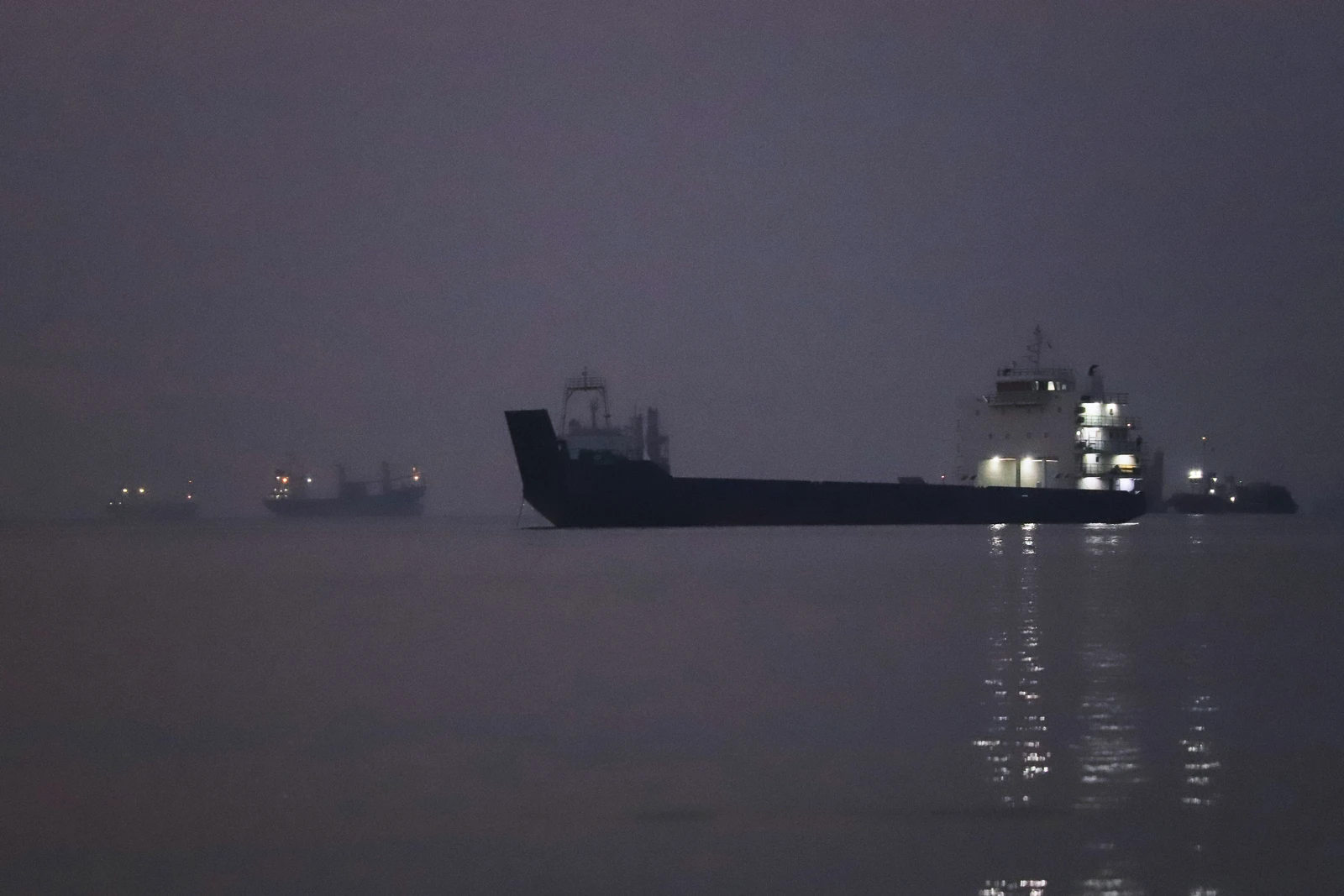
That technology, he said, reaches Yemen aboard small vessels through Iranian smuggling networks, either directly or after transshipment through East Africa.
The large number of fishing and smuggling boats operating in the region makes interdiction particularly difficult.
“Iranian intelligence services use these small boats to disguise their weapons shipments,” Roule said.
While describing the Houthis as both partners and proxies of Iran, Roule stressed that they also possess ambitions independent of Tehran.
He said the relationship should therefore not be understood as one in which every Houthi action is necessarily ordered directly by Iran.
The possibility of Iranian personnel playing a more direct operational role could not be ruled out, he added, citing the precedent of Islamic Revolutionary Guard Corps’ Quds Force officers working alongside allied forces during the Syrian civil war.
A report last month by the Associated Press, based on sources including a top Houthi official, suggested that the IRGC followed a similar operational model during the recent Houthi offensive toward the Red Sea.
However, the Houthis’ own objective, Roule said, remains straightforward — control of Yemen and access to the economic and strategic leverage that control of the Red Sea coast could provide.
Against that backdrop, Roule said international support for Saudi Arabia’s defenses would become increasingly important.
The starting point, he argued, should be listening to Riyadh rather than prescribing what support it requires.
“What we should be doing is reaching out to our Saudi partners, which the US does every day through its Central Command military liaisons, and find out from Saudi Arabia what exactly it needs to do to improve its defenses,” he said.
“The Kingdom will know what it needs.”
Washington and other partners should then provide the necessary support and, where required, take part in a broader international effort to neutralize the threat, he said.
Diplomacy remains desirable, Roule added, but cannot be treated as a substitute for security when one side refuses to compromise.
“The weakest form of response you see in the international community is when you have actors say they of course condemn the action, but they seek a diplomatic solution, and end the conversation there,” he said.
“The conversation must continue to say: What if the Houthis and the Iranians will not take diplomacy, but will only insist upon their goals?”
Despite concerns that escalating violence could drag Washington or Riyadh into another prolonged regional war, Roule said the latest crisis had, in fact, strengthened Gulf-US security ties.
“My understanding, which is informed, is that the partnership between the US and Saudi Arabia and the GCC in general has never been closer,” he said.
When the conflict ends, he predicted, Washington would emerge with a substantially closer security relationship with the GCC than it had enjoyed in many years.
That partnership, he said, should not mean transforming Yemen’s war into a US-Houthi or Saudi-Houthi war.
“This is a Yemen conflict to be resolved by Yemenis,” Roule said.
Allowing the Houthis to portray the fighting as a struggle against Washington, Riyadh or other foreign capitals would only help the group shift attention away from its confrontation with the Yemeni government.
But the transnational nature of Houthi attacks means the outside world cannot remain detached either.
“An international approach to this is absolutely required,” Roule said.
Such an effort, he argued, should be led by the US in partnership with Saudi Arabia — and should recognize that Houthi missile, drone and maritime attacks are no longer solely a Yemeni or Saudi problem.
“This is a global threat,” he said.
“We’ve seen lives taken — from Indians to Saudis to Americans — in the last week, and this requires, therefore, a global response.”