Editing by Tarek Ali Ahmad, Graphics by AN Creative Team, Copy Editing by Andy Hase
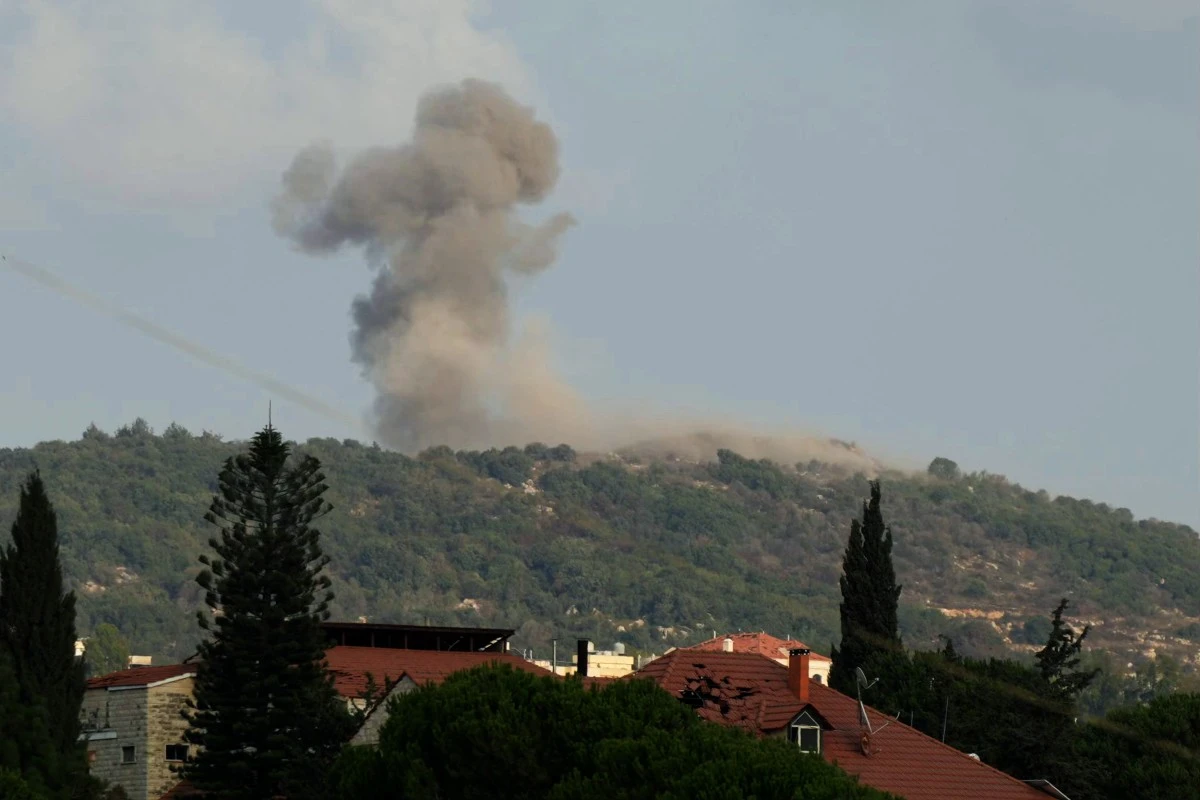
BEIRUT: Israel’s announcement that it had secured “operational control” of the Ali Al-Taher highlands in southern Lebanon was met with cautious silence in Beirut on Friday, with Lebanese officials and military experts saying they were unable to independently confirm whether the strategically important position had actually fallen.
The Israeli military said on Thursday night that forces from its 36th Division had established control of the area “above and below ground” after clearing what it described as Hezbollah’s underground military infrastructure.
It claimed that several Hezbollah fighters had been killed and others had fled, while operations to destroy tunnels and underground facilities were continuing.
Israeli Prime Minister Benjamin Netanyahu described the operation as the “clearing” of the Ali Al-Taher heights and said that the area no longer posed a threat to Israel.
But on the Lebanese side uncertainty remained.
Retired Lebanese army Maj. Gen. Abdulrahman Shehaitli, who previously headed Lebanon’s delegation in maritime border negotiations with Israel, told Arab News that Israel had imposed a broad “ring of fire” around the hills, making independent verification impossible.
“No Lebanese party can confirm that the hills have fallen,” he said.
“The Israeli fire cordon is preventing anyone from advancing to verify what has happened. The Lebanese army cannot move forward, nor can anyone else.”
Why Ali Al-Taher matters
The Ali Al-Taher highlands lie in Nabatieh governorate, between Kfar Tibnit and Nabatieh Al-Fawqa, north of the Litani River.
Rising about 600 meters above sea level and located 12-15 km from the Israeli border, the hills overlook Nabatieh, Iqlim Al-Tuffah and areas around the Litani.
Their location also links southern Lebanon’s border districts with the mountainous Iqlim Al-Tuffah region further north.
For years the area was regarded as an important Hezbollah logistical and operational position.
Israeli assessments have long portrayed the hills not simply as high ground but as a gateway to some of Hezbollah’s deeper defensive infrastructure, including tunnels and underground installations.
Israel has claimed that dozens of Hezbollah fighters were sheltering inside those facilities.
Over recent weeks, Israeli forces carried out extensive air and ground operations around the area, apparently seeking to isolate the position and prevent supplies or reinforcements reaching those inside.
The significance of the operation lies partly in what comes next.
A Lebanese political observer, preferring to stay anonymous due to sensitive discussions they are privy to, told Arab News that if Israel had genuinely secured the highlands, it could weaken its argument for further territorial expansion deeper into Lebanon.
“The fall of Ali Al-Taher could mean an end to Israeli incursions aimed at taking additional Lebanese territory,” the person said.
“The argument that Hezbollah continues to pose a major threat to northern Israel would become less convincing if south of the Litani is already under Israeli control and Hezbollah’s ability to operate militarily has been significantly reduced.”
That assessment, however, remains contested.
The Israeli military itself said operations in the area were continuing, while Defense Minister Israel Katz said on Friday that forces were still preparing to establish “full control” of the heights and prevent Hezbollah from reestablishing a presence there.
That language raised questions over whether Israel had actually completed the capture it announced a day earlier.
A position long at the center of Israeli planning
The Ali Al-Taher highlands emerged as a major Israeli objective after the ceasefire between Israel and Hezbollah in June.
During fighting that began on March 2, Israeli forces had advanced as far as Beaufort Castle, about 3-4 km from the heights. A temporary ceasefire reached after direct Lebanon-Israel talks on April 14, mediated by the US, halted the advance.
A Lebanese military source said at the time that Israeli forces had appeared likely to push toward Nabatieh in an effort to encircle and seize Ali Al-Taher.
The latest operation suggests that that objective remained central to Israeli planning.
Shehaitli said that the loss of communications between Hezbollah and fighters believed to be inside the installations could suggest that the position had fallen.
But, he added, the absence of clear Israeli evidence remained notable.
“Otherwise Israel would have had to carry out a major propaganda campaign to prove that the hills had fallen — and it has not done so.”
He said that from a military perspective the site was likely to have been heavily booby-trapped by Hezbollah, making any Israeli attempt to enter underground facilities slow and dangerous.
Shehaitli also rejected the idea that an earlier proposal to transfer the area to the Lebanese army would necessarily have provided an easy alternative.
“Even the Lebanese army would not have been able to take over and control those hills without coordination with Hezbollah. Hezbollah alone could provide maps showing where the area had been booby-trapped.”
A source in the Lebanese army command told Arab News that no Lebanese military units were deployed around Ali Al-Taher because continuing Israeli escalation had made deployment impossible.
Questions over Israel’s claims
Retired Brig. Gen. Mounir Shehadeh also questioned whether Israel had taken complete control.
“If Israel had fully captured Ali Al-Taher it would have raised its flag there, as it did at Beaufort Castle, and released footage from inside the hills showing the installations it claims are there,” he said.
Whoever controlled the highlands would gain an enhanced ability to monitor movement across the surrounding area, establish surveillance and communications equipment, and add depth to the security zone Israel is attempting to establish in southern Lebanon, Shehadeh said.
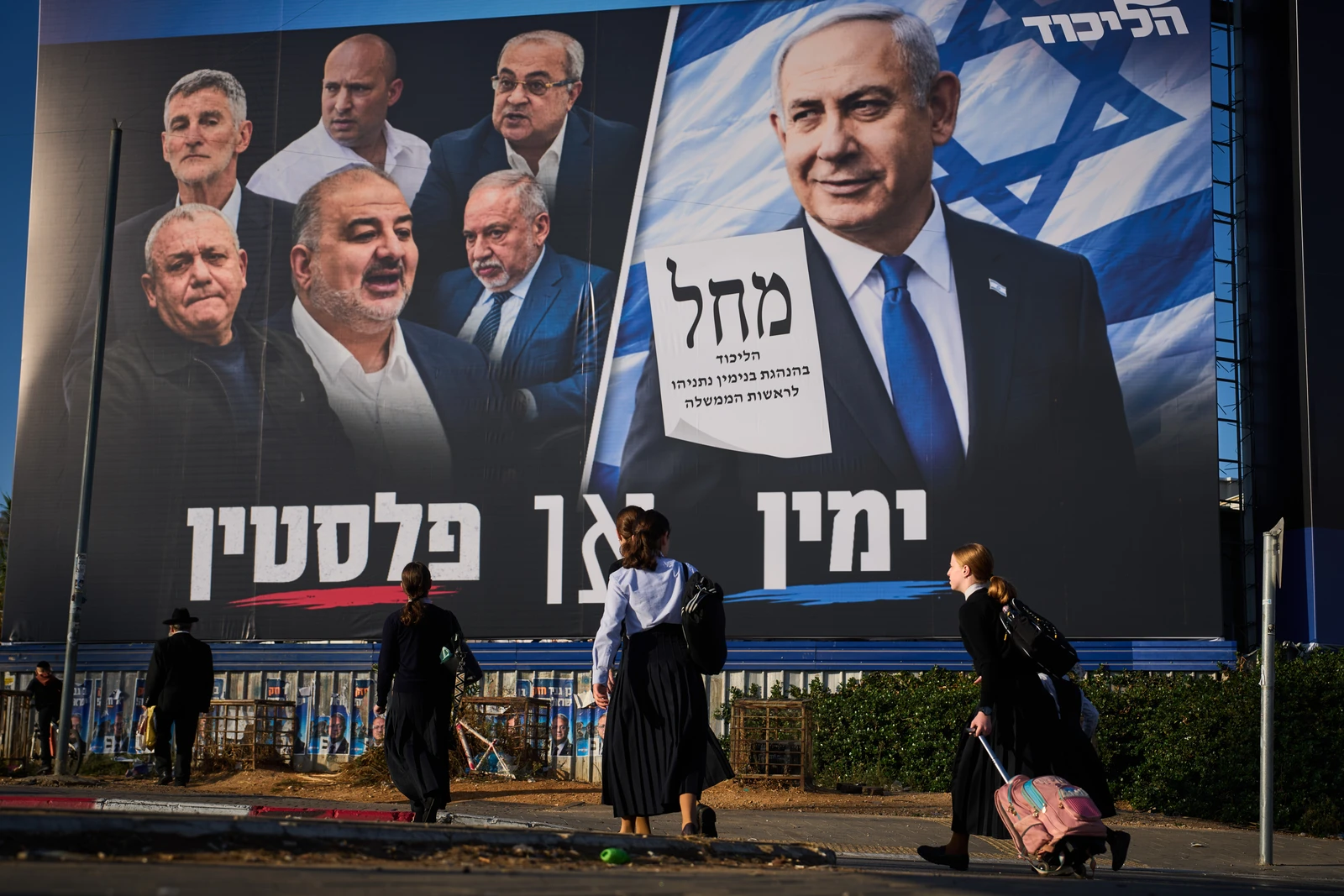
Such a capture could also carry political value inside Israel ahead of elections, he said.
Later on Friday an Israeli military source quoted by Maariv said that 15 bodies had been found inside tunnels at Ali Al-Taher.
Katz said that the area had served as a command center for attacks against Israeli forces and the Galilee and that Israel would not withdraw from its security zone in southern Lebanon until Hezbollah had been disarmed.
Israeli forces would continue operations to neutralize tunnels across the south and prevent Hezbollah from rebuilding its military capabilities, he said.
Israel also said that details of the operation had been withheld to protect soldiers taking part.
Hezbollah, meanwhile, offered little public response.
Ihab Hamadeh, one of the group’s representatives in the Lebanese Parliament, said that there remained “ambiguity” over the reality of Israel’s control.
“How can the Israeli enemy claim to have captured Ali Al-Taher while it continues to bombard and strike it?” he said.
Hamadeh argued that Israel might control the skies and have surrounded the area geographically but had not demonstrated that its troops had entered and secured the underground complex.
Israel had released no images proving it had seized the site or the military equipment it claimed was inside, he said.
He also suggested that Netanyahu was seeking to turn the announcement into an electoral achievement.
Could the capture change Israel’s security rationale?
The wider question is whether control of Ali Al-Taher, if confirmed, changes Israel’s justification for maintaining forces deeper inside Lebanon.
The hills had been considered one of the main remaining positions from which Hezbollah could potentially threaten northern Israel with short-range rockets and drones.
Their elevation and location gave them operational value beyond the immediate battlefield.
If those capabilities have now been removed, pressure could increase on Israel to explain the rationale for maintaining or expanding its territorial presence.
At the same time, Israel has made clear that it sees the broader objective not simply as destroying individual positions but preventing Hezbollah from rebuilding its military infrastructure.
That distinction could determine whether the fall of Ali Al-Taher marks the end of one Israeli objective or merely the beginning of another phase of operations.
Prisoner releases accompany military developments
The developments at Ali Al-Taher coincided with a second consecutive day of Lebanese prisoner releases by Israel.
The US Embassy in Lebanon said that American mediation between the the two governments had produced initial steps including the release of detainees and assistance to Lebanon in recovering missing remains.
The measures followed direct bilateral talks hosted in Rome in August on what the embassy described as important civilian issues.
US Ambassador to Lebanon Michel Issa and US Ambassador to Israel Mike Huckabee finalized the latest prisoner release during Issa’s visit to Israel earlier this week, according to the embassy.
It praised both governments for demonstrating “good faith” and expressed hope that the steps could form a basis for expanding discussions to other civilian issues.
A Lebanese official told Arab News that prisoner releases and the Lebanon-Israel border would likely feature prominently in the eighth round of direct negotiations in Rome.
Israeli demolition and bulldozing operations in southern Lebanon had erased or obscured parts of the physical border, the person said.
“The next negotiations must therefore reaffirm the location of the international boundary after its markers were lost.”
Negotiators were not expected to discuss expanding the designated pilot zones during the next round, the official said.
On Friday morning the International Committee of the Red Cross received four Lebanese prisoners from the Israeli military through the Naqoura border crossing.
The convoy later traveled to Mansouri, south of Tyre, where the men were handed to the Lebanese army and transferred to a military barracks.
Their release followed that of a Lebanese civilian a day earlier.
For Lebanon, the timing underscores the contradiction shaping the current phase: direct negotiations and confidence-building measures are advancing at the same time that Israeli forces continue military operations and consolidate positions deeper inside Lebanese territory.
Whether Ali Al-Taher ultimately becomes the point at which Israel considers its immediate military objectives achieved — or another foothold in a longer-term security zone — may now be one of the central questions facing the next stage of Lebanon-Israel negotiations.
Has Israel’s claimed capture of Ali Al-Taher changed military equation in south Lebanon?