- Lebanese officials say foreign envoys have warned that any new confrontation could quickly engulf the country
- Israeli threats, Hezbollah’s remaining arsenal and widening disputes over the Lebanese army add to fears of a renewed conflict
BEIRUT: Lebanese President Joseph Aoun warned on Wednesday that wars rarely unfold as either side expects, as fears grow that Lebanon could once again be drawn into a wider regional confrontation.
“The course of wars always differs from what the parties to the conflict expect,” Aoun said, stressing that wars “can only end through negotiation and dialogue,” while their continuation leads to more casualties, bloodshed and destruction.
His comments came as Israeli drones flew intensively over Beirut on Wednesday amid heightened tensions and increasingly explicit Israeli warnings of a new war if Iran-backed Hezbollah joins any Iranian attack on Israel.
Lebanese officials have also faced renewed Israeli criticism of the Lebanese army and its efforts to implement security arrangements in the south.
A Lebanese official source told Arab News that senior officials had received repeated warnings in recent days about the consequences of Hezbollah becoming involved in any renewed military confrontation between Israel and Iran.
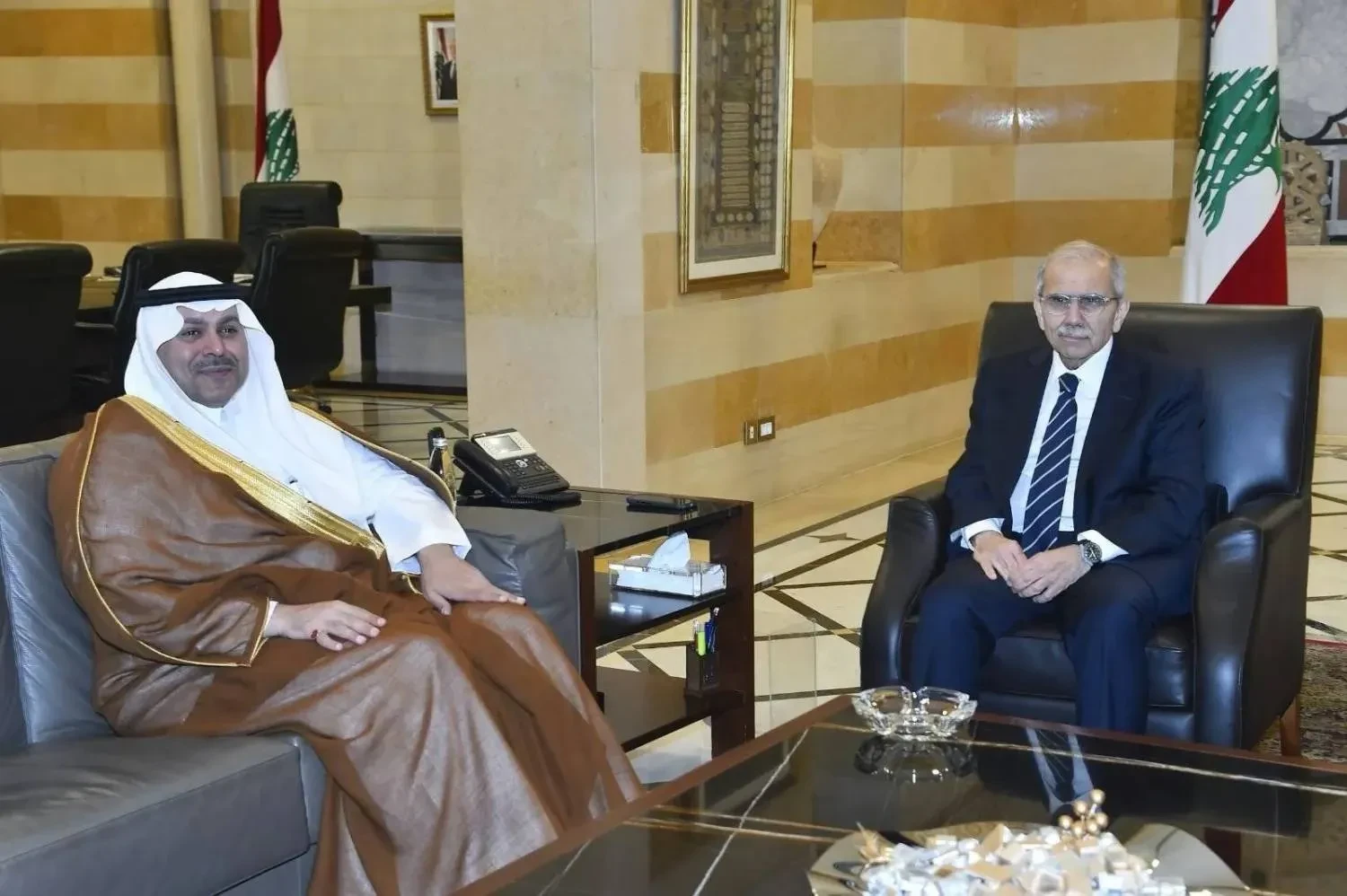
“All Arab and foreign officials who have visited Lebanon and met President Joseph Aoun, Prime Minister Nawaf Salam and Parliament Speaker Nabih Berri have conveyed their countries’ concerns about the possibility of renewed war,” the source said.
“They have also warned against Lebanon becoming involved, particularly because there may be no Israeli restraints in the next confrontation.”
Sidon MP Abdul Rahman Al-Bizri told Arab News that the region was passing through “dangerous circumstances,” with Israeli military expansion continuing in southern Lebanon.
“What raises the level of danger further are the attacks on Saudi Arabia, which plays an important role in finding solutions in the region,” Al-Bizri said.
“Lebanon will inevitably be affected by the continuing US-Iranian tension.”
He said developments could also be influenced by political events in Israel and the US, adding that several foreign envoys had warned Lebanese officials that major developments could place the country “at the heart of events.”
Al-Bizri said: “What Lebanon needs is internal unity and for political disagreements to remain within state institutions.
“We all agree on the Taif Agreement, the state’s monopoly over authority and the extension of sovereignty. But there is also Israeli occupation, and the Lebanese negotiating side, which is relying on the framework agreement, needs to achieve positive results if optimism is to be justified.”
Israeli Defense Minister Israel Katz warned on Tuesday that Israel could expand its control to additional areas of southern Lebanon if Hezbollah joined an Iranian attack on Israel.
He also threatened a forceful response against Beirut’s southern suburbs if fire or drones were launched toward Israeli cities or settlements.
The Israeli military currently controls about 700 sq. km of Lebanese border territory, according to Lebanese estimates.
Since the ceasefire, more than 60 Lebanese villages containing some 23,000 homes have been demolished, according to figures cited by the Lebanese side. Israel says areas targeted by its forces were being used by Hezbollah and posed a threat to residents of northern Israel.
Katz has said Israeli forces would not withdraw from the security zone as long as Hezbollah remained armed across Lebanon.
Retired Lebanese Brig. Gen. Khalil Gemayel told Arab News that the military indicators did not currently suggest Israel was preparing for an immediate full-scale offensive.
“All the military indicators suggest that Israel is currently in a defensive rather than offensive posture,” he said.
“The offensive priority has been withdrawn from the south, with reserve brigades remaining.”
Gemayel said Hezbollah had lost a substantial part of its previous military strength but continued to retain an organized command structure, fighters, missiles and drones.
“Hezbollah has lost a large part of its capabilities, but it still exists, still has command and control over its members, and still possesses missiles — although not in the quantities it once did — as well as drones,” he said.
“But the decision to go to war would be an enormous one, and the consequences would be catastrophic.”
Gemayel warned that Nabatiyeh could become a major target if another war erupted.
“If Iran is cornered, Hezbollah will support it,” he said.
He also referred to explosives seized by the Lebanese state that were linked to Hezbollah, saying he believed they may have been intended for booby-trapping operations.
“Israel, meanwhile, is continuing to expand its target bank,” he said. “Everyone is preparing, but Israel is more comfortable militarily, and there is little to prevent it from expanding operations if it chooses to do so.”
The warnings come as Lebanese and Israeli military delegations completed two days of direct technical talks at US Central Command headquarters in Tampa, Florida, with US participation.
The discussions on Oct. 20 and 21 marked the resumption of direct negotiations after a break of about two-and-a-half months.
The Lebanese delegation focused on several demands, including an end to Israeli bulldozing in border towns, a halt to airstrikes and demolitions, full implementation of the ceasefire and Israeli withdrawal, the return of Lebanese detainees, and protection for civilians near the so-called yellow line during the olive harvest.
The US Embassy in Lebanon quoted an American official as saying the Tampa talks were working-level discussions focused on the security dimension of the tripartite framework.
The two sessions centered on security provisions and technical measures, but a wide gap remains between the Lebanese and Israeli positions.
Israel has accused the Lebanese army of coordinating with Hezbollah and failing to sufficiently curb the group’s activities.
The Lebanese army, meanwhile, accuses Israel of failing to implement agreed commitments while continuing military operations, demolitions and strikes.
The Lebanese side has also rejected proposals to establish a permanent bilateral committee between the Lebanese and Israeli militaries.
Coinciding with the Tampa negotiations, the Israeli military issued a statement accusing the Lebanese army of failing to adequately restrict Hezbollah activity and of coordinating with the group over enforcement of security arrangements.
It said it expected the Lebanese army to take “more determined and effective measures” to fulfill its responsibilities.
The Israeli military cited a Hezbollah facility in Kafra, southern Lebanon, which the Lebanese army announced it had begun dismantling in December 2025.
Israel claimed subsequent footage showed Hezbollah members continuing to operate inside the facility and attempting to remove weapons months later.
The Lebanese army rejected the accusation, saying all measures carried out by its units had been documented with the ceasefire monitoring committee, known as the Mechanism.
In a statement, the army said its units began dealing with the facility in Kafra, in the Bint Jbeil district, in December 2025 and continued work until March 16, 2026.
It said troops were then forced to suspend the operation and evacuate the area at the request of the monitoring committee because of Israeli threats to strike the facility.
The army said it informed the Mechanism at the time that the mission had not been completed and that military equipment and ammunition remained inside.
The site was subsequently struck by Israel, while later Lebanese army requests to return and complete the operation were rejected by Israel, according to the statement.
Lebanese troops were eventually able to resume work at the facility on Aug. 15 in coordination with the monitoring committee and completed the operation, closing the site on Oct. 16.
The Lebanese army described repeated Israeli accusations as “disinformation campaigns” aimed at undermining its credibility at home and abroad.
With military tensions rising, Hezbollah still armed and Israeli forces remaining inside Lebanese territory, officials and analysts say the danger lies less in whether Lebanon actively chooses another war than in whether a wider regional confrontation leaves it any choice at all.