VENICE: Marking the UAE’s ninth participation at the International Art Exhibition at La Biennale di Venezia, Washwasha is whispering its message loud and clear.
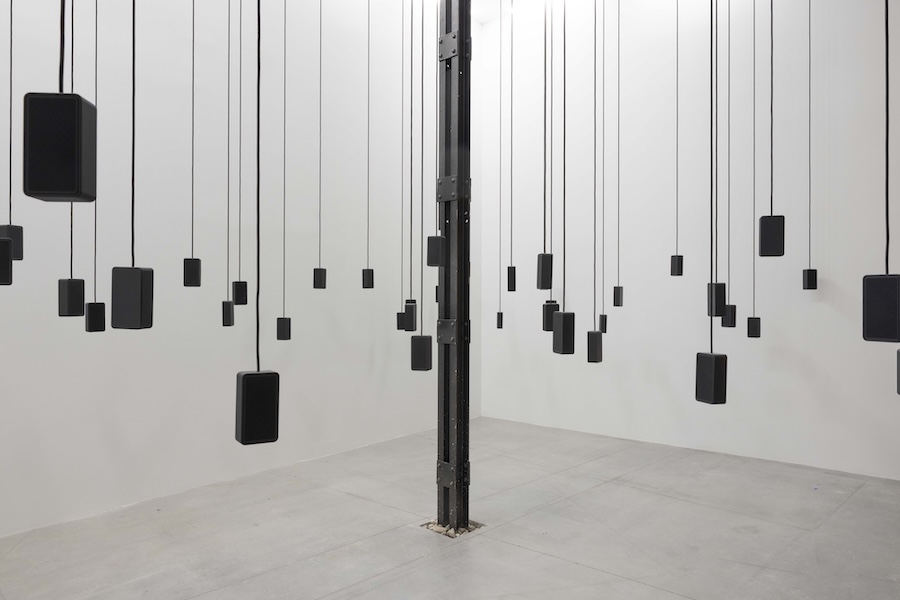
The group show with six artists — Mays Al-Baik, Jawad Al-Malhi, Farah Al-Qasimi, Alaa Edris, Lamya Gargash and Taus Makhacheva — is perhaps one of the most cohesive group exhibitions at the Arsenale.
The exhibition is curated by Bana Kattan, associate head of exhibitions at the Guggenheim Abu Dhabi, with assistant curator Tala Nassar, who specializes in modern and contemporary Arab art.
Arab News spoke to Nassar about the exhibition, which will close on Nov. 22.
“Sound optimizes a lot of our exhibition, but we are very strict about saying that this is not a sound show — the artists just use sound as a starting point to explore themes of the intangible,” Nassar said.
The curators started with the idea of sound frequencies.
“Washwasha is an onomatopoeic word, so the meaning resides in the sound itself. So, it sounds like the sound of whisper,” Nassar said.
A phonetic transliteration of Arabic, the Washwasha logo was crafted by a design studio based in Jordan.
“I’m very proud of this logo,” Nassar said, adding that it was created by commissioning a seasoned calligrapher to write washwasha in Arabic.
“Now, if you look close, you’ll see the wall from the logo is actually turned. It is intentional — it looks like an ear. If you look really hard, it also looks like the bass clef (in music).
“That is the beauty of the Arabic language. It’s not just squiggly lines. Each one signifies something.”
At the entrance of the UAE National Pavilion is Makhacheva’s And What Did You Say?
Nassar said: “Taus (Makhacheva) wanted to metabolize gossip and thinking about how gossip is related to your body.”
A newer part of the artwork was activated in July — the bench which houses the ephemera will be used as part of the live show.
There will be three dancers, each representing “a stage of gossip,” who will linger around the corners of the space and interact with those present — just like gossip.
Next, in Al-Malhi’s Naiman (2008/2026), we enter an architectural reimagining of Hammam Al-Ayn, the historic public bathhouse in East Jerusalem.
“In 2008, he recorded men in their 70s — none of these men are with us today — and they were each talking about their experience of the celebratory ritual the night before their wedding, where they would go to one of the oldest bathhouses in Palestine with their friends.
“These men were telling the story with candor and humor. What is really interesting is the tradition does not exist in that same way anymore,” Nassar said.
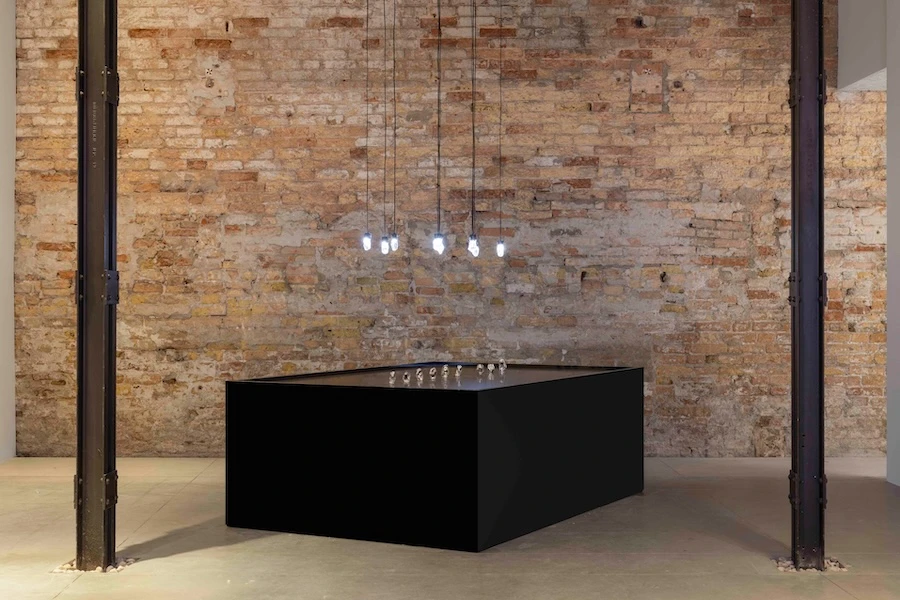
Meanwhile, Al-Baik’s Kuni Kai Akuna Kama Aqul! (Be, so that I may be as I say!) (2026) consists of casts made of her own mouth as she tried to utter a word.
Although no sound came out, there was a permanent record of the movement that signaled her desire to communicate.
“There are 10 pieces that hang from the ceiling; a phrase from the Qur’an, so it like a celestial command,” Nassar said. “And if you look up, you will notice that they are organized in the shape or the pattern of the Thuraya star cluster, the Pleiades, which is very much present in a lot of Arabic poetry.”
Next, are photographs from Gargash’s Majlis series (2009).
“Lamya captures a range of hosting spaces in the UAE, and for me, that ties really well with Jawad’s piece because it is another sonic gathering space,” Nassar said. “The majlis is used in people’s homes. It’s also an institutional and a cultural space. People have weddings, funerals, conversations. They go to solve problems — and to gossip.”
Al-Qasimi’s new commission “The Curse” is a four-channel film set against a backdrop of a children’s theater. Throughout the 18-minute-long film, the artist explores the narrative of a child who believes that their scream brought a curse upon the village.
Al-Qasimi filmed it within the UAE, alongside the Habus tribe — who originate in the northern Emirates — performing Al-Nadbah, the tradition where a group of men scream across mountain tops as a way of calling the community together.
“Back then, before phones, this was a way of calling people. Nowadays, they use it more as a traditional performance. In other scenes, Farah films the pigeons that are all over the UAE, which were historically used as domesticated messengers, and now they are seen as a nuisance — even here in Venice,” Nassar said.
Other scenes include a Pakistani shop-owner in Dubai reading his original poetry while showing a translation using ChatGPT.
Then we move to artist Edris’ Wiswas.
Nassar said: “I really love this work because it is not only about technology, but it talks about how language translates differently from one person to the other.”
Edris created three wooden self-portrait sculptures with animatronic eyes that rotate; they each represent the past, present and future.
“What I want people to note when they visit this space is that our artists are multi-generational and from diverse places but all have a certain tie to the UAE. We really wanted to highlight that in Venice,” Nassar said.