- Ithra’s exhibition of this year’s potential winners runs until October
DAMMAM: The King Abdulaziz Center for World Culture (Ithra) is currently exhibiting the works of the five artists shortlisted for the seventh edition of the Ithra Art Prize — Aseel Al-Yaqoub (Kuwait); Bady Dalloul (Syria/France); Heba Y. Amin El-Mahamly (Egypt); Ala Younis (Kuwait); and Jawad Al-Malhi (Palestine).
The Ithra Art Prize is one of the region’s most prestigious art awards, offering the winner a grant of $100,000 and a place in the center’s permanent collection. The exhibition will run until the announcement of the winner in October.
Aseel Al-Yaqoub
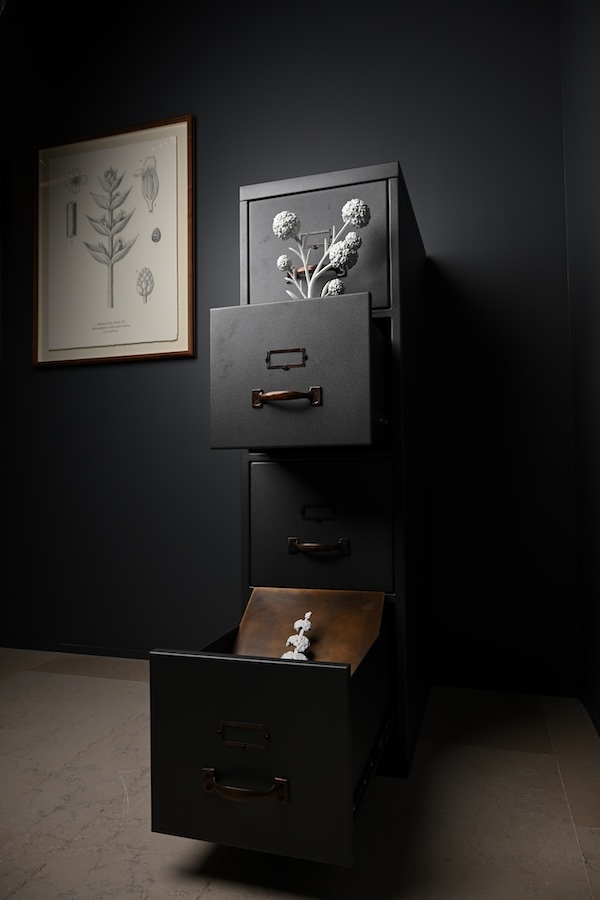
‘Flora Incognita’
Al-Yaqoub’s installation of 3D-printed plant sculptures, steel cabinets and graphite drawings “revisits the history of botanical classification in the Gulf and the systems that sought to stabilize it,” according to the exhibition brochure. Commonly, when an unknown plant was discovered, it was named according to what already known plant it most resembled, and a geographic reference was added to the — normally — Latin structure. “In this gesture of recognition,” Al-Yaqoub’s piece asks, “what was altered, and what was secured?” The “plants” in “Flora Incognita” do not, the brochure states “resolve into fixed categories.” Instead, “they exist in a state of suspension, neither fully native nor entirely foreign, neither wholly authentic nor entirely invented.
“By inhabiting this ambiguity,” the statement continues, the work explores “how systems of documentation quietly determine what is seen, remembered, and accepted as real.”
Bady Dalloul
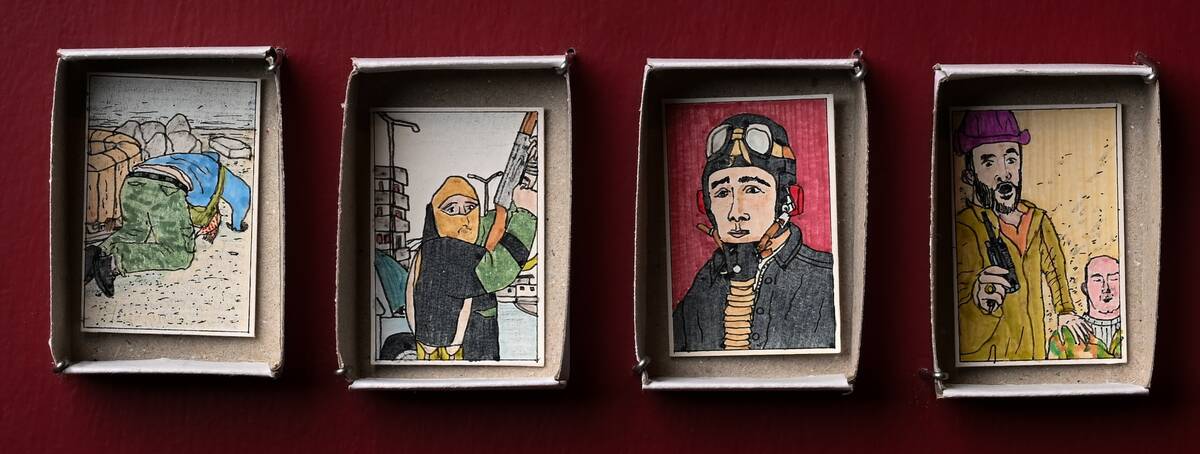
‘Drawing in Matchboxes’
Dalloul’s entry for the prize is a selection of pieces from his ongoing series, most recently seen in his Dubai solo exhibition “Self-Portrait for a Cat I Don’t Have.” His daily practice of drawing in matchboxes began in 2016, since when he has completed more than 800 of them. At first, they were mostly scenes from the Syrian Civil War, reflecting what he saw on TV, online, and in print media in France, where he was living at the time. “It was my way to cope,” he told Arab News of the series earlier this year. “The contrast between those images and my memories of summers at my grandparents’ home (in Damascus) was torturing me. Somehow, the drawing itself makes it less horrendous to me. It makes it lookable, but not likeable.” Later, the drawings became more like a visual journal, particularly of his time spent living in Japan.
Heba Y. Amin El-Mahamly
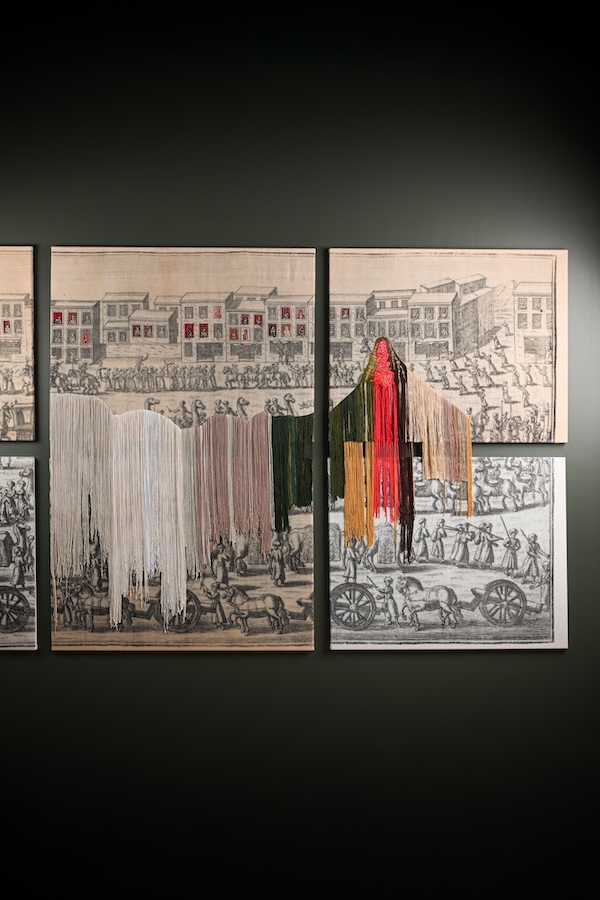
‘The Last Carrier: Iteration I’
El-Mahamly’s practice, the brochure states, “critically investigates the technologies and infrastructures of control that shape modernity, taking as its point of departure the colonial and postcolonial histories embedded in visual and territorial regimes.”
Her shortlisted screenprint is inspired by French traveler Paul Lucas’ 1719 depiction of a Mahmal procession departing Cairo for Makkah — “an engraving onto which fantasy, authority, and curiosity about the ‘exotic East’ converged,” the notes suggest.
“By translating the engraving into fragmented textile panels, the work transforms the image into a site of re-vision where those once rendered as spectacle become agents who look back,” the brochure continues. “What happens when those once reduced to image become the authors of vision?”
Ala Younis
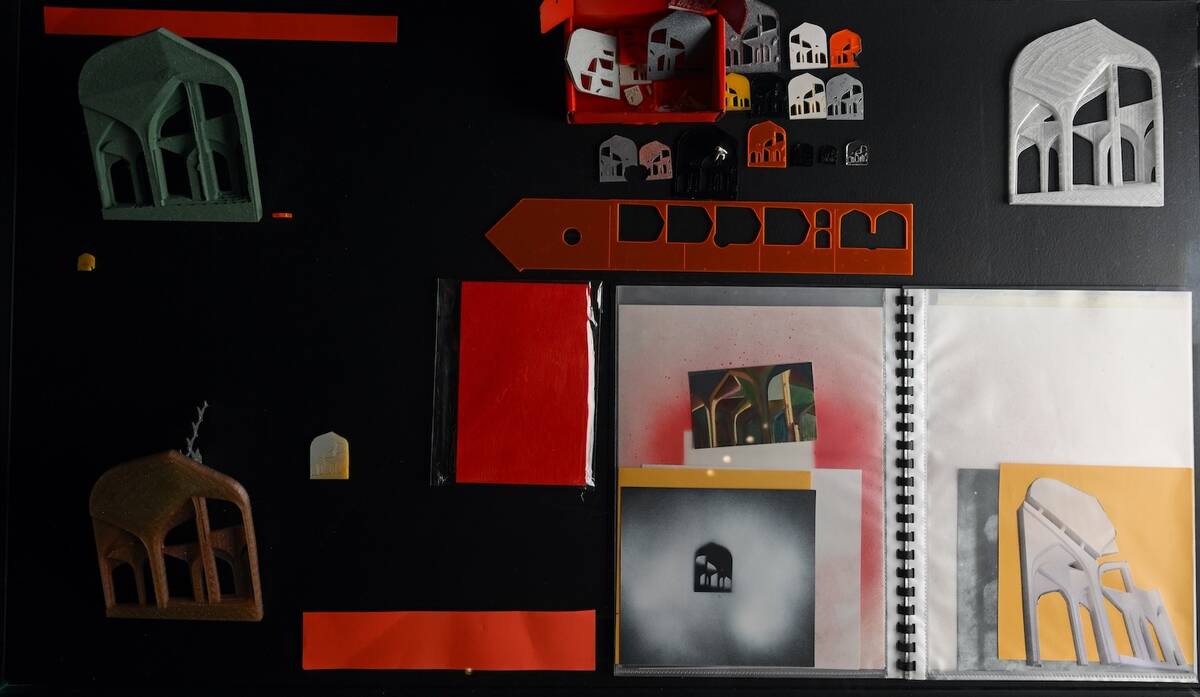
‘Lifted Arches’
Younis’ 3D-printed sculpture, accompanied by drawings, archival prints, and wooden studies (as pictured), uses Dhahran Civil Air Terminal as its starting point. The terminal, completed in 1961, was designed by US architect Minoru Yamasaki (who designed the original World Trade Center in New York). Its pointed arches — “embedding a modernist vocabulary deeply resonating with Islamic architectural tradition,” the brochure states — are a motif that recurs throughout Yamasaki’s subsequent work, and on buildings throughout the Gulf.
“This sculpture compresses that lineage into a single semi-translucent form taken from a perspectival shot of its interconnected walls and ceilings,” the brochure notes. “Its leaning posture is inspired by archival footage of the terminal's enormous façade panels lying flat on the ground before being lifted into place, a feat of construction that the sculpture holds in its inclination as both memory and homage.”
Jawad Al-Malhi
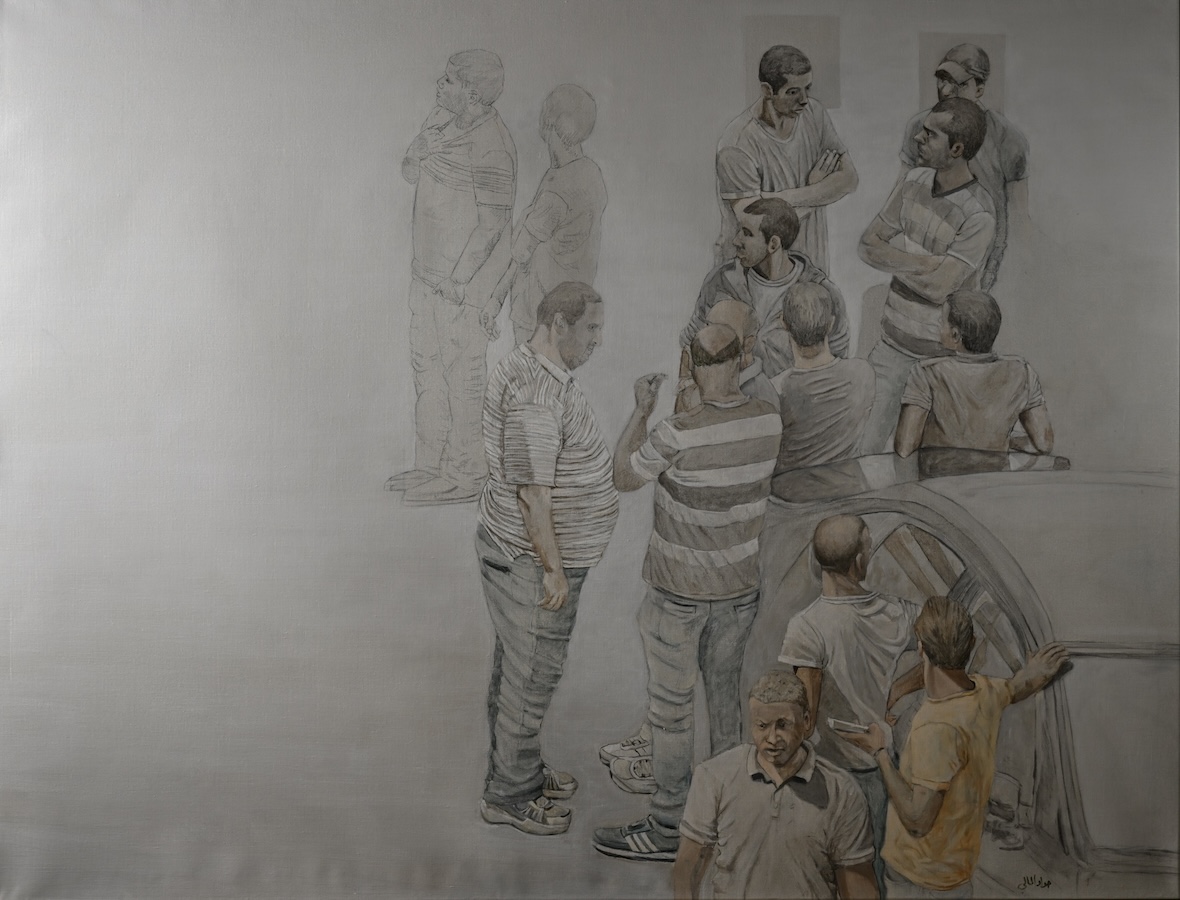
‘Ashes of Absence’
The figures in Al-Mahli’s shortlisted paintings “are rendered in tones of grey, inhabiting — and pausing in — nondescript places,” the brochure states. “The figures appear as shells of their former selves: fragile, an outline … Single individual figures are haunted by the loss of many, their solitude marked by inward gestures. Figures leave ghostly traces of themselves … figures disappear … while also appearing suspended in time. In this stillness, silence subsumes the air.” The piece, the brochure explains, “explores questions of frailty and how we are perpetually haunted by those we have lost.”