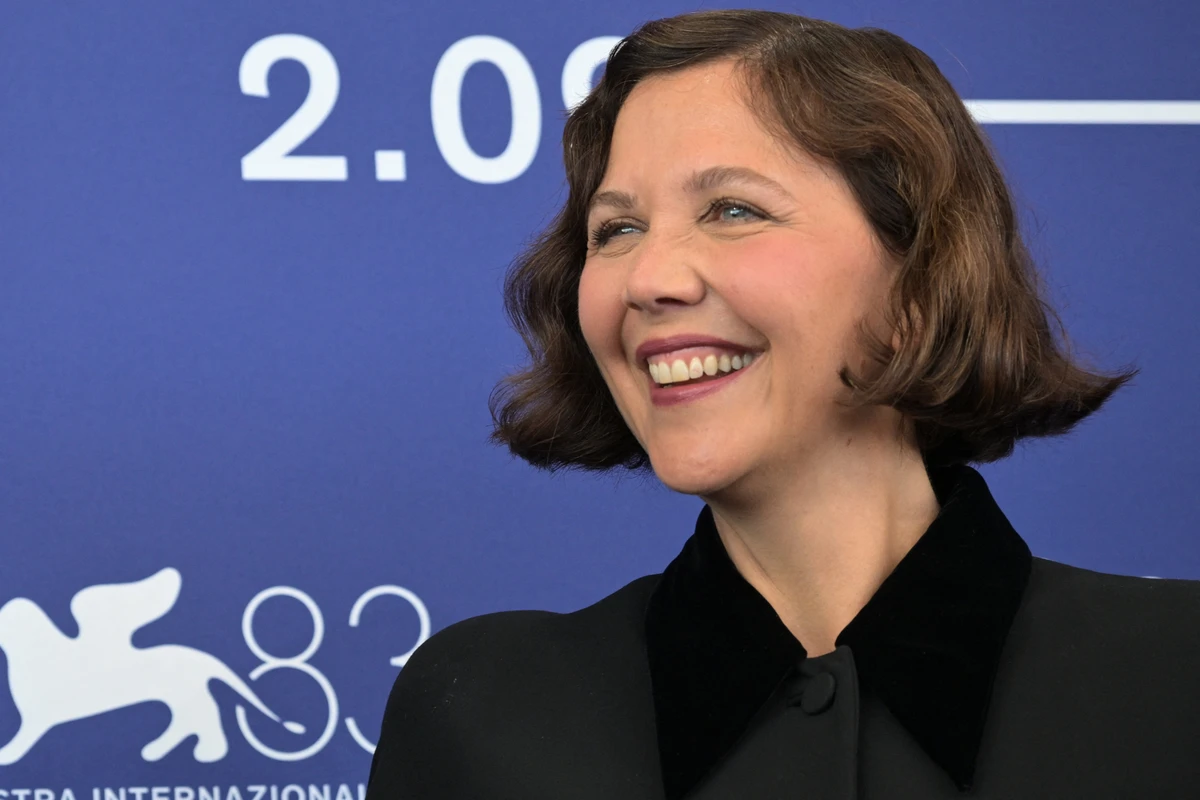
DUBAI: Politics quickly moved to the center of attention at the Venice Film Festival’s jury press conference, where jury president Maggie Gyllenhaal was asked whether cinema has a responsibility to engage with politics.
“OK,” Gyllenhaal said with a laugh. “May as well get into it.”
The filmmaker, whose latest directorial project is “The Bride,” responded by arguing that politics and cinema are inherently intertwined, describing films as “fundamentally, unavoidably political.”
“Look, we could say, how are we possibly here talking about movies right now when the world is in a state of emergency?” she said. “To me, the answer has something to do with empathy. I think that film allows an opening into an opportunity to find empathy inside of ourselves.”
Gyllenhaal also emphasized the importance of giving filmmakers and their subjects space to tell their stories, even when those perspectives may be uncomfortable or difficult to understand.
“I think we can challenge ourselves to hear stories about the most corrupt, most perverse people because it opens up the opportunity to find empathy for those people,” she says. “I am here open. I am here curious.”
The discussion also turned to gender representation within this year’s competition, with Gyllenhaal questioned about the relatively small number of female directors in contention for the festival’s top prize, the Golden Lion.
Only one film in the competition, “Woman Unknown” by Danish Egyptian filmmaker May El-Toukhysolely, was directed solely by a woman.
“I guess it’s finally become clear that men make better movies than women do,” Gyllenhaal joked.
Venice artistic director Alberto Barbera subsequently pointed to “Naza,” a documentary by “No Other Land” filmmakers Yuval Abraham and Rachel Szor, noting that the film had been added to the competition shortly before the festival began.
Films are ‘unavoidably political,’ says Maggie Gyllenhaal at Venice Film Festival