- The Egyptian rapper and singer discusses her upcoming album ‘Hibiskiss’
- The nine-track record drops on Oct. 9, after which Felukah will embark on a world tour that opens in London on Oct. 12
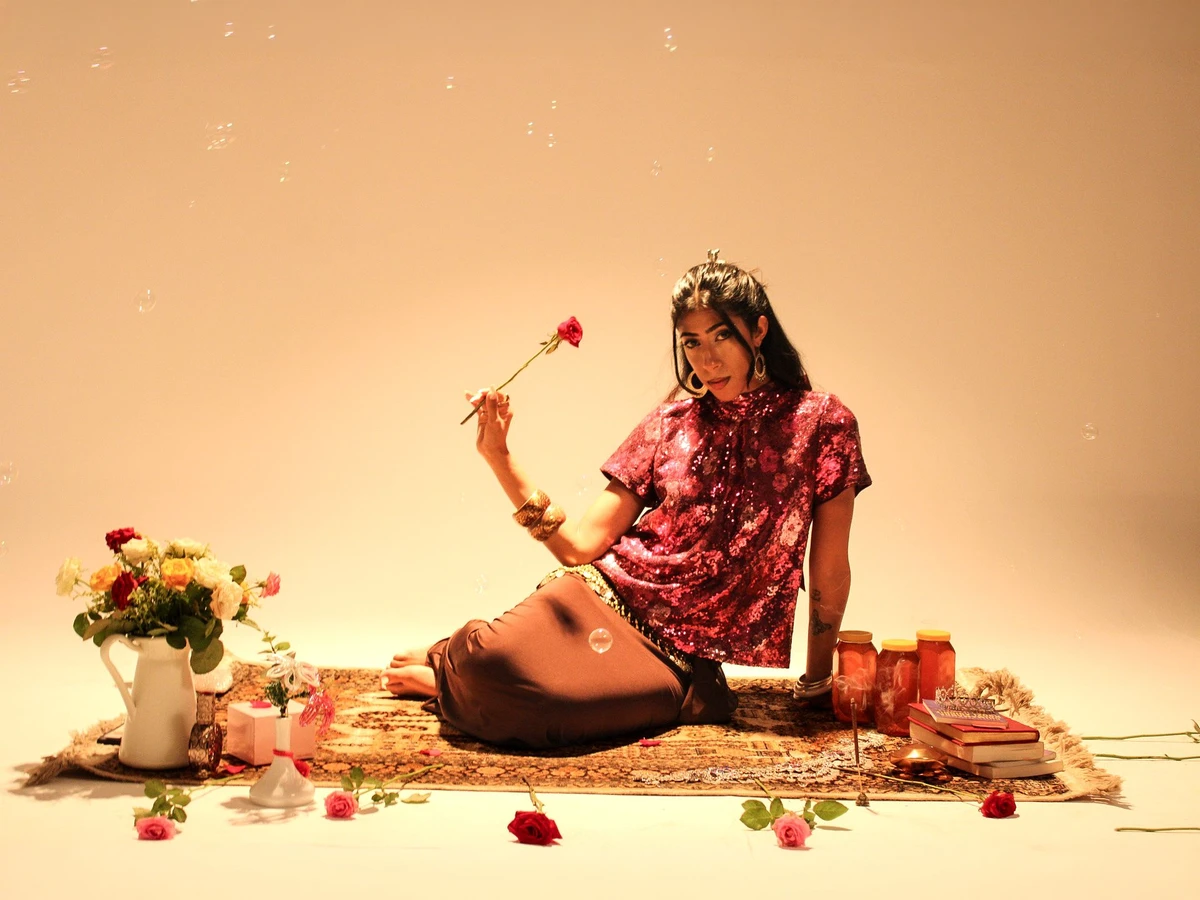
JEDDAH: “This is the beginning of a new era for me,” Egyptian rapper and singer Sara El-Messiry, who goes by the artist name Felukah, tells Arab News. She is discussing her new album, “Hibiskiss,” which finds the artist pushing deeper than ever before into questions of identity, womanhood, culture and belonging.
The nine-track record drops on Oct. 9, after which Felukah will embark on a world tour that opens in London on Oct. 12. She has been rehearsing at her recently opened recording facility, Waha Studios, in Cairo, having returned to Egypt in April after almost nine years in New York.
“I’m so excited to just meet the Falayek (her name for her fans) all around the world, to sing and dance with everyone, and connect,” she says.
Named and styled after the hibiscus flower, “Hibiskiss” stitches Cairo to New York, tracing “women’s issues, trouble in the industry, love and loss,” as well as what it means to be a woman from the East navigating the West and returning home.
“I think blossoming to me right now means following my heart,” she says. “The project is an actual ‘kiss’ for my inner child and for anyone else who can relate to my message.”
Although Egypt has shaped Arabic pop for generations, artists working in the West are often expected to speak for an entire region, and Arab women in hip-hop — a genre still largely dominated by men — face this expectation twice over.
“I carry my Egyptian identity like a crown,” Felukah says. “I’m so proud of where I come from and if I can add to the magnificent fabric of Arabic music and pop culture in any way, I’ll die happy.”
The artist built “Hibiskiss” around a community of multicultural and multilingual collaborators whose work reflects the record’s wider ideas about identity and connection.
Xiuhtezcatl — a 25-year-old indigenous artist and activist from Xochimilco, Mexico — features on “Azucar,” the single released on Sept. 18, that moves fluidly between Arabic, Spanish and English. It is an exchange between SWANA and indigenous communities about homelands, borders, and the sweetness found inside struggle.
“Xiuhtezcatl is someone I’ve admired since I discovered him three years ago. We performed together in New York and I instantly realized we’re talking about the same thing: Taking the land back from the colonizers, representing our cultures that have been silenced by the oppressor. (We are both) showing the younger generation that there is so much power and joy in unity,” Felukah says, adding that the response to the track has been “overwhelmingly beautiful.”
Her collaboration with London-based Palestinian singer Lana Lubany and Palestinian-Italian artist Tära — “Sahara” — is, she says, “bursting with Arab feminine power.”
She continues: “The three of us show up as ourselves unapologetically and challenge the status quo in many ways. From our lyrical and musical content to our styling choices, we’re here to change the game.”
Perhaps the album’s most decidedly Egyptian moment is “Shut Up Your Mouse,” which samples Mona Al-Beheiri, the Egyptian woman who became a viral sensation after telling then-US President Barack Obama on television in 2014, “We are Egyptian women! Shut up your mouth, Obama!”
The track confronts the ways Arab women have been spoken about in the West. “We have been talked down to, belittled, compared to Western women for years, and are still fighting for our rights every day,” Felukah says. “I found myself writing a song inspired by the message that, as an Egyptian woman, I’m telling you to shut up.”
“Hibiskiss” arrives at a time when the music industry and all creative endeavors are confronting issues with AI and authorship. The album, with its long list of co-creators, is a counterexample that Felukah describes as moving towards “something bigger than music.” When it comes to the AI argument, the artist has picked her side.
“AI is ruining art, wrecking our brains and polluting our water,” she says. “Now more than ever, there is power in community.”
And at a time when the different cultures seem increasingly fractured, she sees music as one way of resisting isolation. “I’m not trying to be better than any Western artists, I want to collaborate with everyone who sees the vision and the value in what I do,” she says. “We are on this Earth to connect with each other and uplift each other.”
From New York-based producer Gloria Kaiyi Hui “who helped produce the bulk of the album,” to the artists who appear across its tracks, the record seems to have been made with a sense of play.
“I love it when I’m giggling in a session and the ideas are flowing like honey,” Felukah says. “I feel incredibly blessed and I’m confident that ‘Hibiskiss’ is my best work yet.”
Her joy in the studio is fuel for the future. “I’m aching to make an Arabic jazz album,” she reveals, adding that she also hopes to venture into films and acting.
“There is more work to be done,” she says, “more souls to inspire and more stories to tell before my time is up.”