- The Saudi artist’s 2021 work is part of the group exhibition ‘Archipelago of Whispers’
An isolated community of whales in the Arabian Gulf inspired Saudi artist Ayman Zedani's “Between Desert Seas,” now on show at Abu Dhabi’s 421 Arts Campus as part of the “Archipelago of Whispers” exhibition.
The show, which runs until Jan. 10, was curated by Deniz Kirkali and Elham Puriya Mehr and includes works by artists including Aliaskar Abarkas, Ruba Al-Sweel, Farah Al Qasimi, Gizem Karakaş, Yen Chun Lin, Omar Mismar, and Zedani that are focused on the theme “alternative infrastructures for knowledge-making.”
The featured artworks explore the concept of communication from fresh perspectives.
Zedani’s 2021 sonic installation features recordings of the critically endangered Arabian Sea humpback whale, a subpopulation that does not undertake seasonal migration. His work explores the show’s theme by “challenging how we record history and asking visitors to tune into voices that usually get drowned out,” according to the Riyadh-based artist.
The “subpopulation … has lived isolated in these warm waters for tens of thousands of years. Because they don't migrate, they’re effectively living archives of the region's marine history,” Zedani told Arab News.
Studies suggest that the whale community has remained separate from other humpback whale populations for 70,000 years, according to WWF Pakistan.
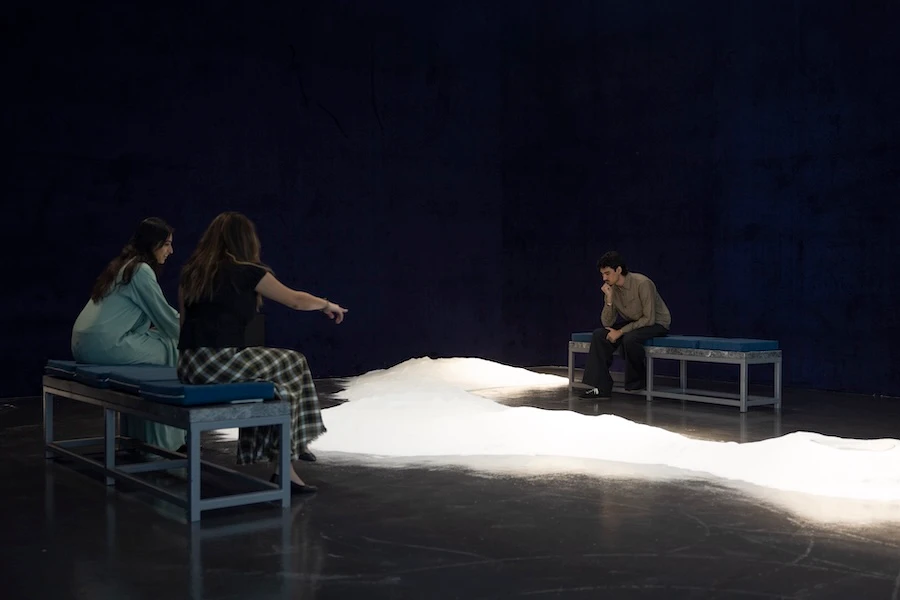
Zedani’s multilayered installation features benches, acoustic panels and a central mound of salt that reminds viewers of the harmful effects of human activity. On his website he describes the work as “an immersive sonic experience of different elements gathered and made through the research process. Between factual and fictional, these elements have been weaved together to create a tapestry of stories highlighting the Arabian Sea humpback whale … In their solitude, they developed their own language, their own song, their own culture.”
Zedani explained: “Shaped like local grave markers, the salt blocks reflect both the brine waste from desalination plants and the raw mineral archive left behind when water evaporates.”
The piece is indicative of Zedani’s repertoire as a whole; he studied biomedical science at university before becoming a full-time artist five years ago and has since focused on the region’s landscapes as a source of inspiration.
“By centering the whales and their acoustic environment, I wanted to move away from that purely human-centric view,” he said. “Understanding the history of this place means listening to all its inhabitants, especially the marine life that has shaped these waters.”