RIYADH/JEDDAH: A severe sandstorm in Jeddah on Sunday resulted in the death of two people in a road accident, closure of schools and rescheduling of flights.
The city was literally blanketed by dust for a better part of the day with winds moving menacingly at 60 km/hour, sharply bringing down visibility while uprooting trees in some areas and also forcing small shops to down shutters.
“The Jeddah Civil Defense received 20 calls. They were due to incidents related to falling of metals, scaffoldings, marbles, palm and other trees, as well as light posts and unregistered buildings,” said Col. Saeed Sarhan, spokesman of the Civil Defense in Makkah.
The road accident in which two people were killed happened in the Al-Salama district due to poor visibility.
The victims reportedly got trapped in their car and were taken out by a rescue team.
Authorities at King Abdulaziz International Airport in Jeddah rescheduled flights. Turki Al-Zeeb, the director of public relations and information at the airport, called on travelers to check with airlines about fresh flight schedules.
Most of the schools that were open on Sunday had to be closed by 10:30 a.m. due to the bad weather, a principal told Arab news.
“We were waiting for orders from the Education Ministry to close the school due to bad weather, but didn’t receive any,” she said.
“However, around 10:30 a.m., the weather condition became worse, even parents came to pick their children up, so we closed the school,” said the principal.
Mohammed Khan, PME Weather Forecaster, said the weather turned dusty with winds between 30 km and 60 km per hour, bringing down visibility to just about a kilometer. He, however, said the weather is expected to be normal in Jeddah on Monday, with visibility of 10 km and cold winds moving at 10 to 30 km per hour.
“The temperature will decrease by to 3 to 4 degree Celsius in the Kingdom. In Jeddah, the maximum temperature will be 35 degree Celsius and minimum 21 degree Celsius on Monday.”
The General Directorate of Civil Defense in Riyadh, meanwhile, called for the need to take precautions against bad weather according to the alerts issued the PME.
Major Mohammad Al-Hammadi, the directorate’s spokesman, called on people to follow safety instructions and take into account the low level of visibility.
He said the directorate has raised the readiness of its teams in case of emergencies.
The Directorate of Civil Defense in Tabuk also warned people to be careful in view of weather fluctuations that are expected to continue until Tuesday.
Brig. Gen. Mamdouh Al-Anzi, the directorate’s spokesman, said people should be extra cautious while driving and must keep away from valleys and streams.
A general warning has gone out for people who suffer from asthma and allergies to stay indoors and avoid dust.
(With inputs from Fouzia Khan and Afshan Aziz)


![]()
![]()
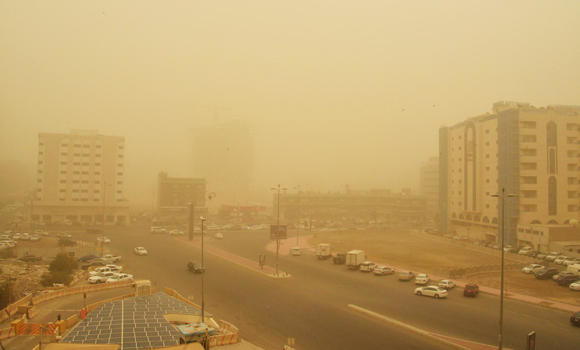
Two killed as sandstorm hits Jeddah; flights delayed
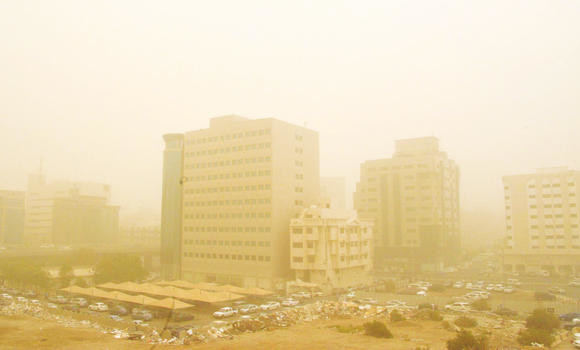
Two killed as sandstorm hits Jeddah; flights delayed
Latest updates


© 2026 SAUDI RESEARCH & PUBLISHING COMPANY, All Rights Reserved And subject to Terms of Use Agreement.