Seatbelt, mobile phone violators in Saher focus

Updated 23 February 2016
Follow

Seatbelt, mobile phone violators in Saher focus

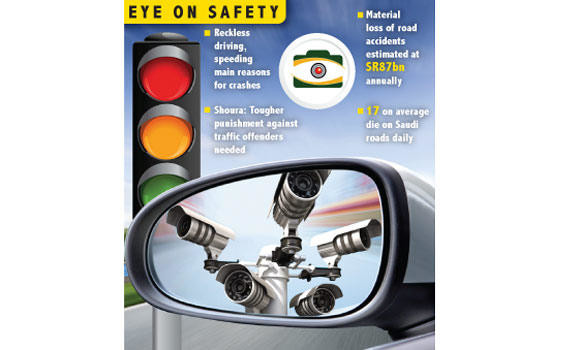
JEDDAH: The company that manages and runs Saher traffic cameras is planning to install additional equipment to monitor seatbelt and mobile phone violations besides speeding.
A source was quoted by a local newspaper as saying that the company will apply the new system soon.
The source said two new cameras will be installed at key locations, especially highways, to discipline the motorists.
Using mobile phones while driving has been cited as one of the major causes of road accidents, according to several studies.
Saudi Arabia has one of the highest rates of road accidents in the world, with an average of 18 people losing their lives every day.
Saher camera monitoring has reduced the rate of accidents to some degree.


Saudi wildlife center releases 140 wild animals into royal reserve

Updated 06 February 2026
Follow

Saudi wildlife center releases 140 wild animals into royal reserve

  • This milestone reflects significant progress in the management and governance of wildlife across the Kingdom, supporting the goals of the Saudi Green Initiative and aligning with the objectives of Saudi Vision 2030

RIYADH: The National Center for Wildlife released 140 wild animals into the King Salman bin Abdulaziz Royal Reserve as part of ongoing programs to reintroduce endangered species. The initiatives aim to enhance ecological balance and restore biodiversity in natural habitats.

The release, carried out in cooperation with the King Salman bin Abdulaziz Royal Reserve Development Authority, included 30 Arabian oryx, 70 reem gazelles (sand gazelles), and 40 houbara bustards, the SPA reported on Thursday. 

The initiative forms part of efforts to reintroduce species to their natural habitats and establish stable, self-sustaining wildlife populations capable of breeding, contributing to improved ecosystem functioning and sustainability.

The NCW continues to implement its strategic plans for wildlife development, with the total number of animals reintroduced through its specialized programs now exceeding 10,000.

This milestone reflects significant progress in the management and governance of wildlife across the Kingdom, supporting the goals of the Saudi Green Initiative and aligning with the objectives of Saudi Vision 2030.