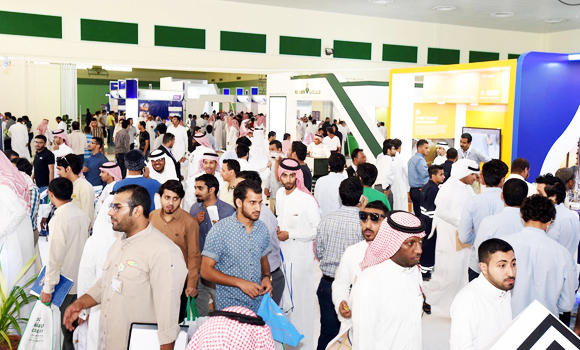
RIYADH: Saudi Arabia’s population grew by 2.4 percent to 31.52 million last year from 30.77 million in 2014, according to the Saudi Department of Statistics and Information.
The number of Saudis, who make up two-thirds of the population, increased to 21.1 million in 2015. The number of expats rose to 10.4 million.
The Kingdom’s population growth over the last 12 years is as follows: 22.6 million in 2004, 23.3 million in 2005, 24.1 million in 2006, 24.2 million in 2007, 24.8 million in 2008, and 25.4 million in 2009.
The population jumped to 27.6 million in 2010, 28.4 million in 2011 and 29.2 million in 2012. It increased to 30 million in 2013 and 30.77 million in 2014.
The country’s GDP per capita grew over the past 12 years by 6 percent on average, or an annual increase of SR3,200.
The highest growth was recorded between 2010 and 2011 when it expanded by 24 percent from SR71,100 to SR87,900.
The worst year in recent times was when it fell by 19 percent in 2009 from SR78,600 recorded in 2008 because of the global economic crisis. It dropped by 15 percent to SR77,700 last year from SR91,900 in 2014.
The per capita GDP is a measure of the total output of a country that takes the gross domestic product and divides it by the number of people in the country.

KSA population: 21.1m Saudis, 10.4m expats
Saudi Arabia's Sharaan and Wadi Nakhlah nature reserves win Dark Sky recognition
- The two reserves in AlUla join more than 250 locations worldwide that are protected from light pollution
- AlUla Manara and AlGharameel Nature Reserve, also both in AlUla, received Dark Sky Park designations last year
ALULA: Two more nature reserves in Saudi Arabia's AlUla have won recognition as Dark Sky Places, joining more than 250 locations worldwide that are protected from light pollution.
The official accreditation of Sharaan National Park and Wadi Nakhlah reserves from the DarkSky International builds on AlUla's 2024 achievement, when AlUla Manara and AlGharameel Nature Reserve became the first sites in the Kingdom and the Gulf region to receive Dark Sky Park designations.
The latest recognition further strengthens AlUla’s position as a leading global destination for night sky protection and astronomical tourism, said the Royal Commission for AlUla (RCU) in a statement carried by the Saudi Press Agency (SPA).
Dark Sky International also announced the recognition in an earlier report, noting that the Sharaan and Wadi Nakhlah's combined area of 6,146 square kilometers reflects the "expanded scope of environmental protection efforts aimed at preserving AlUla's pristine night skies and reducing light pollution across a vast geographical area."
DarkSky International works to reduce light pollution in both urban and rural areas and to raise global awareness of the importance of protecting the night sky.
AlUla's protected areas are located in the heart of northwest Arabia, near the ancient oasis city of AlUla in Madinah Province.
"Towering sandstone cliffs, labyrinthine canyons, tranquil basins, and volcanic formations create a dramatic setting where geological diversity, cultural heritage, and thriving biodiversity converge beneath exceptionally dark, open skies," Dark Sky said.
Scientists have noted that AlUla’s natural isolation from urban light sources, combined with ideal atmospheric conditions, makes it a world-class destination for stargazing, astronomy education, and immersive dark-sky experiences.
With the phased development of its reserves, AlUla is now ranked 3rd globally in the Dark Sky Park category, solidifying its status as one of the world’s premier destinations for astronomical discovery.
The RCU reaffirmed its commitment to protecting the natural environment, preserving the night sky, and promoting sustainable tourism, further positioning AlUla as a leading global destination for astronomy, scientific research, and advanced environmental experiences, in line with AlUla Vision and the Kingdom’s Vision 2030.