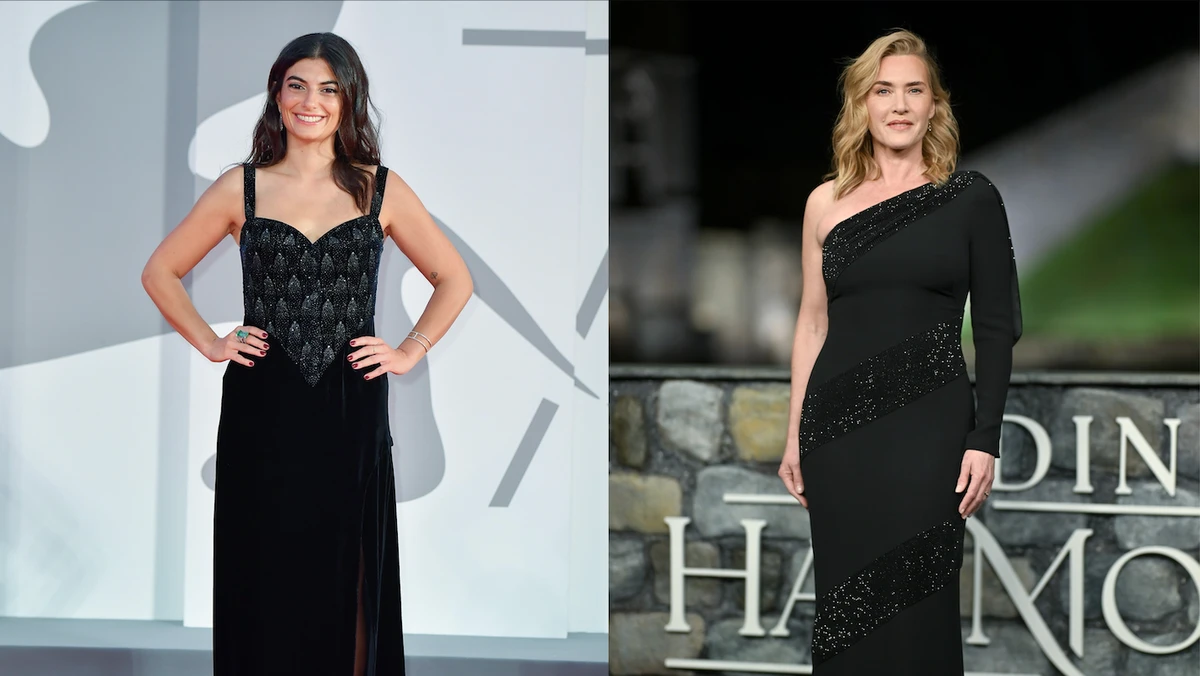
- The Jordanian filmmaker on her debut feature, ‘Sink,’ screening at RSIFF this week
JEDDAH: Jordanian director Zain Duraie’s debut feature “Sink” is showing in competition at this week’s Red Sea International Film Festival, marking another milestone in the film’s journey across the global festival circuit.
Its Jeddah screening will be a full-circle moment for Duraie, who first developed the project through the Red Sea Lodge.

“Sink" centers on the relationship between a mother, Nadia, and her teenage son Basil as he begins to struggle with mental and emotional stability, resulting in his expulsion from school. Nadia tries her best to understand and support him despite the judgment of those around them, some of whom believe Basil is simply acting out while others suspect deeper psychological issues. Determined to stay connected to Basil, Nadia follows him closely, hoping that staying by his side will prevent him from drifting further away.
“‘Sink’ comes from a very personal place,” Duraie tells Arab News. “I grew up observing how deeply rooted the bond between a mother and her son can be in our region; it’s almost sacred. I was always fascinated by the strength of maternal instinct — how a mother holds her family together even when things begin to quietly fall apart.
“Honestly, this film is a gift to my mother, and to all the Arab mothers in our region who silently endure,” she adds.
Duraie says she wanted to explore “that intimate space where love, denial and fear all coexist,” explaining that the story was shaped by experiences close to her and by women she has known who “carry so much in silence.”
She continues: “For me, the most important thing was to capture the emotions — which is always the hardest part of filmmaking. I wanted the audience to feel the unspoken things between a mother and her son: the infinite love she carries, the fear and shame she hides, the quiet moments where she tries to stay strong even when she’s breaking inside.”

However, she didn’t want “big melodramatic gestures” from her cast, but “small, subtle looks and silences,” Duraie adds.
“I focused on creating an atmosphere where the camera could sit close to the characters and let their inner world speak without words. For me, this is the kind of cinema I love: real and truthful cinema.”
She explains that she is drawn to stories centered on women, motherhood and mental health, explaining that these themes contain “beauty and complexity.” She also notes the importance of portraying Arab families in contemporary, realistic ways — something that made the film’s development even more complicated than usual.
“Besides the usual financing obstacles, one of the biggest challenges was that some funders from the West didn’t think the film was ‘Jordanian’ enough,” Duraie says. “They didn’t believe that a middle–upper-class family like the one in ‘Sink’ exists in Amman; a family in which the mother works, and the father is kind and gentle, rather than the typical portrayal of Arab men that Western audiences are used to seeing in many Arab films.”
Some European funders, she adds, expected a “poverty trope” the film did not fit, but she refused to change the story “just to satisfy their stereotypical gaze on us.”
RSIFF holds particular weight for Duraie, given the film’s origins as part of the festival’s development program.
“Bringing the film to the festival feels like returning home,” she says. “It’s a very emotional moment for me to share it with the Arab world. And, frankly, quite a scary one.”
RSIFF, she adds, “is very important because it’s the most visible Arab film festival today. It brings international attention to our region and supports new voices.”