LAUNCESTON, Australia: The decision by Boashan Iron & Steel Co, China's biggest listed steelmaker, to idle a plant may both be a sign of how bad things are in the key sector and a contrarian signal that a turnaround is near.
It's easy to construct an argument that the move to close the 3 million ton-a-year plant in Shanghai is proof that China's steel sector has too much capacity and supply is well ahead of demand.
Closing down higher cost steel production is after all what should happen when demand cools and prices decline, and there is also a need to work through an overhang of inventory built up in the first half of 2012 when steelmakers maintained output even as economic growth eased.
However, an argument can also be built on saying the Boashan move is an early indicator that things should start turning around within the next 12 months.
Removing the higher cost production allows prices to stabilize as supply adjusts lower to reflect the change in demand.
What you are basically left with is a situation where the current short-term pain is replaced with longer-term gain.
The question then becomes how long are iron ore and steel producers going to have to wait for the good times to return?
It's worth looking back to the start of 2012 when many analysts thought Chinese commodity demand would slow in the first half before rebounding in the second.
Instead what happened is that the economic growth rate eased as expected, but raw commodity consumption and finished product output continued apace, particularly in the steel sector.
This led to a build-up of inventories, falling prices and the current situation, where even if demand does pick up, it will take some time to work its way down to commodity producers.
The most-traded steel rebar contract in Shanghai has lost 13 percent this year and while it has picked up slightly in recent weeks, it's still near the record low hit last month.
Spot iron ore prices have also rebounded recently, gaining 17 percent in September, but they were still down 22 percent for the third quarter, the steepest drop since the Steel Index starting compiling data in 2008.
The idling of the Boashan steel plant in Shanghai is unlikely to be the last such occurrence, especially if the Chinese government's $ 160 billion infrastructure-spending boost fails to increase demand meaningfully in the next few months.
Iron ore capacity is also being closed in China, with high-cost mines the first to go.
This is positive for the big, global iron ore miners such as Vale, BHP Billton and Rio Tinto, as their lower cost bases means they can keep producing at a profit long after Chinese rivals are deep in the red.
But just as analysts were off with the timing of the slowdown in China's commodity demand, hopes that it will rebound by the end of this year may be too optimistic as well.
Even if China's economic growth does start to regain momentum, and by that I mean a gross domestic product outcome above 8 percent in year-on-year terms, it's likely that commodity demand will lag the improvement, just as it remained resilient during the first half of slowing GDP growth.
The official Purchasing Managers' Index rose to 49.8 in September from 49.2 in August, which was the lowest reading since November 2011.
While still in contractionary territory below 50, the PMI is consistent with an economy bouncing along the bottom of the cycle.
But the compiler of the PMI, the National Bureau of Statistics, also said on Monday that while demand for food, beverages, tobacco and computers improved, that for steel, refined metals and construction materials remained under pressure.
This is consistent with the view that any recovery in the iron ore and steel sector is going to be slow, and more likely U-shaped rather than the more V-shaped rebound that happened after the 2008 global financial crisis.
The closure of one of Baoshan's steel plants confirms what we already know: namely that China's steel sector is now doing it tough and suffering from the hangover of over supply in a softening demand scenario.
But it also lays the groundwork for improvement in the sector, albeit a slow and lumpy recovery rather than strong and sustained as many producers would prefer.
— Clyde Russell is a Reuters market analyst. The views expressed are his own.


China steel plant closure points to slow recovery

China steel plant closure points to slow recovery

Mapping Saudi soils to grow better crops
- Palm trees, root crops, and coastal plants reveal the land’s story
RIYADH: Saudi Arabia’s land tells stories written beneath the feet. From fertile plains and rugged highlands to vast deserts, the Kingdom’s diverse landscapes shape what can grow, where it grows, and how agriculture can thrive.
Alongside geography and climate, soil conditions play a decisive role in agricultural success. Understanding soil types across the Kingdom helps determine which crops can flourish and what interventions may be needed to sustain them.
In an interview with Arab News, Turki Almutairi, a senior environmental specialist at the National Afforestation Center under the National Center for Vegetation Cover Development and Combating Desertification, outlined the main soil types found across Saudi Arabia.

“The dominant soil in the Kingdom are sandy desert soils, alongside calcareous soils in the central region. Rocky and stony soils are present along mountainous and hilly landscapes,” he said.
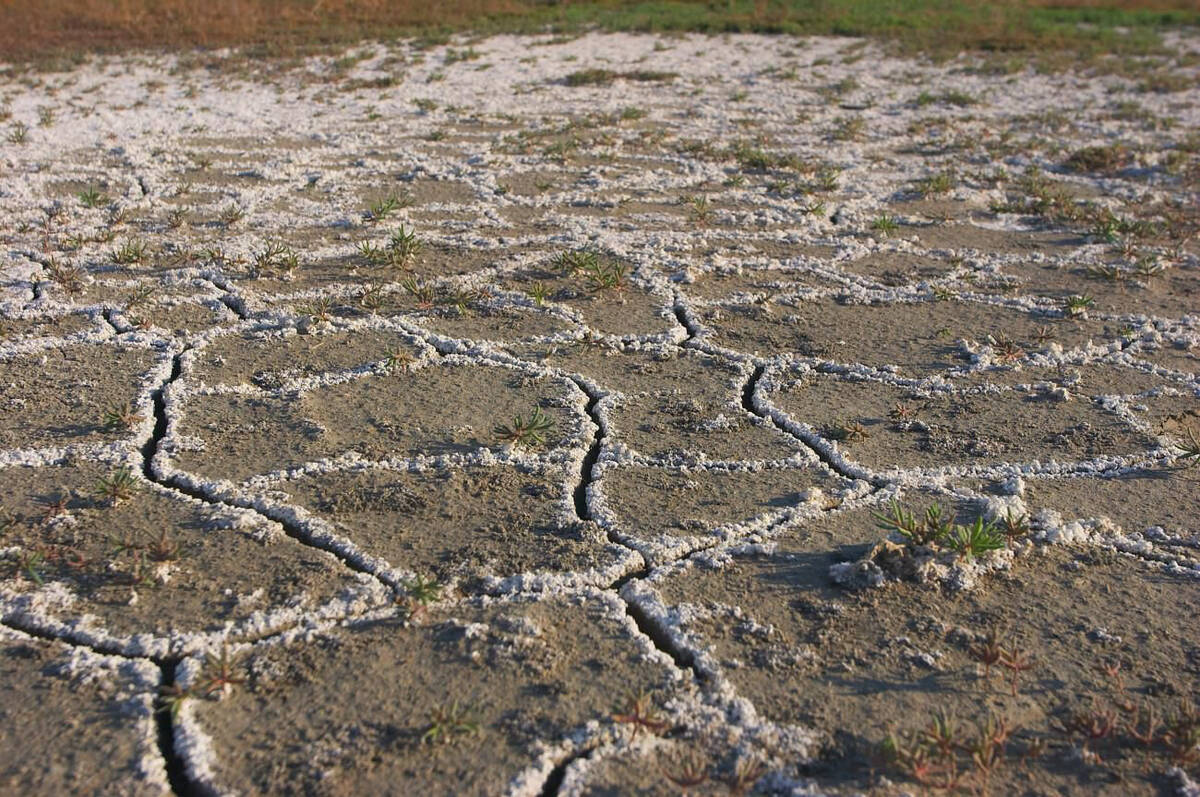
“Alluvial soils are common in wadies (valleys), while saline and sodic soils are located in depressions (Sabkhas) and along coastlines. Pockets of clayed soils can be also found around few sites along the Kingdom.”
The Kingdom’s vast territory gives rise to unique soil characteristics in each region, enabling different crops to grow depending on local conditions.
“Soil is the growing medium for plants. The role of soil includes structural stabilization, providing nutrients and a communication medium for plants,” Basil Nasir, soil lead at engineering consultancy William Sale Partnership, told Arab News.

According to Nasir, assessing soil use is essential before determining whether it is fertile or infertile, as different soils support different plant types.
“The soil used for trees differs from the soil used for ornamental plants and from the soil used for aquatic plants. It varies according to the specific needs of each plant, and based on this, we determine what the soil requires and assess its fertility,” he said.
Nasir explained that soil characteristics are shaped by both physical and chemical components. In addition to water and air, mineral particles such as sand, silt and clay are key indicators of soil health. Organic matter, derived from plant and animal remains, forms the fourth major component.
The balance between these elements determines soil behavior. One important physical trait is water-holding capacity, which influences what types of plants a soil can support.
Opinion
This section contains relevant reference points, placed in (Opinion field)
“If the soil is like dunes, adding water will cause it to run off, but if the soil is clay, its ability to retain water will be very high. If you add water and return the next day, you will find that the water is still there,” said Nasir.
Chemical properties, such as whether soil is alkaline or acidic, are equally important. Understanding both physical and chemical traits allows for proper assessment and treatment when needed.
“What determines whether a plant is suitable for a particular environment is primarily the plant's nature. For example, some plants have fibrous roots and therefore do not require well-draining soil,” Nasir added.
“A palm tree, for example, does not care whether it was planted in one soil or the other because its roots are fibrous. Therefore, palm trees are strong plants and are suitable to grow in both dry and wetlands, while preferring sandy areas.”
Crops such as potatoes, onions, carrots and beetroots — where the edible part grows underground — typically thrive in sandy soils. As a result, plantations of these crops are commonly found in northern regions such as Hail and in Wadi Ad-Dawasir.
In the eastern region, including Al-Ahsa, wetlands are more common due to climatic conditions. Growing plants in such environments often requires human intervention.
“Plants that are coastal or could be found in lagoons or lakes must have some sort of soil around them, like lotus flowers and mangrove trees.”
“An important parameter to keep in mind is that there is no air in its soil, and they are adapted to this condition. However, the lack of air, along with the presence of organic matter, will create a situation where anaerobic bacteria react with the soil, potentially causing diseases we can easily avoid,” said Nasir.
He emphasized that removing organic matter from such soils is essential to ensure plant survival in aquatic environments.
Mountainous and rocky regions in Saudi Arabia are generally volcanic, resulting in low water-holding capacity and challenging growing conditions. However, volcanic ash contributes to high fertility, allowing certain crops to flourish.
As a result, western regions support tree crops such as coffee, mangoes, some banana varieties and pomegranates.

As development accelerates across the Kingdom, soil improvement efforts are expanding under the National Greening Program.
“Soil is considered fundamental for the National Greening Program’s objectives. Understanding the soil variability along the Kingdom is a precondition for fostering sustainable soil management,” Almutairi told Arab News.
Adding, “In this line, the NGP is working towards the establishment of the Saudi Soil Information System (TURBA-KSA), which consists of mapping soils and its functional properties in the Kingdom using state-of-the-art technology.”
He also noted the creation of the “Land Rehabilitation Watch” to report, verify and monitor land rehabilitation nationwide.
“This milestone allows the Kingdom to understand how soil and land health are progressing against national and international targets of land degradation neutrality. Documenting good soil and land management practices is also important, so that those successful practices could be scaled up along the Kingdom, which is a priority task for NGP,” he said.
Raising public awareness is another key pillar of the program.
“Assessing different emerging technologies and soil amendments is a daily activity of NGP, as it then provides technical support to partners on the selection and application of these technologies.”
DID YOU KNOW?
• Saudi Arabia cultivates around 1 million hectares, mainly in Riyadh, Qassim, Hail, and Jouf.
• Farming follows the seasons: winter brings onions, garlic, and carrots, while summer yields watermelon, tomatoes, and cucumbers.
• The Kingdom is a top date producer, with over 31 million palm trees generating nearly 1.54 million tons, especially in Riyadh and Qassim.
Almutairi stressed that soil is often overlooked because it lies unseen beneath the surface, despite its critical role.
Yet soil produces 95 percent of food, stores water, holds more carbon than vegetation and the atmosphere, suppresses contaminants, regulates water, carbon and nutrient cycles, and hosts microorganisms linked to the human microbiome.
He emphasized the need to engage the general public, particularly urban communities disconnected from nature. Education helps people understand where food comes from and how contact with soil — such as walking barefoot — can support well-being. Healthy soils also contribute to cleaner water and air, he added.
Almutairi also called for stronger advocacy among decision-makers, noting that investment in healthy soils supports climate action, food security and sustainable development.
He concluded that key strategies include officially observing UN World Soil Day on Dec. 5, integrating soil education into curricula, launching annual social media campaigns, using art to raise awareness, and organizing public events that connect soils to everyday life.


