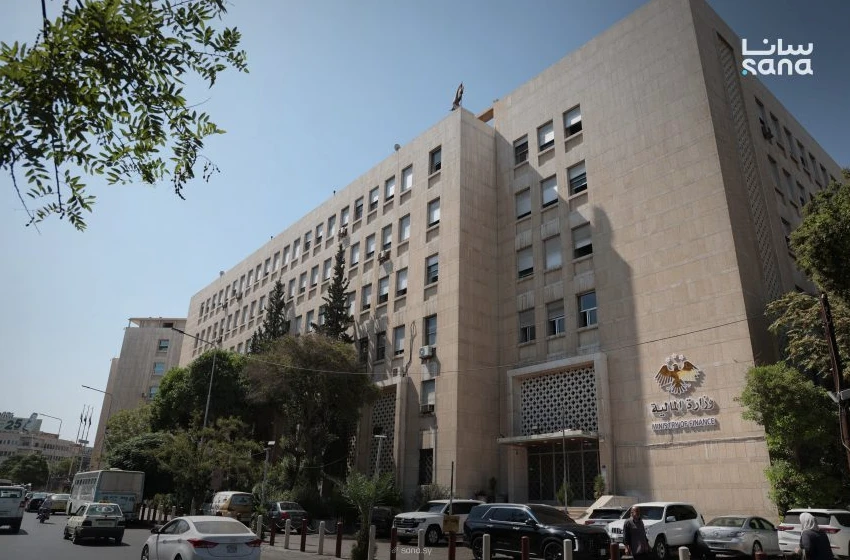
RIYADH: Syria recorded a fiscal deficit of about $1 billion in the first half of 2026 as public spending outpaced revenue amid higher wages, rising import costs and increased expenditure on government priorities.
Public revenue reached approximately $2.7 billion during the period, compared with expenditure of $3.7 billion, Finance Minister Mohammed Barnieh said in the ministry’s first-half budget performance report, according to Syrian Arab News Agency.
The government collected about 31 percent of its estimated annual revenue while executing 35 percent of approved expenditure. Those rates imply full-year revenue and spending allocations of approximately $8.7 billion and $10.6 billion, respectively, according to calculations based on the ministry’s figures.
Revenue increased by about 111 percent compared with the first half of 2025, while spending rose by approximately 331 percent.
The ministry attributed the faster expenditure growth primarily to salary and wage increases, expanded spending on government priorities, and higher costs for goods, services, and production inputs, driven by regional developments and rising import prices.
“We expect spending to increase during the second half of the year as the full impact of salary and wage increases is felt, and project implementation and investment spending accelerate, particularly to support affected areas,” Barnieh said.
Fiscal outlook
Oil and gas revenue began flowing to the Finance Ministry in May, according to Barnieh. Higher hydrocarbon receipts, improved tax and customs collection and some exceptional revenue are expected to strengthen Treasury resources during the second half.
The International Monetary Fund said in August that Syria’s central government budget ended 2025 with a small surplus after expenditure was restricted to available resources and focused on essential needs.
The fund expects revenue to rise substantially in 2026, supported by stronger tax and customs receipts, increasing hydrocarbon income and one-off revenue from telecommunications licenses and fuel transit fees. However, it said financing constraints could require the government to limit capital spending.
The IMF also called for stronger oversight of off-budget operations, quasi-fiscal activities and contingent liabilities, alongside tax reforms and improvements to tax and customs administration.
Syria’s Finance Ministry is preparing the 2027 state budget and aims to complete the process before the end of the third quarter, with planned improvements to budget preparation, implementation and digitalization.
Sovereign fund agreement
Separately, the state-owned Syrian Sovereign Fund and UAE developer Arada signed a joint-venture agreement for the $7 billion New Damascus development.
The project will cover 4 million sq. meters west of Damascus and include 11,000 homes, hospitality and retail facilities, schools and healthcare infrastructure.
The $7 billion figure represents the project’s estimated gross development value rather than a direct payment to the Syrian government.
Syria posts $1bn H1 deficit as spending outpaces revenue