RIYADH: Saudi companies stepped up overseas investment in the first half of 2026, with outbound greenfield spending jumping 90 percent to $3.3 billion even as global investment plans contracted sharply, a new report showed.
According to Emirates NBD, Saudi Arabia was the only market among five tracked by the Dubai-based bank — Saudi Arabia, India, Turkiye, Egypt and the UAE — to record growth in outbound greenfield investment, with 39 projects announced during the six months to the end of June.
Saudi renewable energy companies accounted for much of the Kingdom’s overseas expansion.
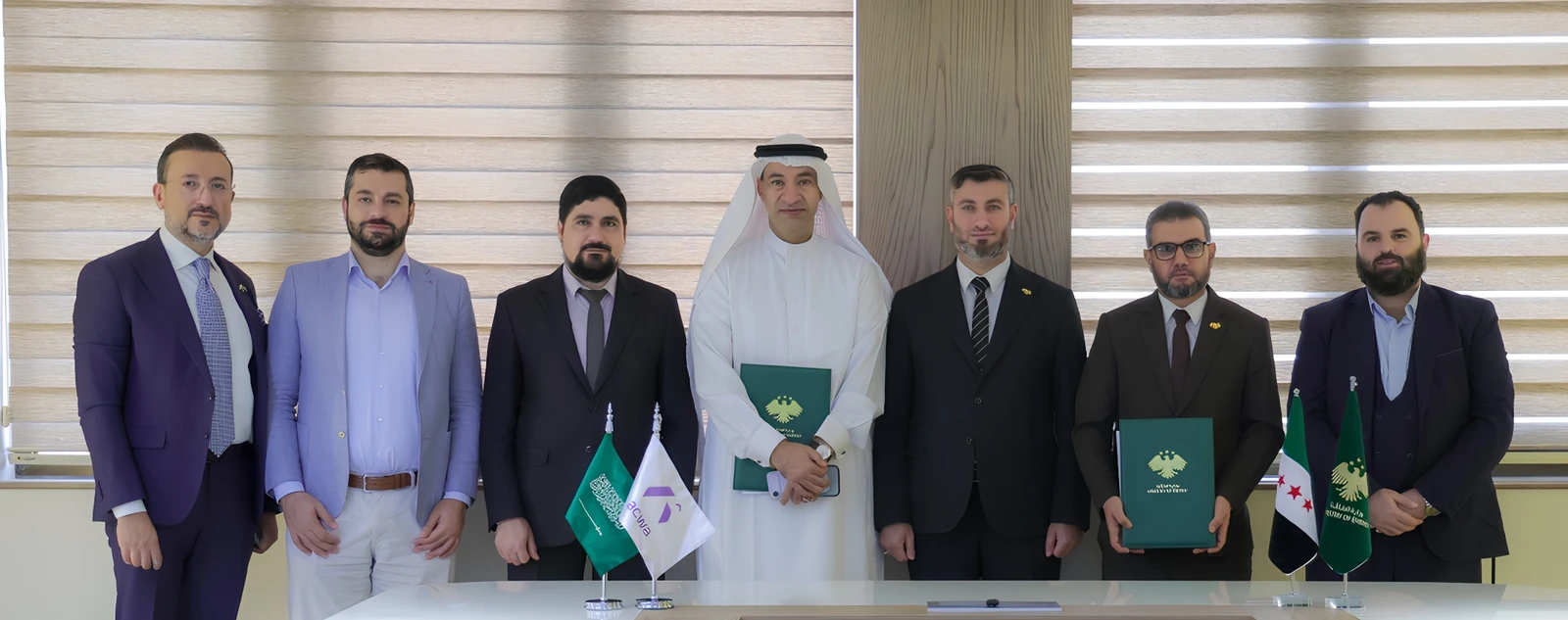
Multi-plant programs in Spain and Italy represented more than half of all Saudi outbound investment announcements, while Acwa added projects in Morocco and Turkiye.
The pipeline also included initial investments in Syria as reconstruction opportunities emerged, along with individual ventures in aviation, healthcare and engineering services by Saudi private companies.
The rise comes as global announcements of foreign capital-spending plans fell 38 percent year on year to $538.2 billion in the first half, Emirates NBD said in its latest analysis.
The figures point to a growing willingness among Saudi companies to deploy capital and expertise overseas as the Kingdom’s Vision 2030 economic transformation matures.
In its latest report, Emirates NBD noted: “Saudi Arabia was the only market in our sample where outbound investment grew.”
Speaking to Arab News, Thomas Kuruvilla, managing partner of Arthur D. Little Middle East & India, said the Kingdom’s 90 percent surge in outbound greenfield investment is more significant than the headline figure alone suggests.
“At a time when global investment intentions are falling sharply, Saudi companies are doing the opposite — deploying capital internationally and increasingly exporting capabilities, not just capital,” he said.
Kuruvilla said the trend could represent a second phase of Saudi Arabia’s diversification strategy.
“The first was diversifying the economy away from oil; the next could be diversifying the risks of diversification itself,” he added.
For decades, Saudi Arabia was seen primarily as an importer of technology, expertise and investment, Kuruvilla said, adding that the expansion of Saudi renewable-energy companies into Europe suggests that dynamic is beginning to shift.
The energy transition could allow Saudi Arabia to remain an energy powerhouse while also becoming an exporter of next-generation energy solutions, he added.
From capital importer to exporter
Tony Hallside, CEO of STP Partners, said the increase in outbound greenfield investment reflected a new stage in the Kingdom’s economic transformation.
“The Kingdom is increasingly producing companies with the capital, expertise and ambition to build businesses and infrastructure overseas, particularly in renewable energy,” Hallside told Arab News.
“That matters because greenfield investment creates new productive capacity rather than simply transferring ownership of an existing asset.”
The expansion into Europe shows Saudi companies are starting to export capabilities developed through the Kingdom’s own energy transition, Hallside said.
“Vision 2030 has focused heavily on attracting international capital into Saudi Arabia. We are now increasingly seeing the other side of that equation: Saudi capital and expertise becoming more influential in global investment flows,” added Hallside.
The growth in outbound investment comes alongside Saudi Arabia’s efforts to attract foreign capital. The Kingdom ranked 13th globally for foreign direct investment inflows in 2025, up from 17th a year earlier, according to UN Trade and Development.
Inbound investments
According to Emirates NBD, announced greenfield FDI inflows into Saudi Arabia moderated to $3.8 billion, down 59 percent from a year earlier.
The mix rotated away from the services projects that dominated the first half of 2025 toward industrial supply chains. The largest announced investments were in battery-chain materials: Zhejiang Hailiang’s $566 million copper facility and Northern Graphite’s $200 million plant.
Much of the new capacity is in the Eastern Province, and China was the largest source of capital in this segment. The shift from services offices toward metals, electronic components and minerals is consistent with the Kingdom’s localization agenda, Emirates NBD added.
Wider picture
Emirates NBD added that announced greenfield FDI into the five core markets — the UAE, India, Saudi Arabia, Turkiye and Egypt — was little changed from a year earlier.
That lifted the group’s share of global greenfield FDI to 10.5 percent in the first six months of 2026, from 6.5 percent a year earlier. Average project value in the countries tracked rose to $56 million from $33 million, driven by AI infrastructure in India and Chinese and Gulf mega-projects in Egypt.
Saudi outbound greenfield investment jumps 90% to $3.3bn in H1