RIYADH: Saudi Arabia retained a merchandise trade surplus of about SR18 billion ($4.8 billion) in June, as a decline in imports partly cushioned a slowdown in exports, official data showed.
The General Authority for Statistics reported that merchandise exports fell 4.5 percent in June from a year earlier, while imports declined 3 percent. The merchandise trade surplus narrowed 10 percent from June 2025.
Oil exports, which accounted for 72 percent of total exports, fell 2.3 percent, while their share of the export mix rose from 70.4 percent a year earlier.
The figures came as Saudi Arabia adapted its trade and energy flows to a major regional disruption. With the conflict between the US and Iran affecting shipping through the Strait of Hormuz, the Kingdom increased use of alternative routes, including its Red Sea infrastructure.
In its latest report, GASTAT stated: “Non-oil exports, including re-exports, recorded a decrease of 9.7 percent compared to June 2025, while national non-oil exports, excluding re-exports, decreased by 11.4 percent.”
The value of re-exported goods fell 6.7 percent in June, driven largely by a 41.7 percent drop in machinery, electrical equipment and parts, which accounted for 36.1 percent of total re-exports.
Among non-oil goods, plastics, rubber and related articles remained the largest export category, accounting for 20.7 percent of total non-oil exports, although shipments fell 12.8 percent from a year earlier. Chemical products and allied industries accounted for 19.2 percent and declined 30.4 percent.
On the import side, machinery, electrical equipment and parts was the largest category at 25.7 percent of total imports, down 20.4 percent from June 2025. Chemical products and allied industries followed at 11.2 percent, rising 30.5 percent year on year.
The ratio of non-oil exports, including re-exports, to imports slipped to 34.9 percent in June from 37.5 percent a year earlier, reflecting the 9.7 percent decline in non-oil exports alongside a 3 percent drop in imports.
Japan and China top the partner list
Japan was the leading destination for Saudi merchandise exports in June, accounting for 13.2 percent of the total, followed by South Korea at 11.5 percent and China at 9.4 percent.
China remained the Kingdom’s largest import source, accounting for 22 percent of total imports, followed by Switzerland at 8.4 percent and the US at 8.3 percent.
Jeddah Islamic Port dominates trade flows
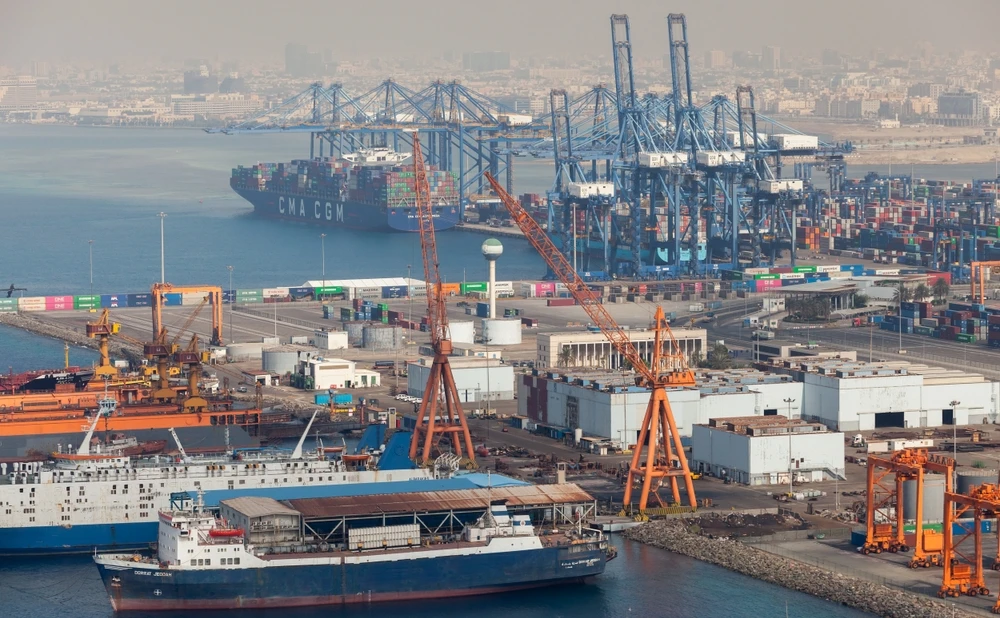
Jeddah Islamic Port handled the largest share of both imports and non-oil exports in June, accounting for 37.2 percent of total imports and 31.9 percent of non-oil exports.
Together with King Khalid International Airport in Riyadh, King Abdulaziz International Airport in Jeddah, King Fahad International Airport in Dammam and Al-Batha Port, the five largest customs points accounted for 76.9 percent of total imports. For non-oil exports, the top five — including Al Hadithah Port instead of King Fahad International Airport — accounted for 64.5 percent.
GASTAT said the 2026 figures are preliminary and are based on administrative records from the Zakat, Tax and Customs Authority for non-oil data and the Ministry of Energy for oil-related data.