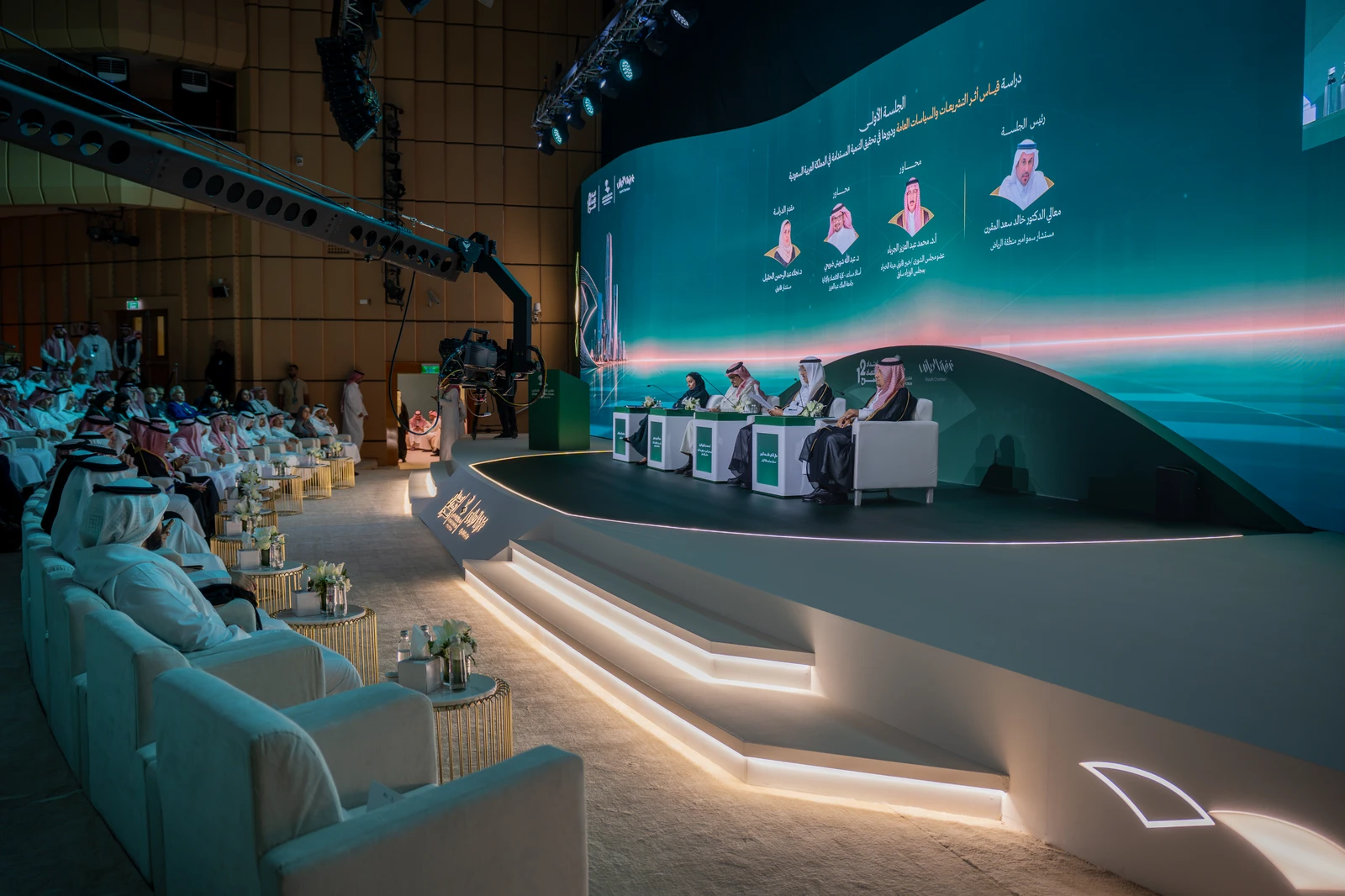
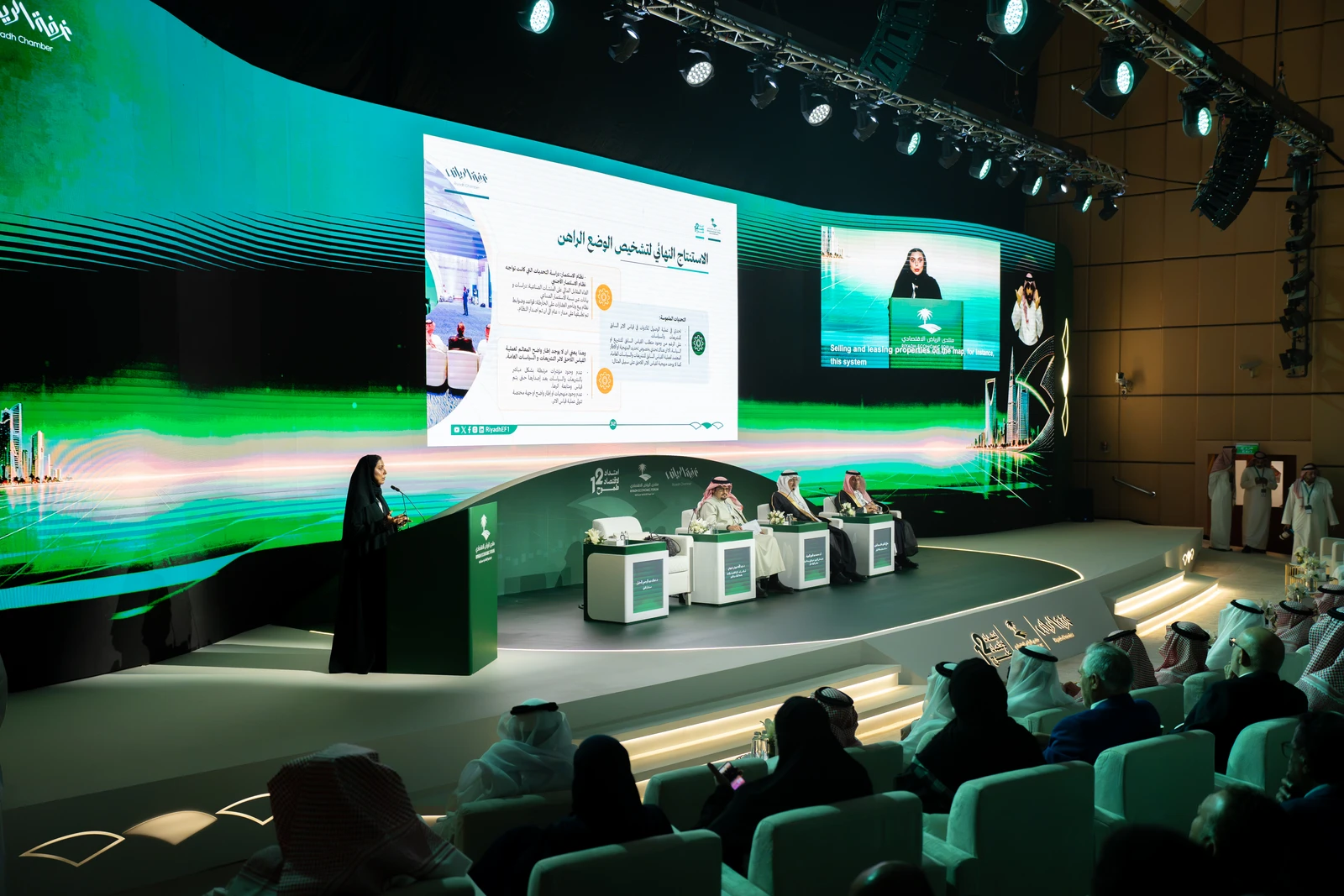
RIYADH: Saudi Arabia should establish an independent center to assess the economic, social, and environmental impact of legislation and public policies, experts said at the Riyadh Economic Forum.
The proposed body would oversee assessments across government bodies, and work to standardize evaluation methods and improve coordination between public entities.
The recommendation emerged during a session at the three-day event, held at the Riyadh International Convention and Exhibition Center, focused on a study measuring the impact of legislation and public policies led by Najla Abdulrahman Al-Huqail, a legal consultant.
Al-Huqail said the study identified significant gaps in specialized assessment capabilities, institutional coordination, data quality and the methodologies used to evaluate legislation and public policies.
The field research included 312 questionnaires completed by members of the public, 76 responses from experts and decision-makers, and six in-depth interviews with representatives of relevant organizations and ministries.
The findings highlighted overlapping responsibilities among government entities and difficulties in obtaining and exchanging the data needed to assess policies from multiple perspectives.
“Today, when evaluating legislation or a public policy, we need to study it from different dimensions, not just one,” Al-Huqail said, explaining that effective assessment requires information from multiple entities and disciplines.
The study also identified inconsistencies in evaluation frameworks and methodologies, with some government bodies having more developed assessment practices than others.
However, political will was identified as a relatively low gap, with the study pointing to the leadership’s commitment to initiatives that benefit individuals and society.
A centralized approach to legislative impact
Al-Huqail said the study favored a hybrid model combining a central authority responsible for overall oversight with specialized units within ministries, authorities and other government entities.
Under the proposed arrangement, the central body would establish standards, coordinate efforts and review the quality of assessments, while sector-specific units would evaluate policies and regulations within their respective areas of responsibility.
International benchmarking involving the UK, the US, South Korea, New Zealand and Canada also informed the study’s recommendations.
Al-Huqail said the countries examined shared several practices, including standardized assessment models, clear methodological guidance and dedicated institutions responsible for overseeing regulatory impact assessment.
She emphasized the importance of adopting a unified national framework, supported by a clear technical guide for regulatory impact assessment, commonly known as RIA.
The assessment process, she said, should begin before a law or policy is introduced and continue after implementation. It should also include transparency, public consultation and engagement with stakeholders who may be directly or indirectly affected.
The study called for common indicators to measure regulatory quality and administrative burdens, alongside measurable baseline data and targets.
Rather than simply counting activities or collecting statistics, the objective should be to determine whether legislation and public policies achieve their intended outcomes.
Al-Huqail also highlighted the need to distinguish the effects of a particular law or policy from external factors that could influence the same outcomes.
Developing specialized human capabilities and using digital technologies, including artificial intelligence, were also identified as priorities for analyzing large volumes of data more efficiently.
Better policy design and lower business costs
Also appearing at the event was Abdullah Shuwaish Duwaihi, an assistant professor at King Abdulaziz University. He said effective legislative impact assessment must begin with accurately identifying the problem a policy is intended to solve.
If the underlying problem is poorly defined, he explained, the alternatives considered by policymakers may be inappropriate, potentially resulting in ineffective regulation.
Duwaihi stressed that policymakers should consider a range of solutions, including non-legislative alternatives, rather than automatically assuming that a new law or regulation is necessary.
When a legislative intervention is justified, its costs should be assessed across economic, social, environmental and technological dimensions.
Duwaihi also highlighted a frequently overlooked consideration: the cost to the government of designing and implementing legislation.
He called for a technical guide to standardize legislative impact assessment and for continued investment in national expertise.
The assistant professor welcomed a previous capacity-building initiative by the Ministry of Economy and Planning aimed at developing national capabilities in the field.
Duwaihi said existing resources, including the government’s Estila platform, could be better utilized while the proposed national center is being developed.
He also called for research into indicators that could help determine when a regulation should undergo a new impact assessment, as well as the establishment of baseline costs for designing and implementing policies and legislation.
For regulations affecting the private sector, he said, assessors should focus on reducing unnecessary administrative burdens on businesses.
Shura Council role and post-implementation reviews
Mohammed Abdulaziz Al-Jarba, a member of the Shura Council, said legislative impact assessment had become increasingly important as economies and societies face rapid economic, social and digital changes.
He described the process as a means of determining the direct and indirect legal, social, economic and other consequences of a regulation, checking whether it achieves its intended objectives, and identifying whether new legislation or amendments are needed.
Al-Jarba said several entities currently contribute to the process, including ministries and other government bodies responsible for monitoring the regulations within their jurisdictions. The Shura Council also has a role in proposing amendments to existing laws and introducing new legislative proposals.
However, he argued that these efforts would benefit from a unified institutional framework.
Among his proposals was a draft regulation establishing a national center responsible for assessing the performance of public agencies, legislative impact and international competitiveness. He said he had prepared a proposed legal framework comprising 17 articles.
Al-Jarba also called for considering a requirement that laws and regulations undergo comprehensive post-implementation reviews every five years, with the responsible authorities submitting their findings to the relevant senior leadership.
He urged the Shura Council to make greater use of government entities’ annual reports to assess legislative outcomes and recommend necessary amendments.
He also proposed incorporating legislative impact assessment into university curricula in law, Shariah, economics, sociology, public administration and related disciplines.
Illustrating the practical applications of the approach, Al-Jarba cited potential assessments of artificial intelligence regulation, pedestrian infrastructure in residential neighborhoods, healthcare practices involving diagnostic imaging, and the use of audiovisual technology to monitor educational performance.
These examples, he said, demonstrate how impact assessment can help policymakers determine whether intervention is necessary, identify unintended consequences and select more effective solutions.
The speakers agreed that a more coordinated, evidence-based approach would strengthen the quality of legislation and help ensure that public policies deliver measurable results.
The proposed national center, standardized methodologies and stronger institutional capabilities would provide a framework for evaluating policies throughout their life cycle, supporting more effective governance and sustainable development in Saudi Arabia.
Saudi Arabia needs national center to assess legislation impact, Riyadh Economic Forum hears