- Key discussions at the forum include local knowledge transfer, legislation's impact on sustainable development, and preparations for Expo 2030 and the 2034 World Cup.
- Experts stress the need to develop local talent and enhance regulatory reforms to maximize returns on past educational and technological investments.
RIYADH: The next stage of Saudi Arabia’s economic transformation needs to be focused on maximizing the returns on national achievements, experts have told Arab News.
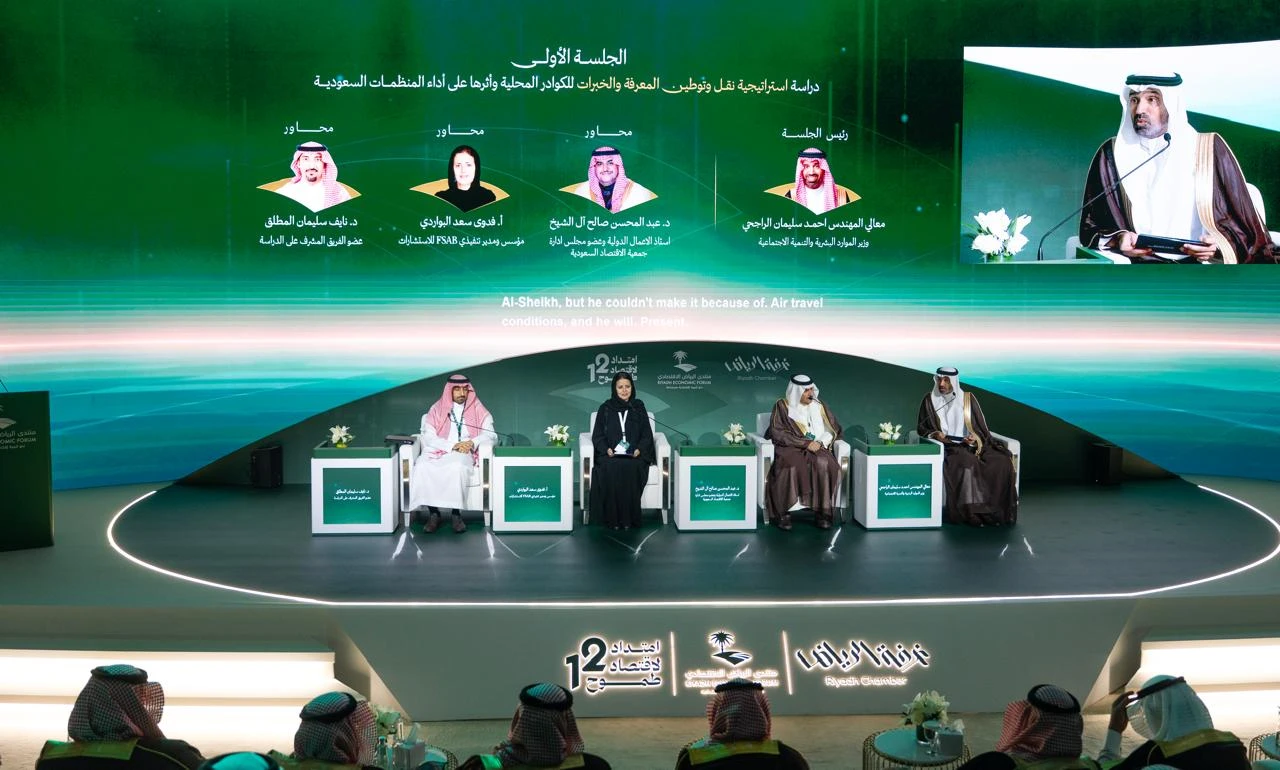
Speaking during the three-day Riyadh Economic Forum, which began on Oct. 12, leading figures across investment, management, and artificial intelligence highlighted the need for the Kingdom to develop local talent, amplify investment opportunities, and push ahead with regulatory reforms.
The forum is focused on five key sessions — taking in local knowledge transference, the impact of legislation on sustainable development, traffic congestion, maximizing returns from Expo 2030 and the 2034 World Cup, and enhancing the use of smart agriculture technologies.
Nayef Al-Mutlaq, a member of the team overseeing a study focused on transferring local knowledge to Saudi organizations, emphasized that the Kingdom has made tangible progress in education, digital transformation, and research and development.
He told Arab News the next phase requires “maximizing the returns on these achievements” by building national capabilities that ensure the continuity of knowledge.
Al-Mutlaq, also an associate professor of public administration, pointed out that comparative international experiences have highlighted the importance of “linking scientific research to developmental and productivity needs,” forging partnerships, and measuring the actual impact of transferred knowledge.
The future priority, he concluded, lies in “enhancing the absorptive capacity of institutions” and aligning research efforts with productivity and competitiveness indicators, thereby achieving the objectives of Saudi Vision 2030.
Fadhel Al-Buainain, a member of the Shura Council and an economic commentator, highlighted the importance of the Riyadh Economic Forum, saying it has “fulfilled its objectives, enriched economic debate and brought pressing issues to the forefront.”
He added that its recommendations address challenges facing both the Saudi and wider global economies at a pivotal time of transformation, but cautioned that “the main challenge is translating those recommendations into actionable plans that deliver a meaningful economic impact.”
Saja Al-Dera, an assistant professor of AI and data science and vice dean of the College of Business at AlMaarefa University, pointed to the forum's focus on localizing knowledge, noting advances in AI regulation, particularly in data protection, governance, and responsible use.
“As technology advances, implementation frameworks must keep pace, with risk assessments tailored to the needs and challenges of individual sectors,” she stated.
The importance of the forum was underscored by Ibrahim Al-Hudhaif, head of real estate asset management at Sulaiman Al Rajhi Holding.
“Saudi Arabia's current economic landscape makes it particularly important to highlight investment opportunities and ongoing regulatory reforms, as well as their role in strengthening the country's appeal to domestic and international capital amid shifting regional and global dynamics,” Al-Hudhaif noted.
These developments coincide with the expansion of family investment portfolios and professionally managed endowments, alongside growing foreign capital flows.
“Investment opportunities span a range of sectors, including real estate following the opening of property ownership to non-Saudis, hospitality, private credit, the domestic sukuk market, mining, manufacturing, renewable energy, critical infrastructure, healthcare, food security, logistics and digital infrastructure,” he said.